What Happened to BTC-e? The Exchange That Was the Crime
BTC-e asked customers for nothing — no name, no ID, no questions — and became the place where cybercrime's Bitcoin went to disappear. In July 2017 the exchange vanished mid-"maintenance", and the man behind it spent eight years as the prize in a three-country extradition war. This is the story of an exchange that wasn't robbed by criminals. It was one.
10 minutes • 16 illustrated steps • In-depth historical chronology & technical analysis
Editorial Research & Chronological Archive
Independently synthesized and cross-verified by The Blockchain History Editorial Board using primary whitepapers, historical archives, and on-chain records.
What happened to BTC-e?
BTC-e was a cryptocurrency exchange launched in 2011 that grew into one of the world's largest Bitcoin markets by doing the opposite of every rule: it required no identity verification, converted dirty coins into anonymous coupon codes, hid behind offshore shell companies and operated under Russia's legal umbrella. On July 25, 2017, it went offline mid-"scheduled maintenance" — because operator Alexander Vinnik had just been arrested on holiday in Thessaloniki, Greece. The same week, FinCEN hit BTC-e with a $110 million penalty and the DOJ unsealed a 21-count indictment alleging over $4 billion in laundered proceeds, including funds from the Mt. Gox hack. After a three-way extradition fight with France and Russia, a hunger strike, extradition to France (2020) and then the US (2022), Vinnik pleaded guilty to money-laundering conspiracy in May 2024 — and in February 2025 he flew home to Moscow in a prisoner swap for American teacher Marc Fogel.
Key Takeaways
- BTC-e launched in 2011 and grew into a top global Bitcoin exchange by serving the underworld: no ID checks, no records, no questions — the DOJ later alleged more than $4 billion in criminal proceeds moved through it, and by the video's count roughly one in twenty Bitcoins in circulation passed behind its counter.
- Its customer base exploded in 2014 when Mt. Gox — then 70% of all Bitcoin trading — collapsed with 850,000 missing BTC ($460 million then, around $60 billion at today's prices), and the displaced victims walked straight into the exchange that was laundering the stolen coins.
- The system had four pillars: signup with a fictitious username and a temporary email, dirty Bitcoin converted into digital coupon codes resold on the dark web, a web of shell companies in Cyprus and offshore havens, and de facto protection under Russian law.
- With no analytics software available in 2014-2015, investigators traced Mt. Gox's missing coins manually through mixers and thousands of wallet hops — and the streams kept converging on Alexander Vinnik's personal WebMoney accounts and wallets.
- Vinnik was arrested in Greece in July 2017 while BTC-e went dark mid-"maintenance"; FinCEN fined the exchange $110 million, the US sought up to 55 years, France claimed him for ransomware laundering, Russia rushed out its own fraud case — and Vinnik answered with a three-month hunger strike.
- Extradited to France in 2020 and to the US in 2022, he pleaded guilty to money-laundering conspiracy in May 2024 — then in February 2025 was released in a prisoner swap for teacher Marc Fogel and landed in Moscow on February 13.
The Source of the Money: It Starts with Mt. Gox
The billions BTC-e washed had one main tributary — the biggest heist in crypto history. To understand the launderer, you have to meet the stolen coins.
- 1
One exchange, most of crypto's dirty money
By the video's count, one out of every twenty Bitcoins in circulation passed through BTC-e, and around 95% of the dirty and stolen Bitcoin in the wild was laundered on its order books. In its final years roughly 30% of all dollar-denominated crypto trading in the world ran through an exchange whose owners never asked a single customer a single question. When the DOJ finally charged it, prosecutors put the number at more than $4 billion in criminal proceeds. BTC-e wasn't an exchange that got robbed. The exchange itself was the crime scene.

The business model, drawn in one image: a banknote in handcuffs. - 2
Rewind to 2011: the hacker's untouched wallet
Where did the dirty coins come from? The story starts with Mt. Gox, the world's first big Bitcoin exchange, founded by Jed McCaleb and sold in 2011 to a young French developer named Mark Karpelès. That same year, roughly 80,000 BTC were stolen straight out of Mt. Gox — the hacker even deleted the server logs behind him. The video shows what on-chain explorers still show today: a wallet holding 79,957 BTC, worth billions at later prices, that has never been touched. Investigators could see exactly where the money went. Moving it safely would take a specialist.
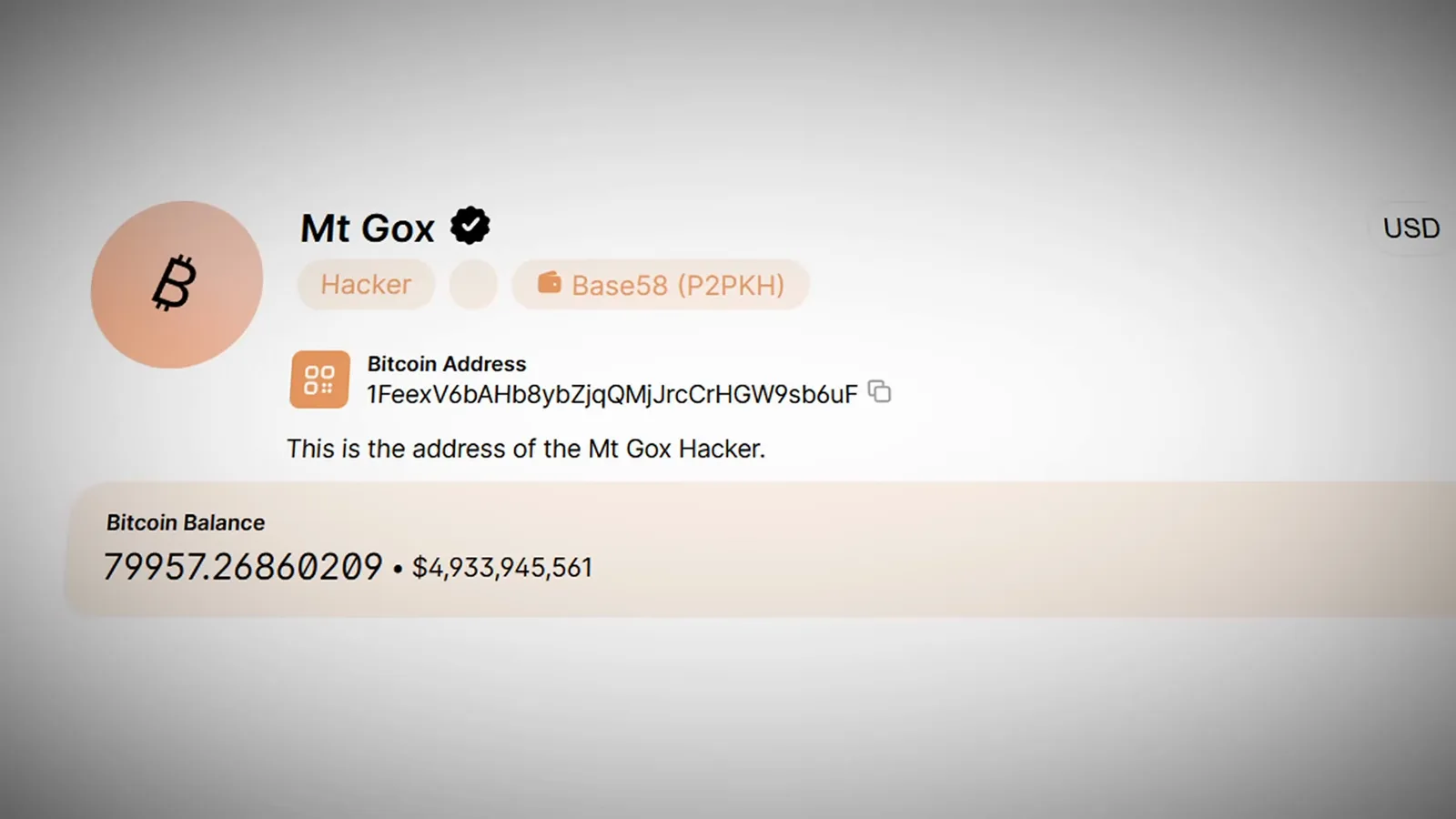
A wallet that has sat still for over a decade — spending it is the hard part. - 3
2013: Mt. Gox, king of Bitcoin
Under Karpelès, Mt. Gox grew to about 2 million users and handled roughly 70% of all Bitcoin transactions worldwide — around $40 million in daily volume at a time when that was an enormous sum. It was, briefly, the emperor of the digital world. It was also a house of cards: the 2011 thieves had never left, quietly siphoning coins for years while the books looked fine. The bigger Mt. Gox grew, the bigger the hole beneath it became.

Two million users, 70% of the market — and a vault already leaking. - 4
February 2014: 850,000 coins vanish
Then the withdrawals failed. In total about 744,000 customer Bitcoins plus 100,000 of the company's own had been drained — roughly 850,000 BTC, about $460 million at 2014 prices, the equivalent of $60 billion today, and by the video's estimate some 7% of all Bitcoin then in existence. About 200,000 coins were later recovered from an old hard drive running outdated wallet software, leaving roughly 644,000 missing. Mt. Gox went bankrupt, and hundreds of thousands of displaced traders went looking for a new home — many picked BTC-e, because it was just as old and just as established. Crypto's biggest victim crowd had just walked into its biggest laundering hub.
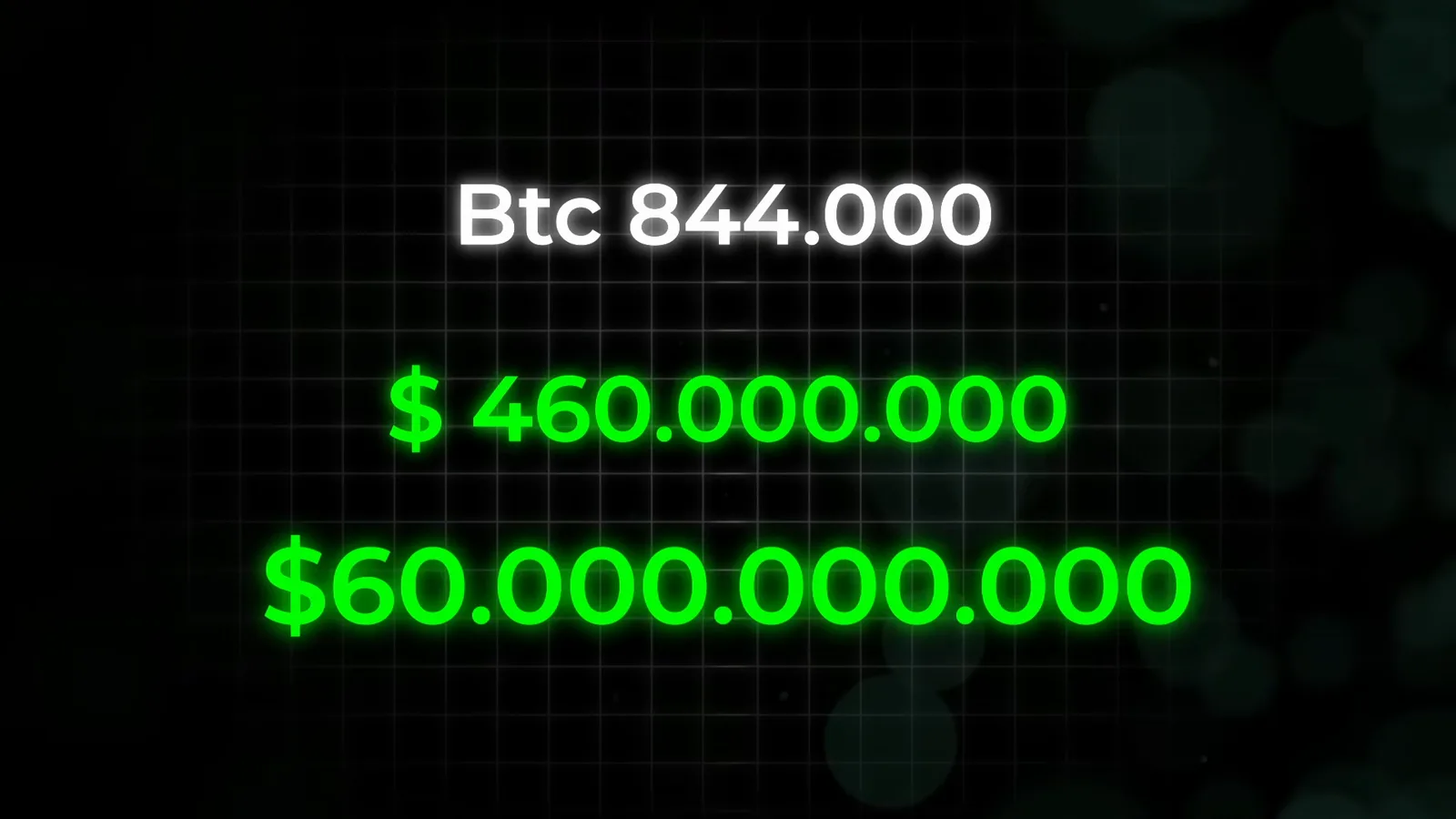
$460 million then. $60 billion today. Gone in slow motion.
The Machine Built for Crime
Four design decisions turned BTC-e from an exchange into the underworld's favorite bank. Each one was, by itself, the crime.
- 5
The man behind the usernames
Behind BTC-e stood Alexander Vinnik, a Russian IT specialist who, by the video's telling, had studied both the psychology of the criminal economy and the loopholes of international law. Law enforcement had the exchange on its radar from the day it launched, because it ignored every anti-money-laundering safeguard that was becoming standard in the industry. Ransomware gangs, dark-net markets and extortionists treated BTC-e as sacred ground. None of them ever met the man who ran it.
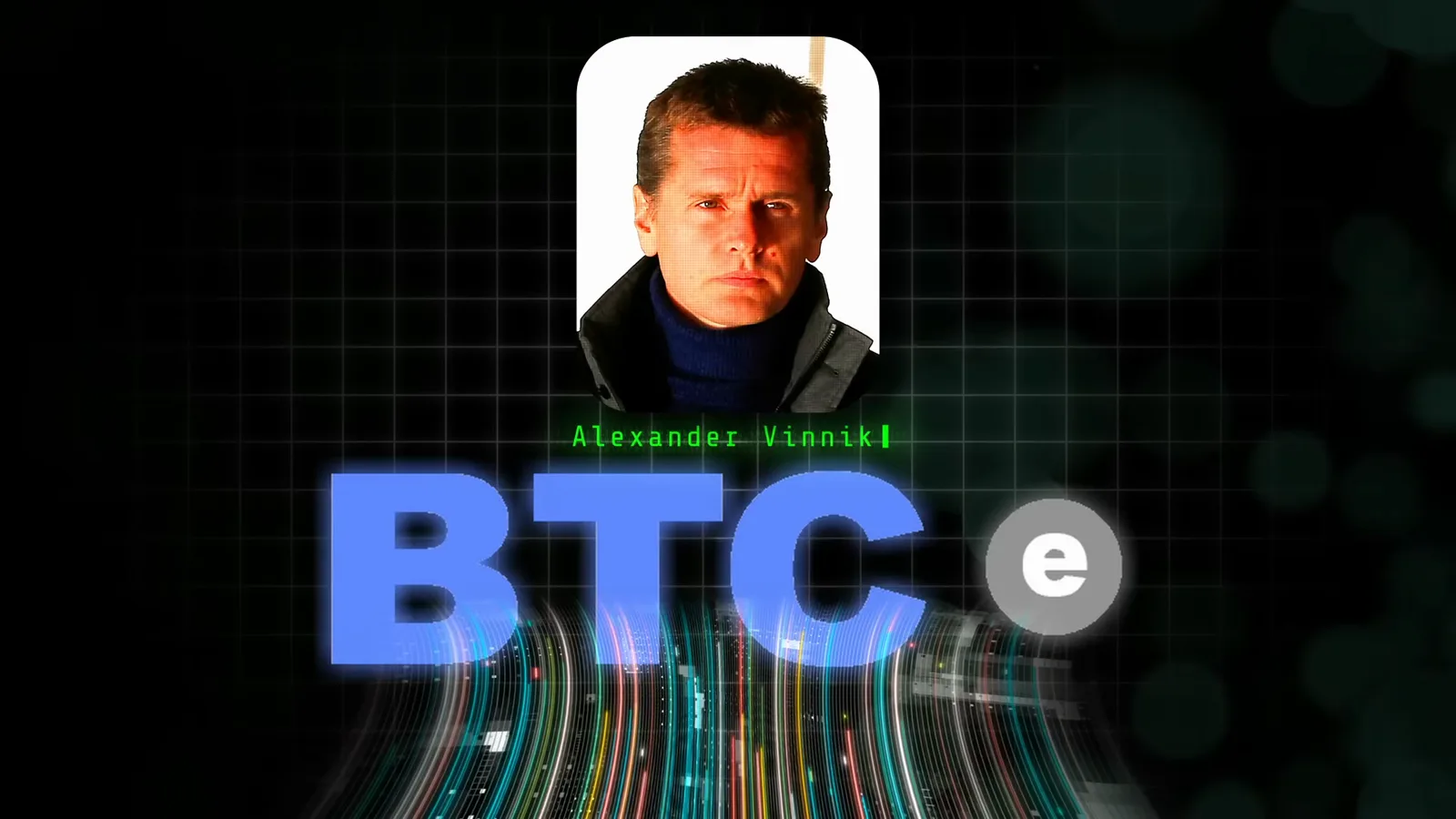
The most popular exchange in the underworld had one name behind it. - 6
Advantage #1: no identity, ever
To become a customer of Vinnik's system, all you needed was a fictitious username and a temporary email address. No ID, no proof of address, no real name — nothing that could connect an account to a person. The moment a hacker moved stolen Bitcoin onto the exchange, the digital trail that normally ends at a bank's front door simply ended. Anonymity wasn't a feature BTC-e offered. It was the product.

The signup form asked for everything except you. - 7
Advantage #2: the coupon trick
The hardest step for any thief is turning stolen crypto into spendable cash, because banks flag anything touching an exchange. Vinnik's solution was a product of his own design: a hacker could convert dirty Bitcoin on BTC-e into a digital coupon code, then sell that code on the dark web to another criminal who had cash to spare. Because the final hand-off was just code changing owners, the bank at the end of the chain saw an ordinary wire transfer between two people — not the exit of a crypto heist.

Dirty coins in, anonymous coupon codes out — the bank never knew. - 8
Advantage #3: built where subpoenas die
Customers' coins stayed safe on BTC-e because the exchange itself was nearly impossible to seize. The operation ran through a web of shell companies planted in offshore jurisdictions — Cyprus, the British Virgin Islands, the Seychelles — most of which held no bank accounts at all, only infrastructure. There was no head office to raid in any country that would answer a Western warrant. Investigators comparing notes found an exchange with billions in flow and effectively no legal body to sue.

A company in no one's country, guarding everyone's money. - 9
Advantage #4: the Moscow shield
The final pillar was jurisdiction. Vinnik and his team lived under the legal protection of the Russian Federation, which ignored Western requests to hand over cybercriminals — and, as the video puts it, had little left to fear from additional sanctions. Western pressure produced polite stalling. With that shield in place, around 30% of the world's dollar-denominated crypto trading flowed through BTC-e, and its management never once asked where the money was coming from. It was less an exchange than a logistics hub for cybercrime.

Washington shouts. Moscow shrugs. The exchange keeps running.
The Hunt: Reading the Blockchain by Hand
No analytics software existed yet — so detectives read the public ledger line by line, until every river of stolen coins flowed to the same man.
- 10
A ledger that never forgets
In 2014-2015 there was no Chainalysis, no AI tracing suite — the receiver appointed for Mt. Gox and cyber-detectives working with the FBI had to track the missing coins manually. They collected every wallet address the thefts touched and read millions of rows of blockchain data like a needle-in-a-haystack ledger. The thieves split coins into thousands of pieces, scattered them across hundreds of wallets and ran them through mixers — but the blockchain has one immutable rule: nothing recorded can be deleted. After months of work, the rivers of dirty money branching into a thousand streams kept converging on one dam.

No tools, no shortcuts — just the public ledger and patience. - 11
The rivers converge on one man
The biggest mistake of BTC-e's hidden mastermind was letting the stolen coins re-enter circulation through himself. Tracing found that a large share of the Bitcoin stolen from Mt. Gox ended up in personal WebMoney accounts and crypto wallets managed by Alexander Vinnik. But there was nothing to arrest: he lived quietly like a normal family man, and — most importantly — he never left Russia. The investigators' file was complete; all they needed was for the target to step outside the shield. They got a secret arrest warrant and waited.

Every trace pointed through the same man.
2017: Seizure, Arrest, Three-Way Tug-of-War
One summer holiday broke Russia's shield — and within a week, the exchange was gone, and three countries were fighting over its owner.
- 12
A family holiday in Thessaloniki
In the summer of 2017, Vinnik finally made a mistake: he booked a holiday with his wife and children at a secluded luxury resort in Thessaloniki, Greece. The FBI didn't rush — they waited until he had checked in, then took him on July 25, 2017. The same day, BTC-e went offline mid-"scheduled maintenance"; within a week the domain displayed a seizure banner, FinCEN assessed a $110 million penalty against the exchange and $12 million against Vinnik, and the DOJ unsealed a 21-count indictment alleging billions in laundered funds, including coins from the Mt. Gox hack — with a sentence of up to 55 years on the table.

The man who never left Russia took one vacation. - 13
Hunger strike in a Greek prison
The handcuffs started a chess match between powers. The US wanted him immediately — up to 55 years for laundering the Mt. Gox billions. France claimed him next, saying proceeds of ransomware attacks on French companies had been laundered through BTC-e. Russia insisted on its citizen and swiftly filed its own fraud case, which would give it legal priority. Vinnik, declaring "I'm not a criminal, just a regular freelance software developer working remotely", fought back with a three-month hunger strike against the process — by the time he was carried to hospital he was barely recognizable. But no confession came out of him, and Greece eventually approved extraditions to both France and the US.

Three months without food — his only remaining motion to file.
Guilty, Then Gone: The Twist Ending
France first, America second, a plea deal in 2024 — then a prisoner swap in 2025 that nobody saw coming.
- 14
France, then the country he feared
After years of diplomatic maneuvering, Greece sent Vinnik to France first — where he faced the ransomware case — and then, in August 2022, to the place he truly feared: the United States. Everyone assumed he would spend the rest of his life in an American federal prison. Instead, his story took one more dramatic turn, because behind the courtroom scenes a much quieter negotiation between Washington and Moscow was underway.

One more flight, one more country — four years after the arrest. - 15
May 2024: the guilty plea
In May 2024, after a long standoff in American courts, Vinnik pleaded guilty to conspiracy to commit money laundering. Per the DOJ, he was held responsible for losses of at least $121 million tied to the exchange he operated, part of the more than $4 billion in bitcoin that flowed through BTC-e. The plea closed the case that began with a maintenance tweet in July 2017 — and confirmed what the blockchain had said all along: the exchange and the crime were the same thing.

Seven years of denial, settled with one signature. - 16
February 2025: the plane to Moscow
Then came the twist. In February 2025, Washington and Moscow struck a surprise exchange, and Alexander Vinnik — the key figure of history's biggest crypto-laundering case — was at the top of the release list. He was swapped for American teacher Marc Fogel, and on February 13, 2025 a plane carrying him landed in Moscow. Today he presents himself in Russia as a freelance blockchain expert and gives talks at cybersecurity conferences. The wallets, the warrants and the world's memory of BTC-e remain — because the ledger, unlike the man, never left.

Released by the country that chased him, home in seven years flat.
Frequently Asked Questions
What happened to BTC-e in July 2017?
Who is Alexander Vinnik?
Did BTC-e users ever get their money back?
How much money did BTC-e launder?
Why did the US, France and Russia all want Vinnik?
Is BTC-e still operating today?
Continue the Story
Mt. Gox Collapse: The Complete Timeline
Where BTC-e's dirty billions came from: 850,000 missing BTC, a decade of waiting — and repayments that finally arrived.
The Biggest Crypto Scams in History, Case by Case
BTC-e sits in a decade-long lineup of cons — OneCoin, BitConnect, FTX and the playbook they share.
QuadrigaCX Collapse: The Crypto King Who Took the Keys
The opposite failure: an exchange nobody robbed, run by a founder who was the hole in the ledger.
BitConnect: Anatomy of Crypto's Biggest Ponzi
The other famous fraud in Bitcoin's history — how the 1% daily 'trading bot' collapsed to zero.
The Cypherpunk Movement
The privacy-first ideology BTC-e exploited — and the 'don't trust, verify' ethos that caught its operator.
The Genesis Block
The message Bitcoin launched with in 2009 — and how far the industry's first great exchange scandal strayed from it.
Browse All Illustrated Guides
Every story in the blockchain history series, as step-by-step illustrated guides.
References
Extended Multimedia Reference
Visual sequences and chronologies in this guide cross-reference video documentation “The $60,000,000,000 Hacker Banker: Alexander Vinnik Documentary” by SERHAT DEDE.
This illustrated guide is maintained strictly for educational, research, and historical documentation purposes. None of the materials constitute investment, financial, legal, or trading advice. Historical crisis and market events are documented from public archives. Digital assets involve significant risks.