The Bitcoin Whitepaper, Explained in Pictures
Satoshi's nine-page paper from October 31, 2008 is the founding document of crypto. This guide walks all twelve sections with the original concepts drawn out — from double-spending to Merkle proofs.
18 minutes • 24 illustrated steps • In-depth historical chronology & technical analysis
Editorial Research & Chronological Archive
Independently synthesized and cross-verified by The Blockchain History Editorial Board using primary whitepapers, historical archives, and on-chain records.
What does the Bitcoin whitepaper actually say?
In one sentence: pure peer-to-peer electronic cash is possible if every transaction is signed into a chain of ownership, transactions are bundled into hash-linked blocks ordered by proof of work, and the network simply always follows the longest chain. The paper's twelve sections build exactly that: an electronic coin (§2), a timestamp server (§3), proof of work (§4), network rules (§5), miner incentives (§6), Merkle-tree pruning and SPV (§7–8), value handling (§9), privacy (§10) and the attack probability math (§11).
Key Takeaways
- The paper solves one problem — double-spending — without a trusted third party, by making all transactions public and having the network agree on a single chronological order.
- An electronic coin is just a chain of digital signatures: each owner signs the hash of the previous transaction together with the next owner's public key.
- Proof of work turns the timestamp server decentralized: miners hash the block until the output starts with a required number of zeros, and the longest chain always wins.
- Merkle trees let old transactions be pruned without breaking the hash chain — the trick that makes lightweight SPV wallets possible.
- Section 11 is pure probability: even a 10% attacker catches up only 20.5% of the time after one confirmation, which is where the six-confirmation convention comes from.
- The privacy section (§10) is the paper's most dated — written before exchanges tied public keys back to real identities.
Before You Read: Two Primitives
The paper assumes you know hash functions and digital signatures. Two minutes here makes everything else click.
- 1
Hash functions: any input, a 256-bit fingerprint
A hash function h(x) takes any input — a number, a document, the works of Shakespeare — and outputs a fixed 256-bit number. Change one bit of the input and the output changes completely, and you can't reverse it. That unpredictability is what Bitcoin builds its tamper-evidence on.
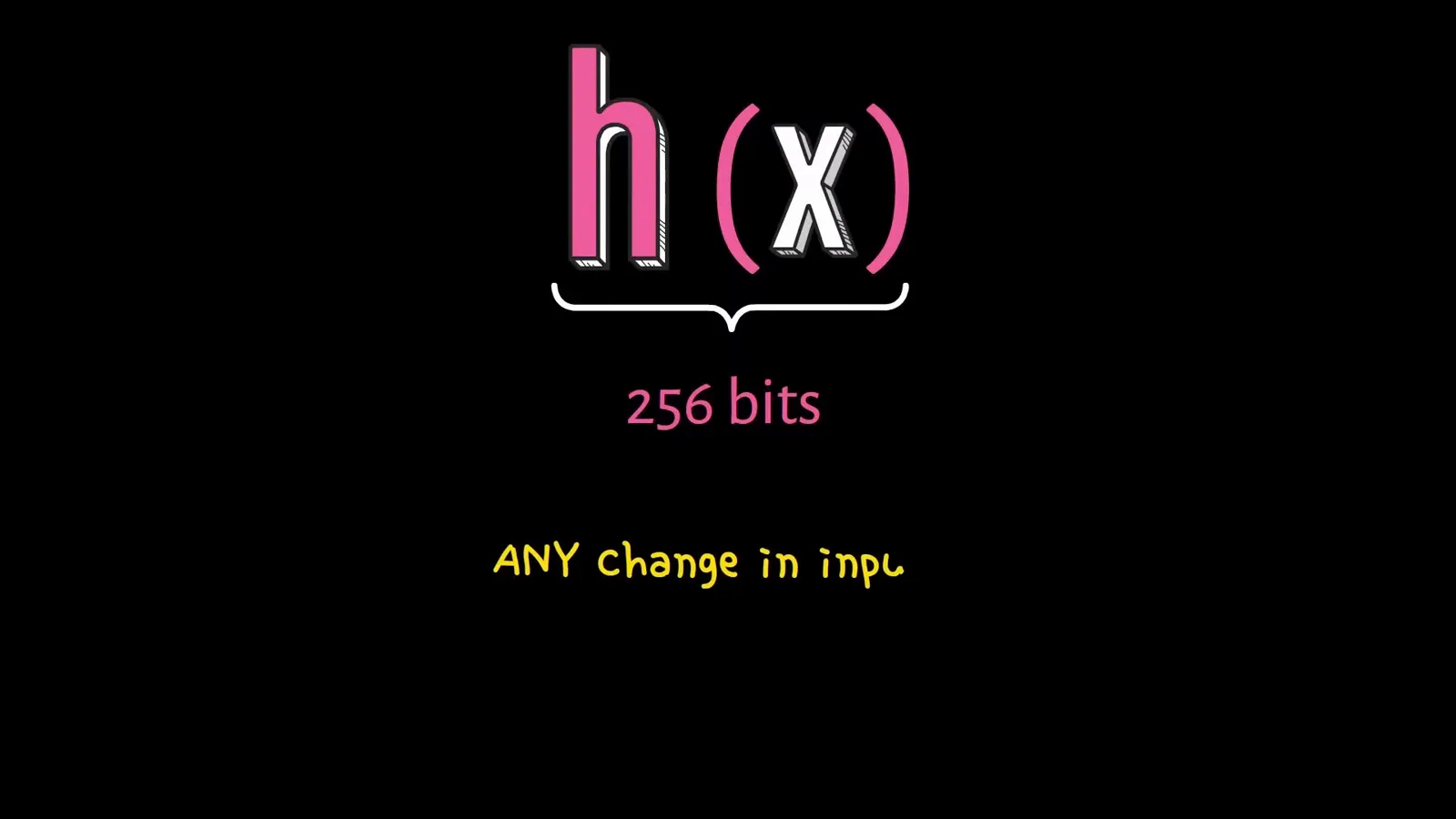
Same input, same fingerprint — change a bit, everything changes.Watch at 4:32 - 2
Digital signatures: proving ownership without revealing the key
Each Bitcoin identity is a private key (known to one person) and a public key (known to everyone). Signing a message with the private key lets anyone verify it with the public key — that's how a coin's owner authorizes a transfer without exposing the secret.
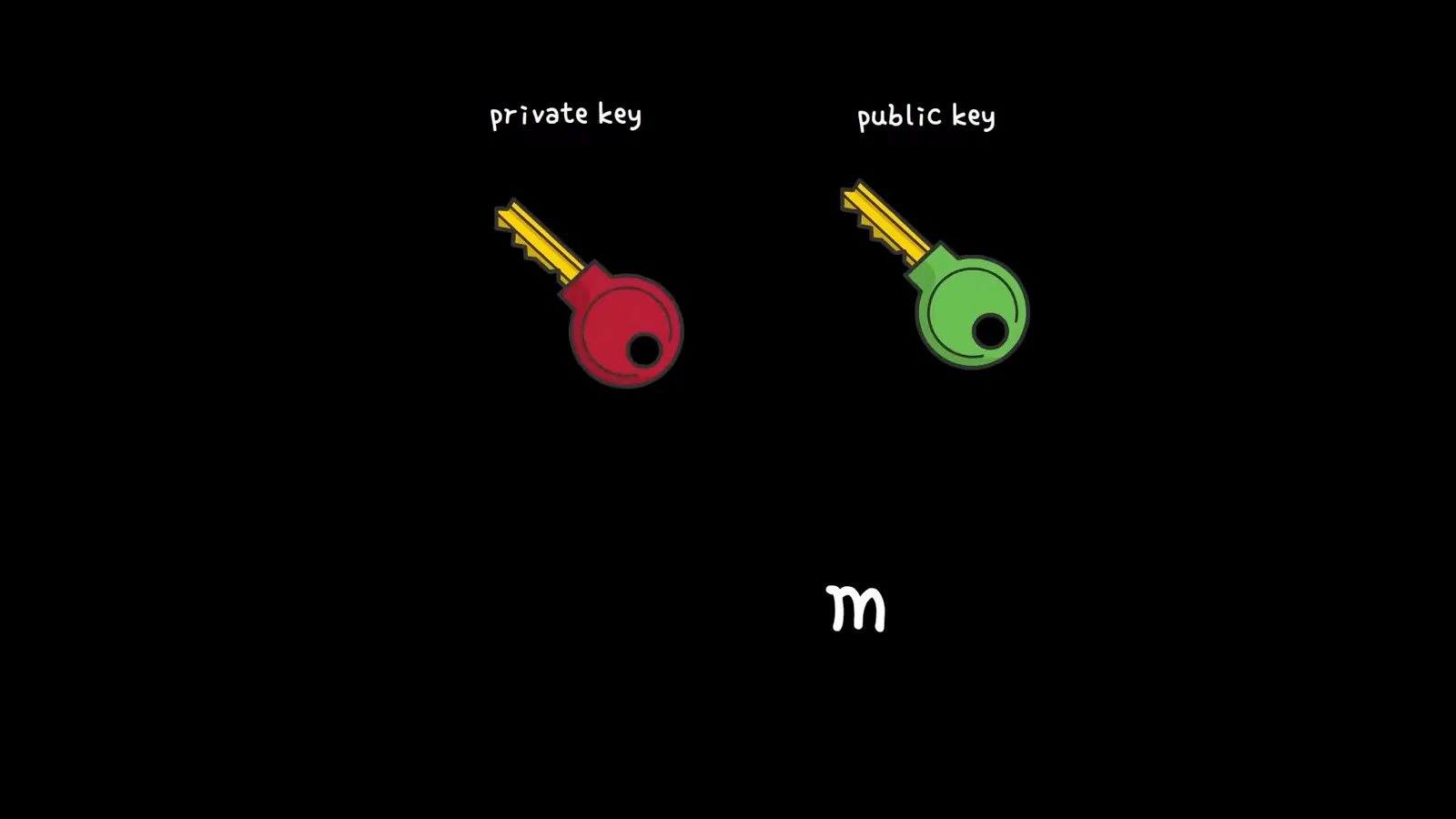
Private key signs; public key verifies.Watch at 6:02
The Problem, and What Came Before
Section 1 names the enemy — trusted third parties — and the video recalls the earlier attempts that fell short.
- 3
The cost of trusted intermediaries
Internet commerce still runs on trusted third parties to process payments and resolve disputes. Satoshi's point in the introduction is modest but radical: mediation costs make small online payments uneconomical, so why not build a system based on cryptographic proof instead of trust?
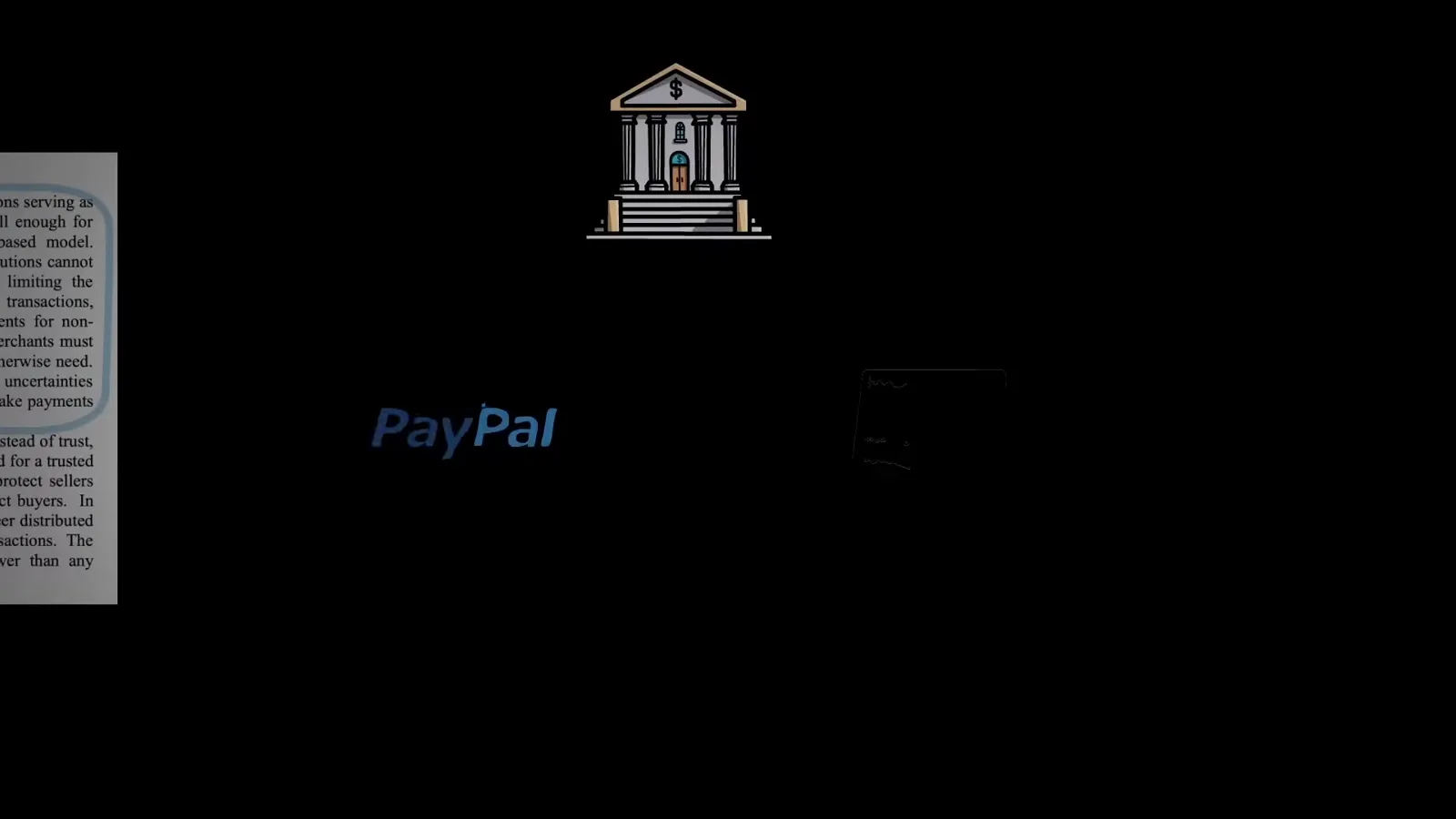
Section 1's target: mediation itself.Watch at 9:26 - 4
Earlier attempts: b-money, Bit gold, RPOW
Before Bitcoin, Wei Dai's b-money and Nick Szabo's Bit gold stayed theoretical, and Hal Finney's RPOW worked but was centralized. Finney also became the first person ever to receive a Bitcoin transaction from Satoshi — the paper's ideas had a lineage.
The RPOW inventor: first recipient of Bitcoin, ever.Watch at 20:30
Sections 1–3: Coins, Signatures and a Timestamp Server
The paper's first building blocks: what an electronic coin is, and how to timestamp it so history can't be rewritten.
- 5
Section 2: a coin is a chain of signatures
An electronic coin is defined as a chain of digital signatures. Each owner passes the coin on by signing a hash of the previous transaction together with the public key of the next owner — anyone can walk the chain and verify every handoff.
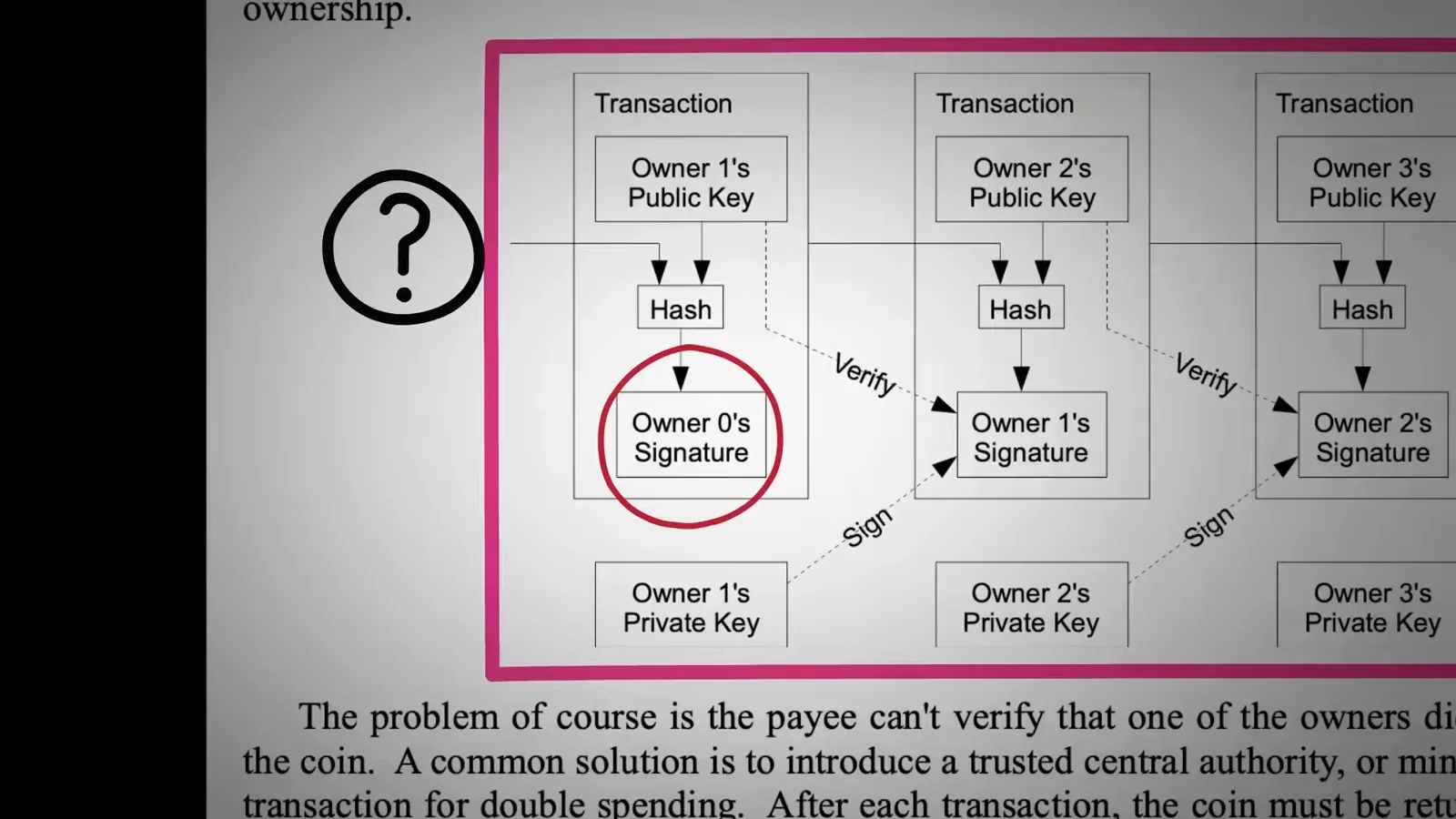
The famous ownership chain from the paper's second page.Watch at 10:56 - 6
Following one coin from Alice to David
Alice signs her transfer to Bob; Bob signs his transfer to Charlie, referencing the transaction he received; and so on. Each new signature locks in the entire history behind the coin — this is the 'hash of the previous transaction' concept in action.
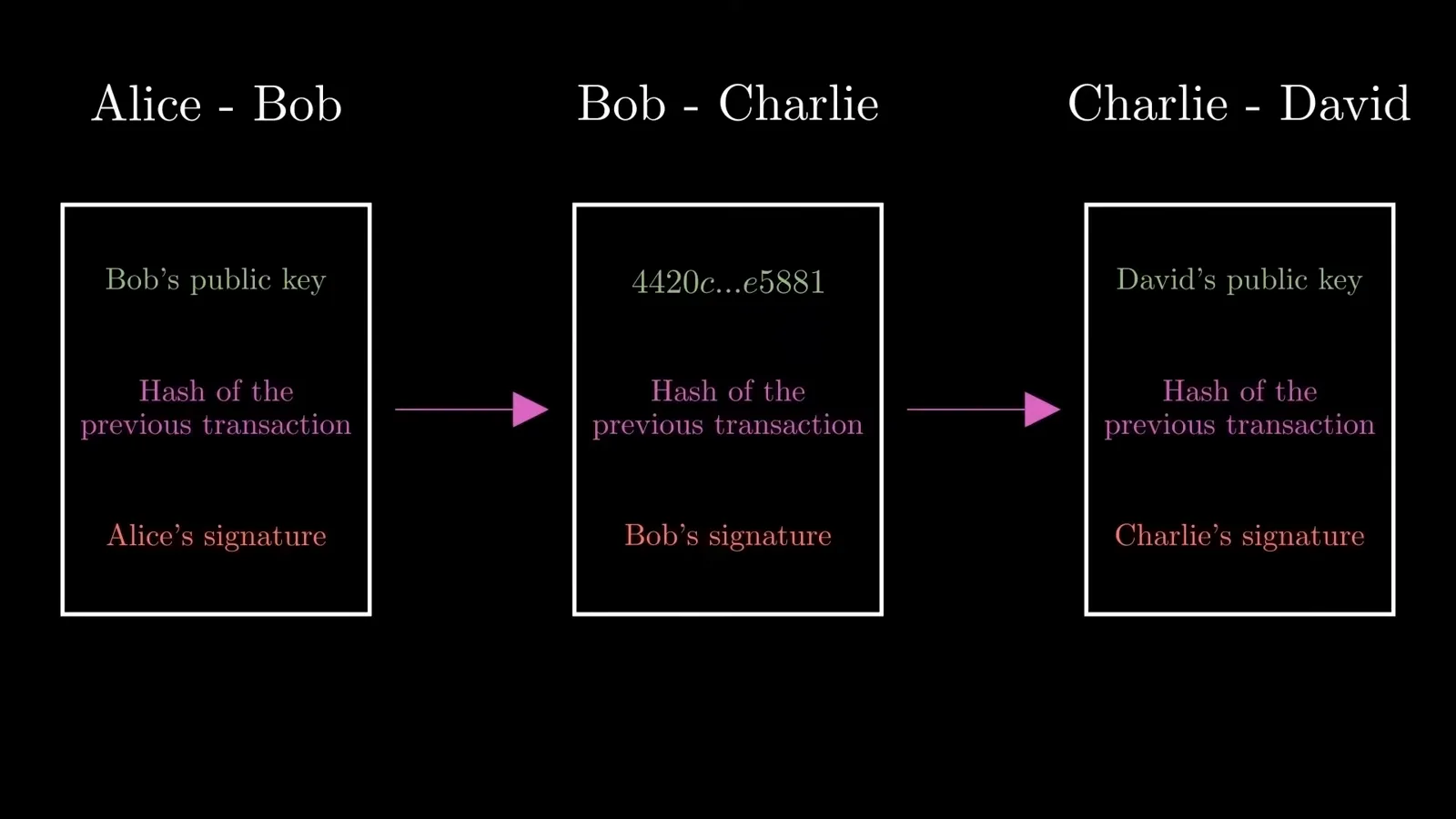
Ownership as an unbroken chain of signatures.Watch at 11:40 - 7
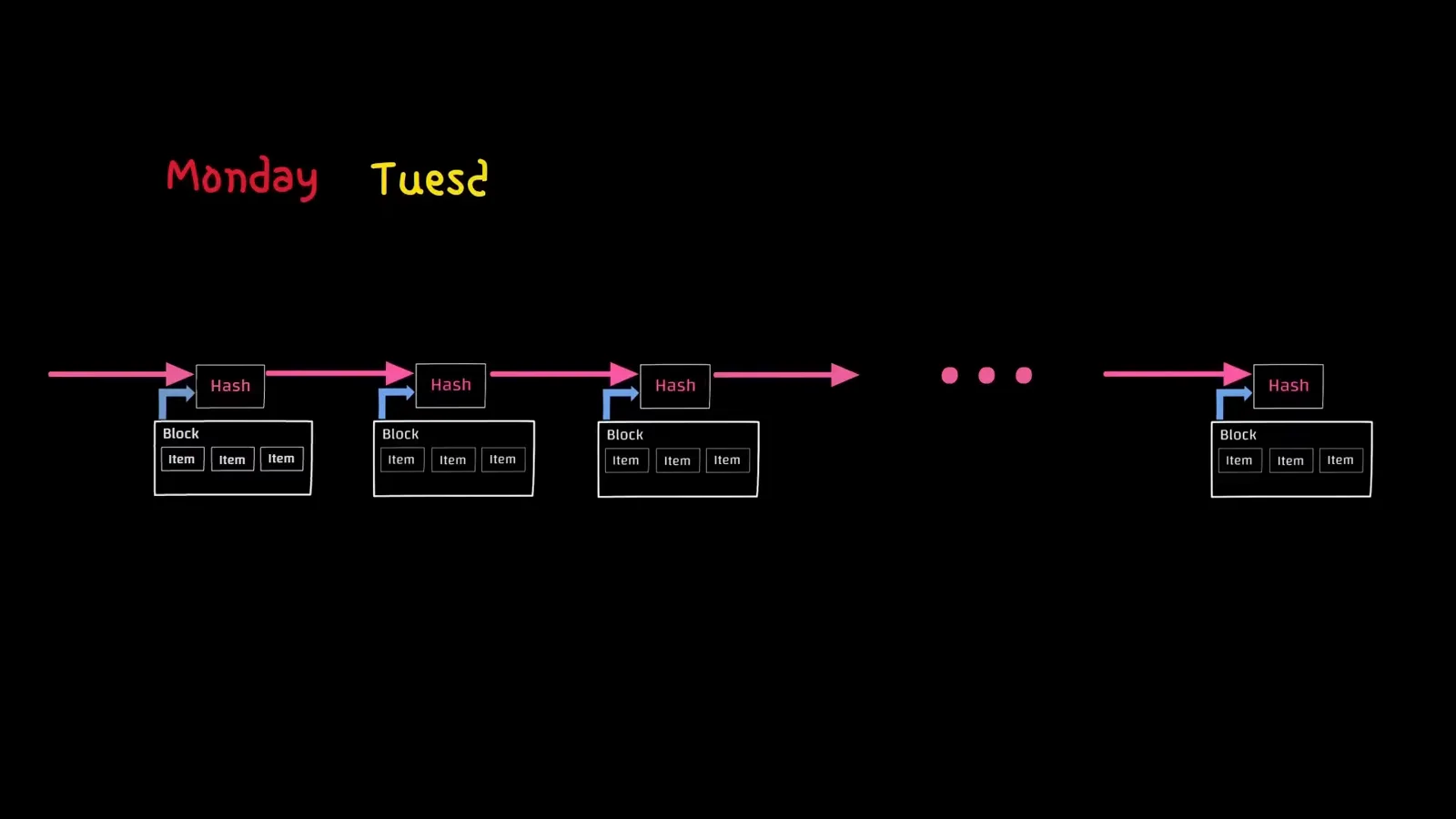
Section 3: the timestamp server
Before Bitcoin, a timestamp service published a hash of the day's data in a newspaper — proof the data existed at that date. Bitcoin generalizes this: each block's hash incorporates the previous block's hash, so the whole history is chained together.
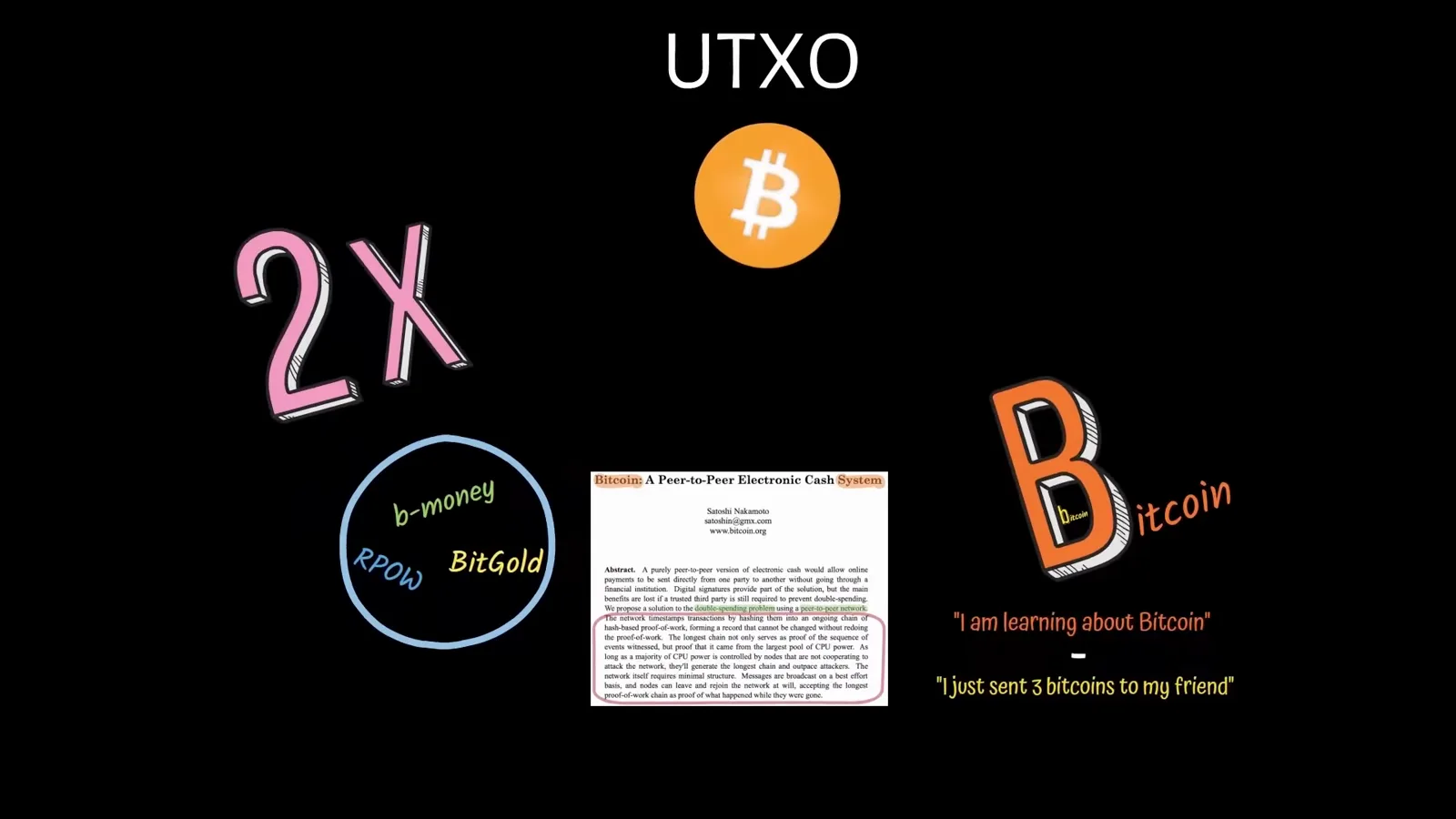
An agreed chronological order — the double-spending killer.Watch at 9:00 - 8
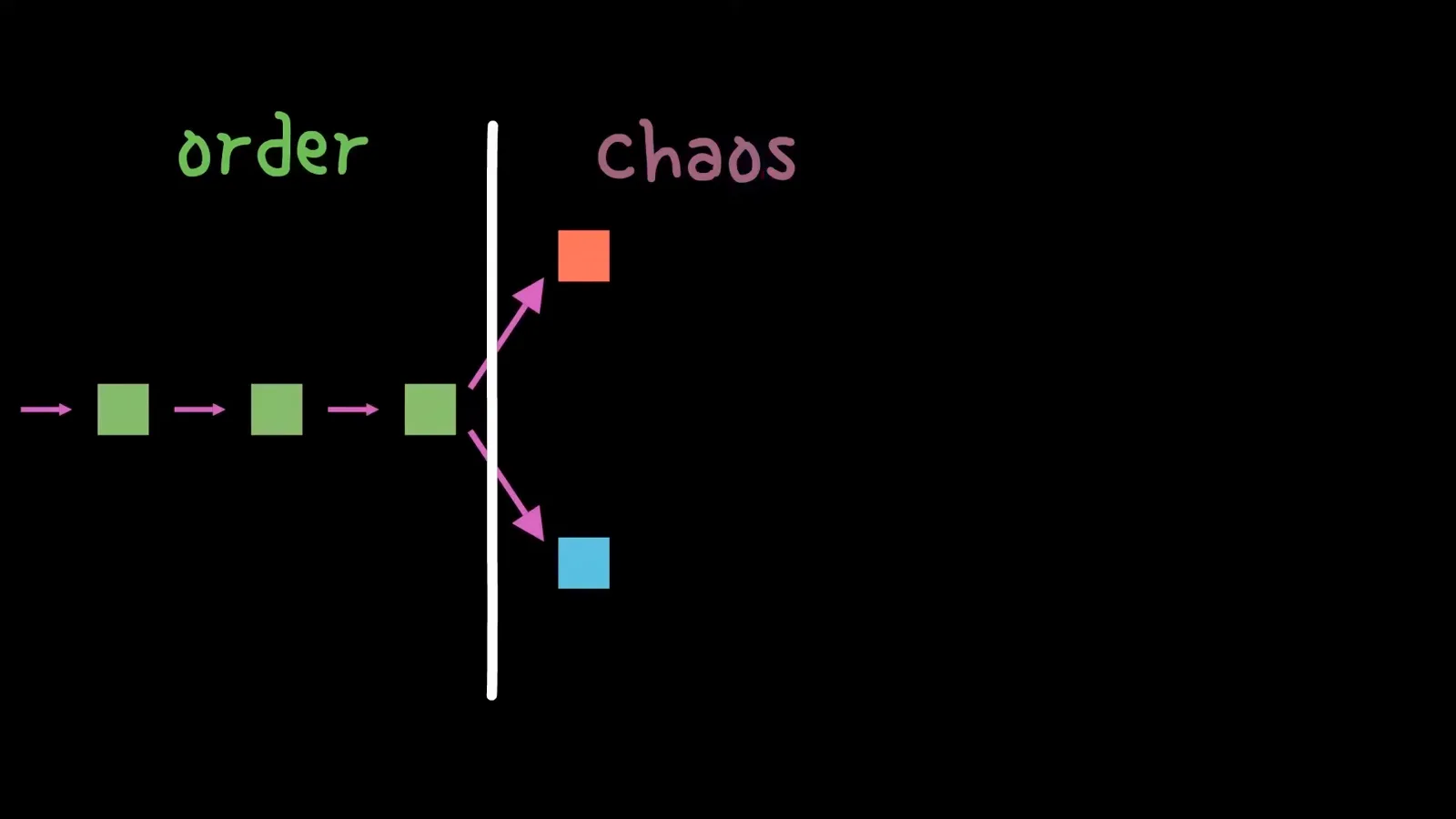
Why one changed bit breaks everything
Because every block hash includes the previous one, altering a single transaction even by one bit changes its block's hash, which changes the next block's hash, and so on forever. That domino effect is the tamper-evidence that makes old history effectively unrewriteable.
One flipped bit, and the whole chain downstream changes.Watch at 14:34 - 9
Publishing digests in the newspaper
In the 1990s, the way to anchor a hash was to print it in The New York Times — nobody could retroactively alter the archive. It worked, but it was centralized: one company controlled the timestamping. Decentralizing that trust is the paper's actual quest.
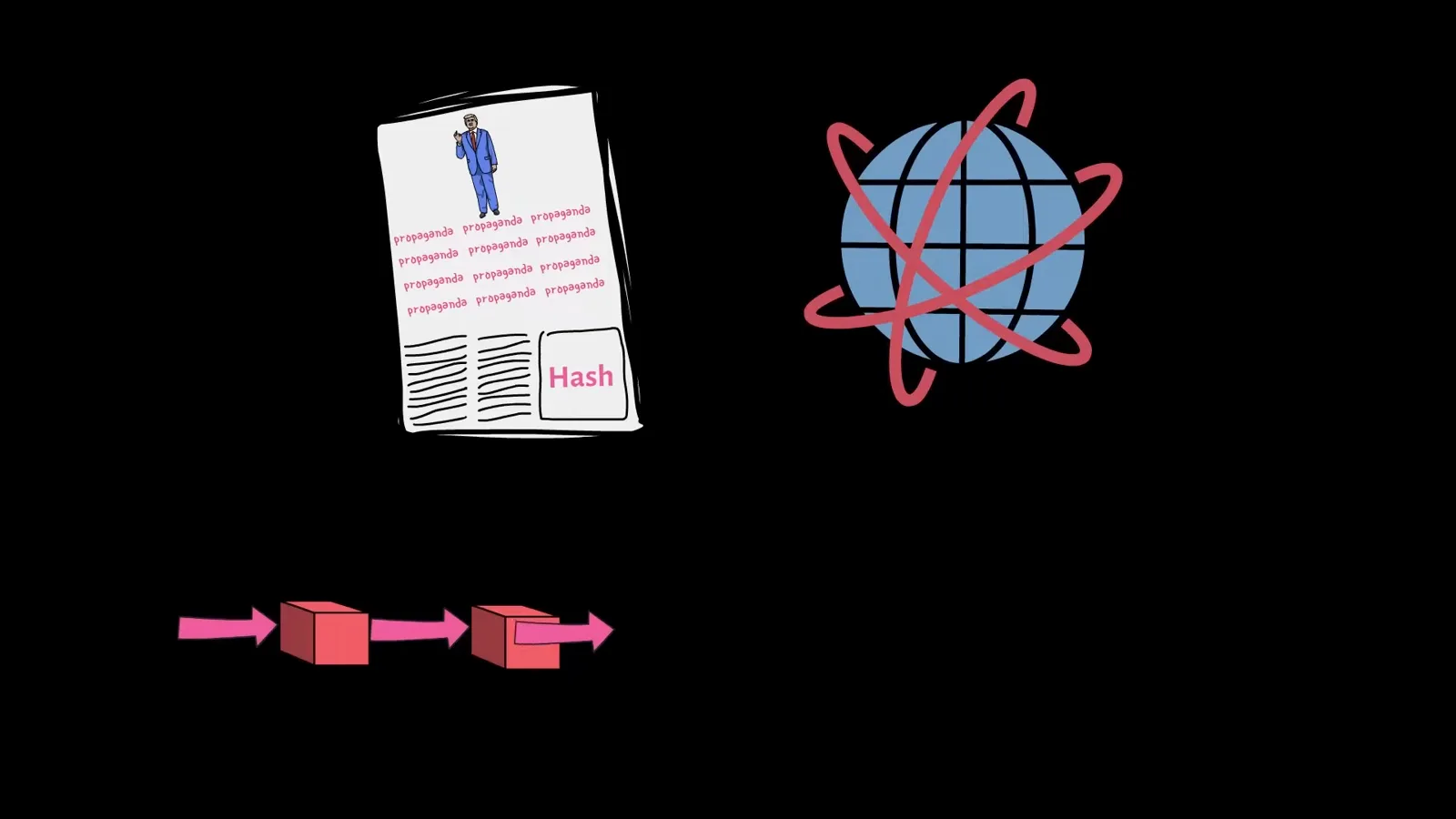
The pre-blockchain way to prove 'this existed on that day'.Watch at 15:20
Section 4: Proof of Work — the Paper's Heart
How do thousands of strangers agree on one chain? This is the section the whole paper hinges on.
- 10
The required zeros
To add a block, miners must find a number (the nonce) such that hashing the block — previous hash, transactions and nonce together — produces an output starting with a required number of zeros. There's no shortcut: only brute-force trial and error proves you spent the work.

Section 4, straight from the paper.Watch at 15:30 - 11
Hunting for a nonce
Miners start the nonce at zero and increment it, hashing the whole block each time. Every new nonce yields a completely different hash, so the search is pure probability — the energy spent trying is the 'work', and the found nonce is its proof.
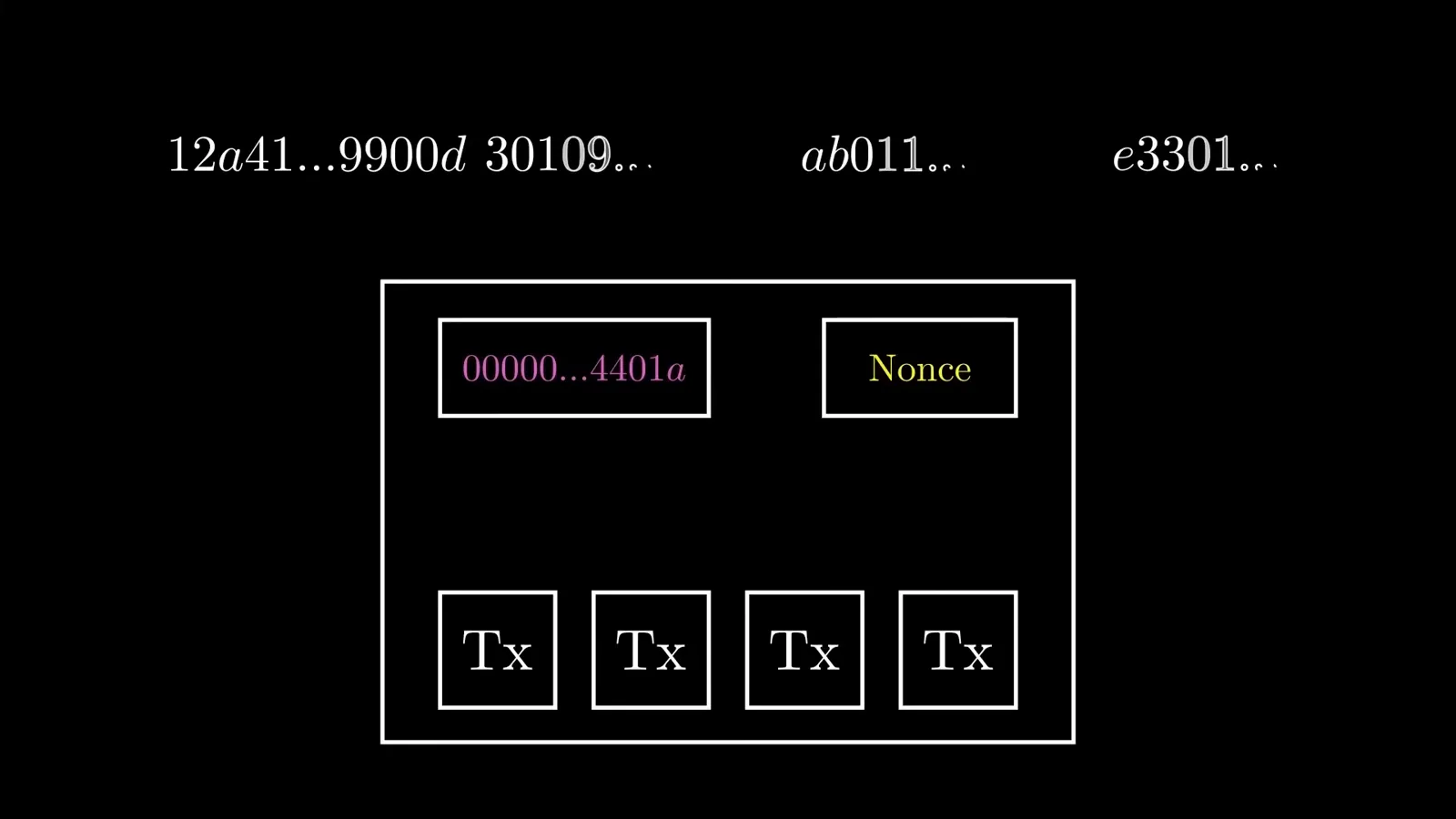
Increment, hash, repeat — until the zeros appear.Watch at 16:30 - 12
Forks and the longest-chain rule
Two miners can find valid blocks at nearly the same moment, splitting the network's view. Nodes keep whichever branch they heard about first — and the tie resolves the moment one branch extends further, because everyone switches to the longest chain.
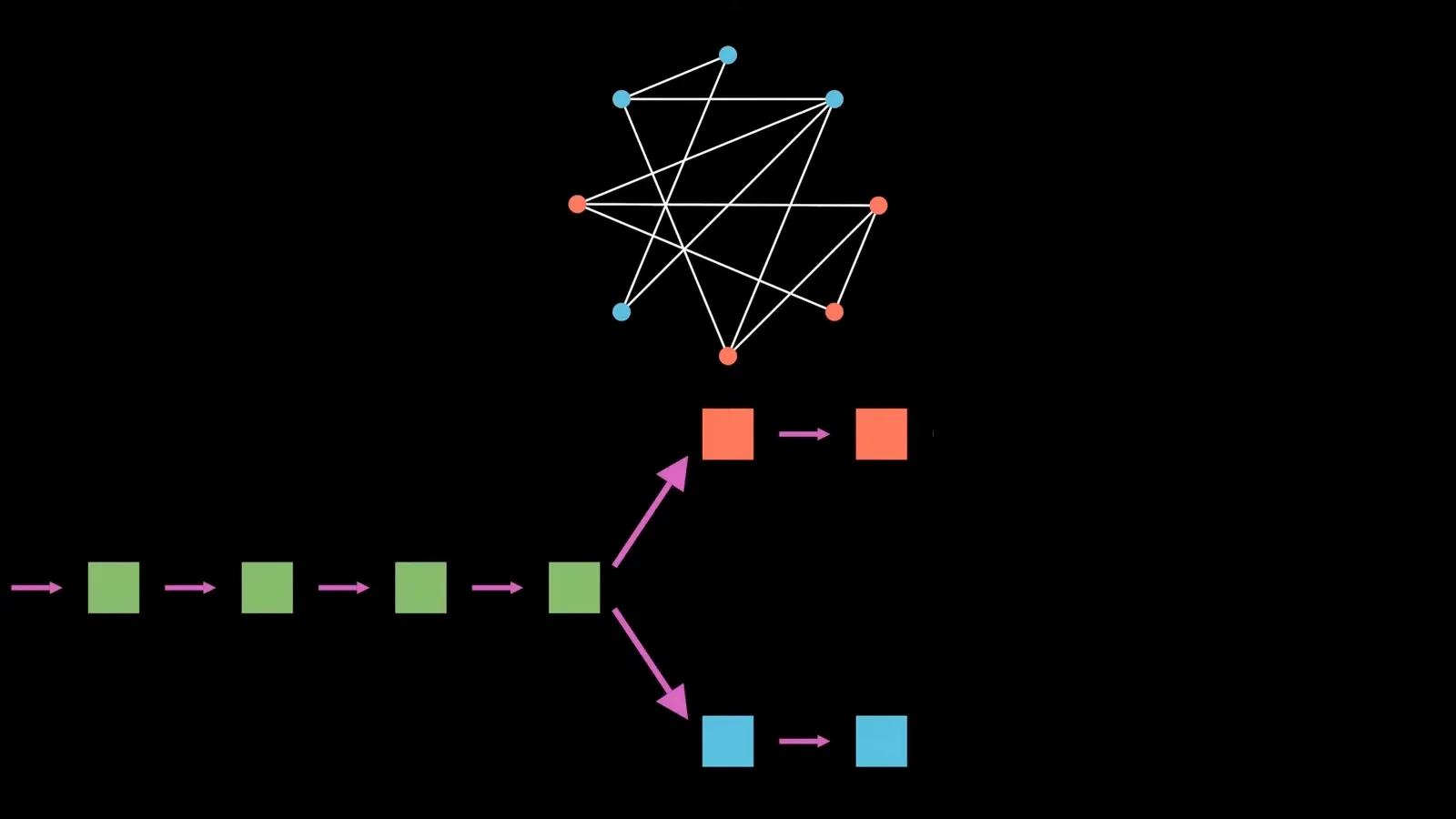
Disagreement is temporary; the longest chain always wins.Watch at 19:30
Sections 5–6: Running the Network, Paying for It
Six network steps keep everything in sync — and a clever coin-creation rule pays the people doing the work.
- 13
Section 5: the six steps of the network
New transactions are broadcast to all nodes; each node collects them into a block; each node hunts for the proof of work; when found, the block is broadcast; nodes accept it only if every transaction is valid and unspent; acceptance is expressed by building on that block next.
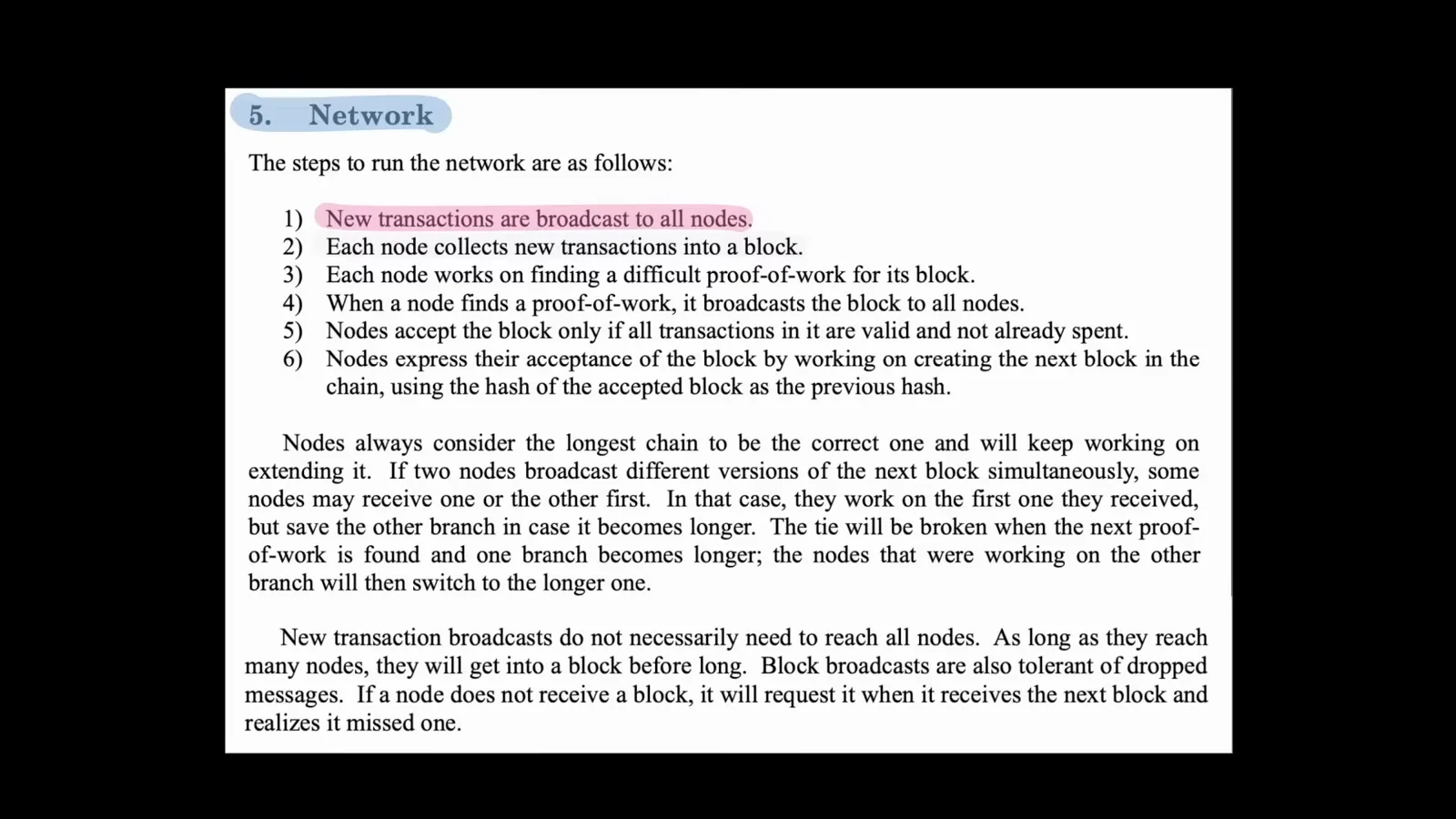
The whole protocol, in six lines.Watch at 20:42 - 14
Checking 'not previously spent' fast
To validate a block, nodes must confirm none of its coins were already spent. Instead of scanning the whole chain (O(n)), each node keeps an in-memory table of transaction IDs mapped to their block and position — searchable in O(log n) with binary search.
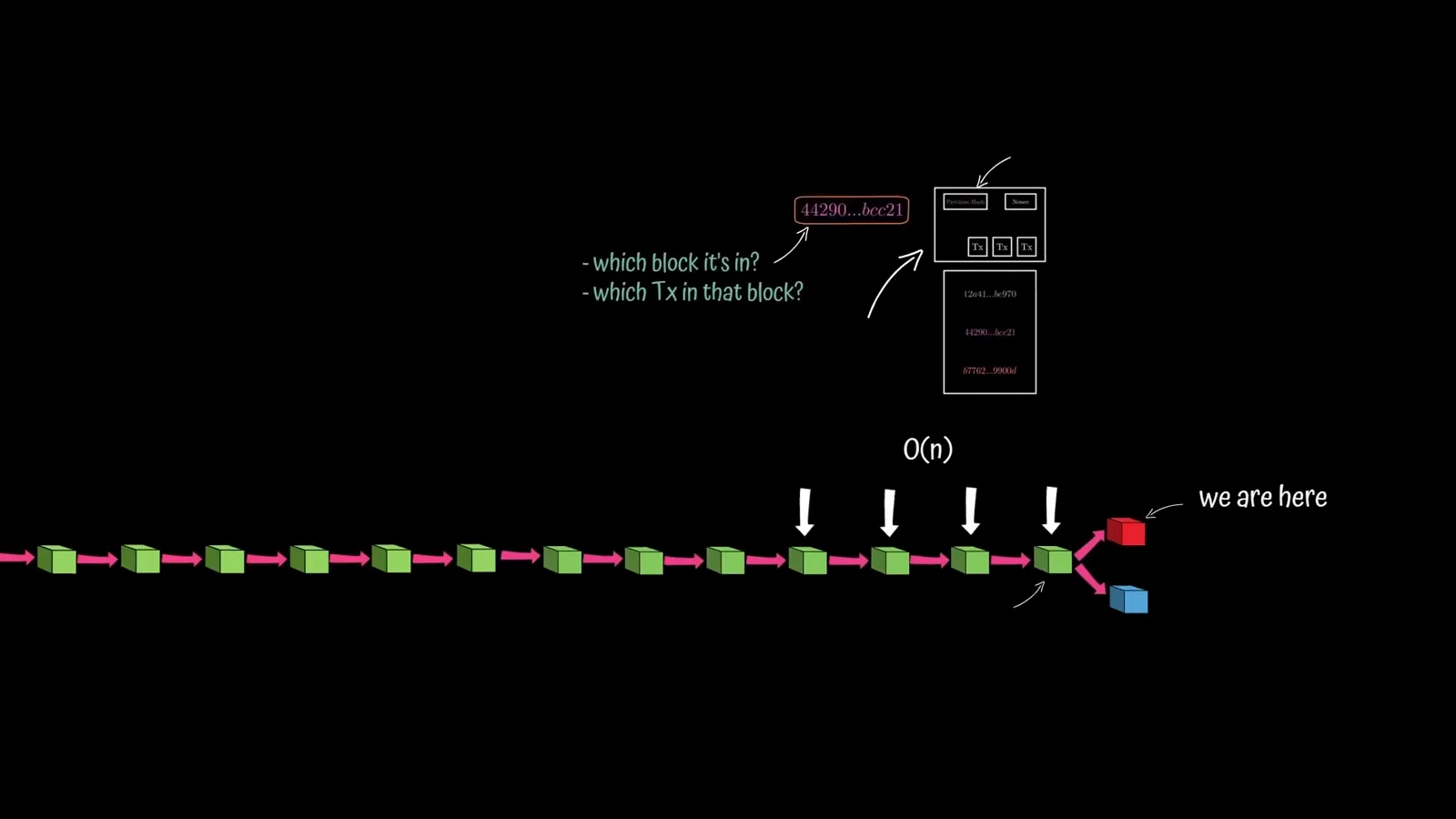
The paper already worried about lookup efficiency.Watch at 22:30 - 15
Section 6: where new coins come from
The first transaction in every block is special: it creates new coins from nothing and awards them to the miner. This incentive pays for the network's security, meters the money supply toward the 21 million cap — and, as the paper notes, makes honesty the most profitable strategy for even a powerful attacker.
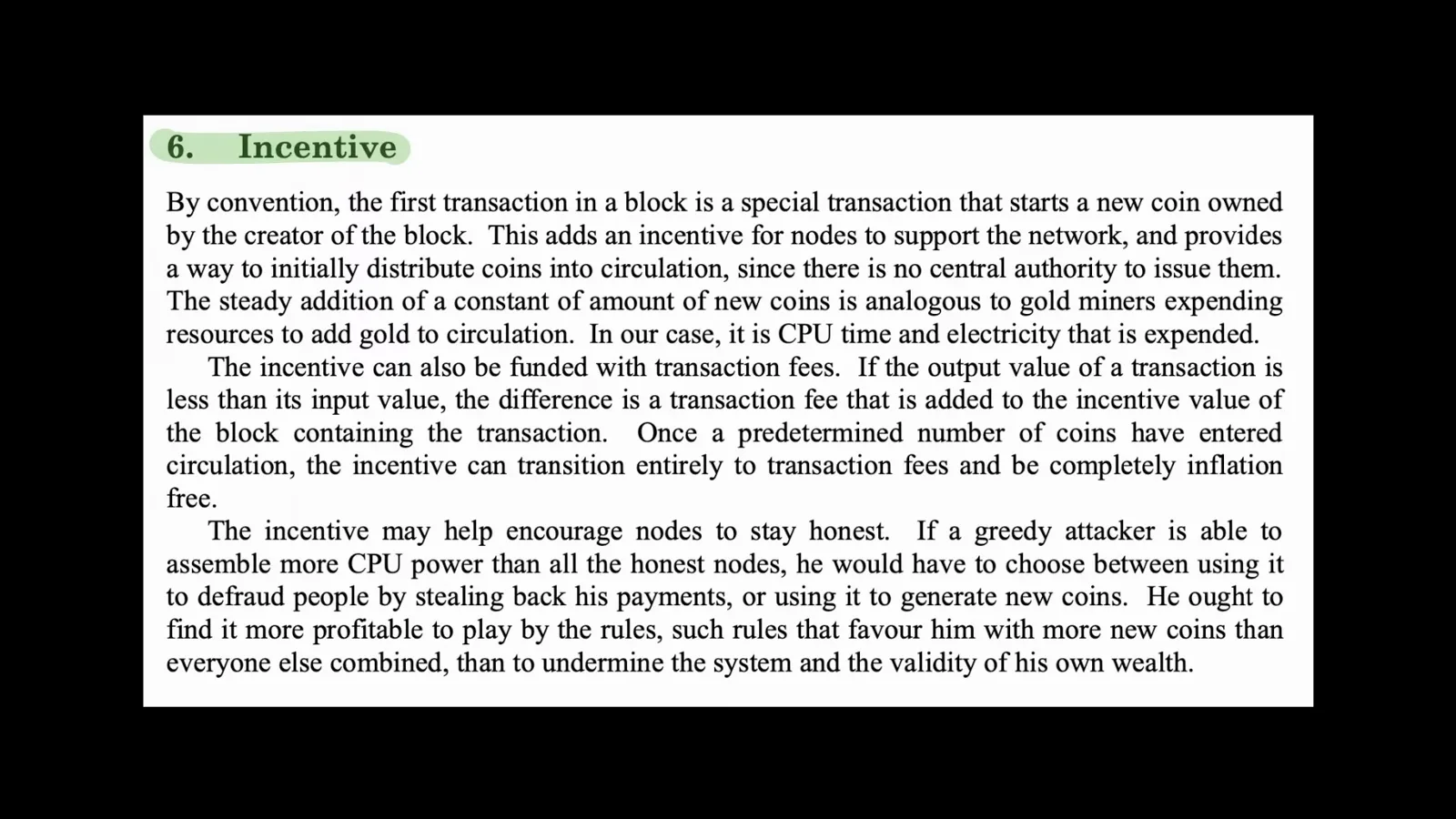
The coinbase transaction: security budget and monetary policy in one.Watch at 24:30
Sections 7–9: Merkle Trees, SPV and Handling Value
The most under-appreciated pages of the paper — the ones that make Bitcoin sustainable and lightweight.
- 16
Section 7: reclaiming disk space
Once a coin's latest owner is known, old transactions in the chain of ownership no longer need to be stored. The paper's answer is a Merkle tree: transactions are hashed pairwise up to a single root hash that lives in the block header, so spent transactions can be dropped without breaking the chain.
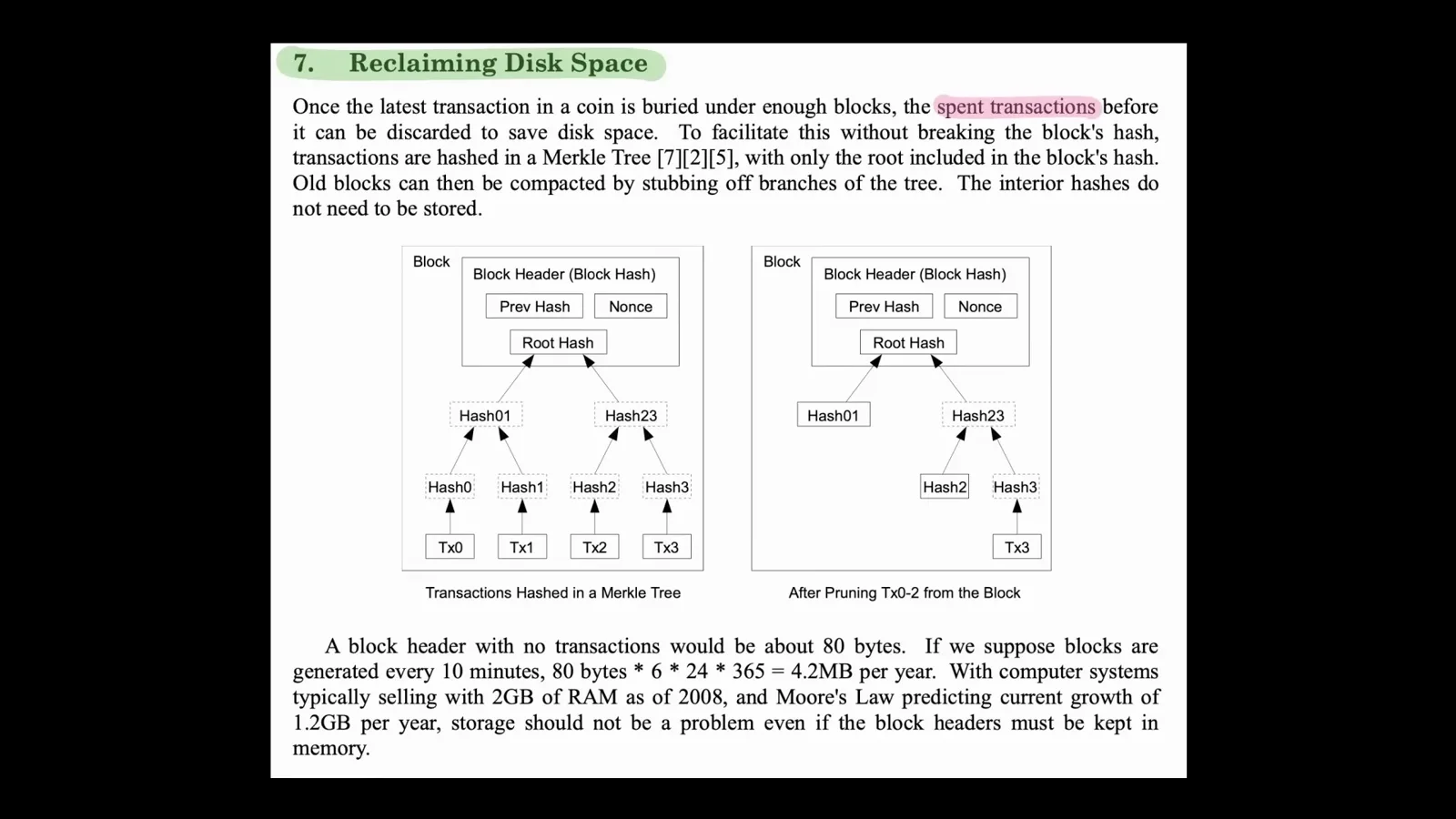
Prune history, keep the proof.Watch at 26:12 - 17
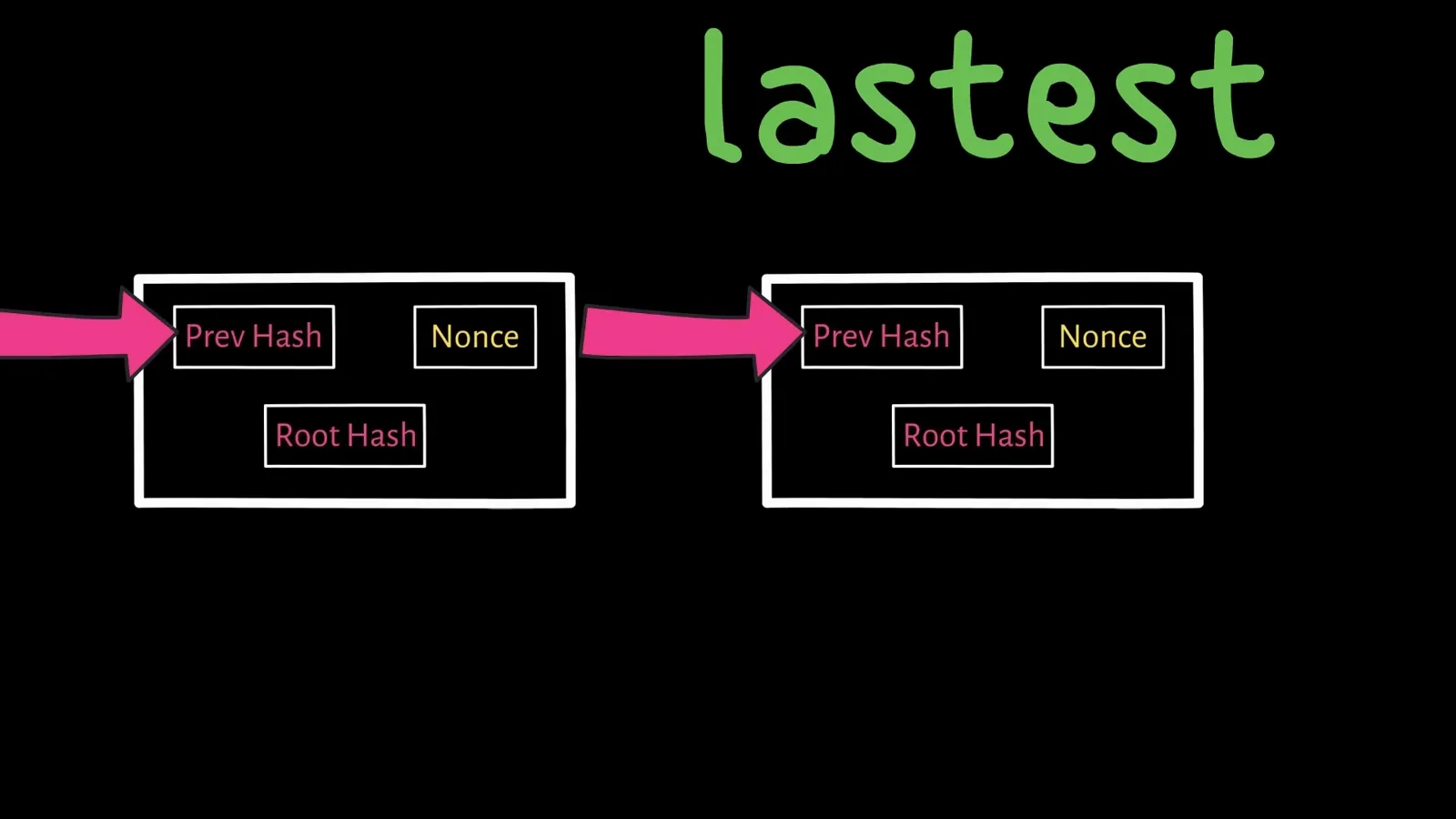
Inside the block header
The block header carries three things that matter: the previous header's hash, the Merkle root summarizing all transactions, and the nonce. Headers chain to each other — which is why a pruned node can still verify the chain of proof of work.
80 bytes per header is all a light client needs to track.Watch at 26:00 - 18
The Merkle tree, drawn out
Take every transaction's hash, pair them up, hash each pair, and repeat until one hash remains: the Merkle root. Only the green boxes need to be stored — everything red can be recomputed from them on demand.
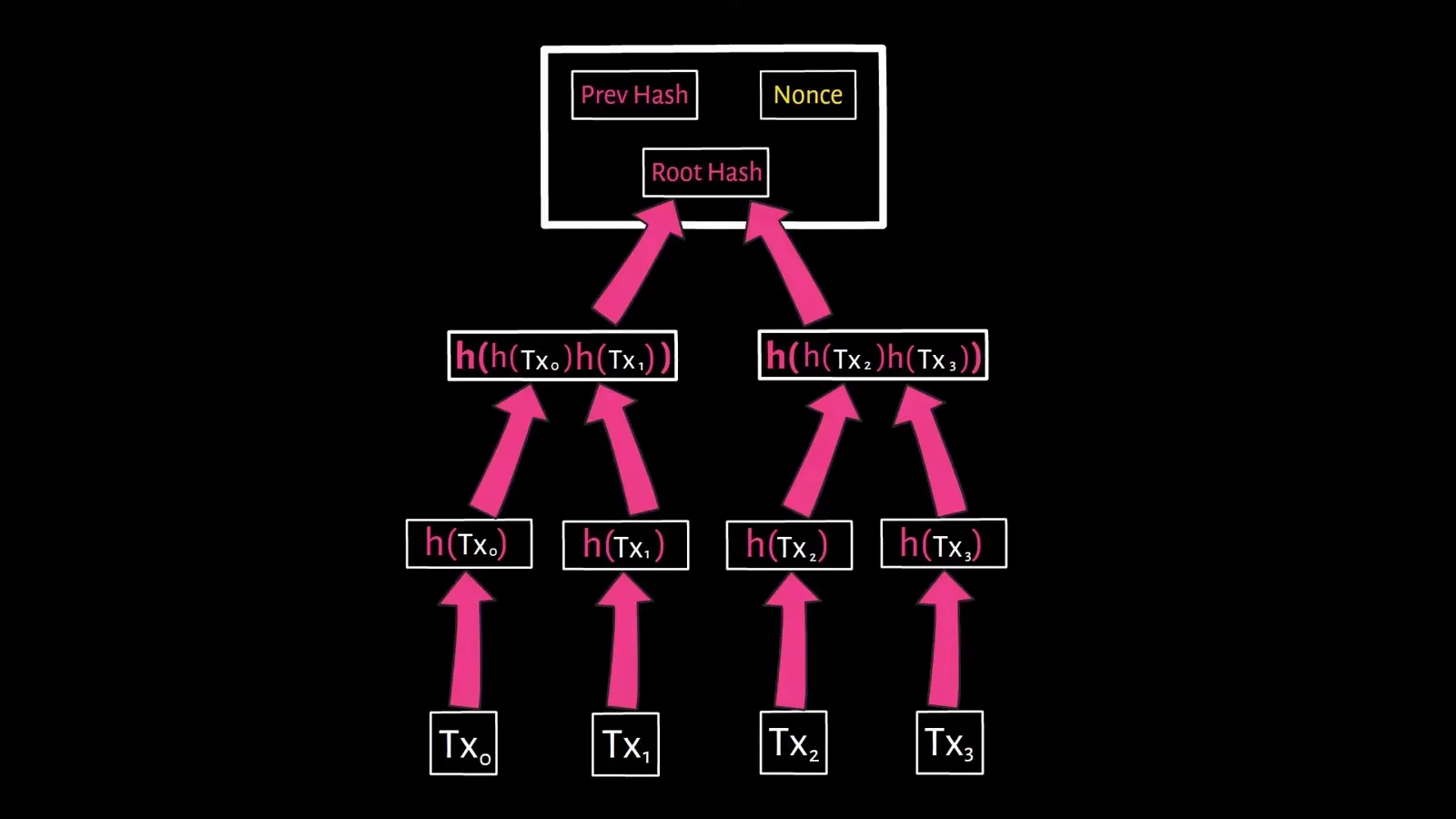
Thousands of transactions, one root hash.Watch at 29:00 - 19
Section 8: proving inclusion without storing the block
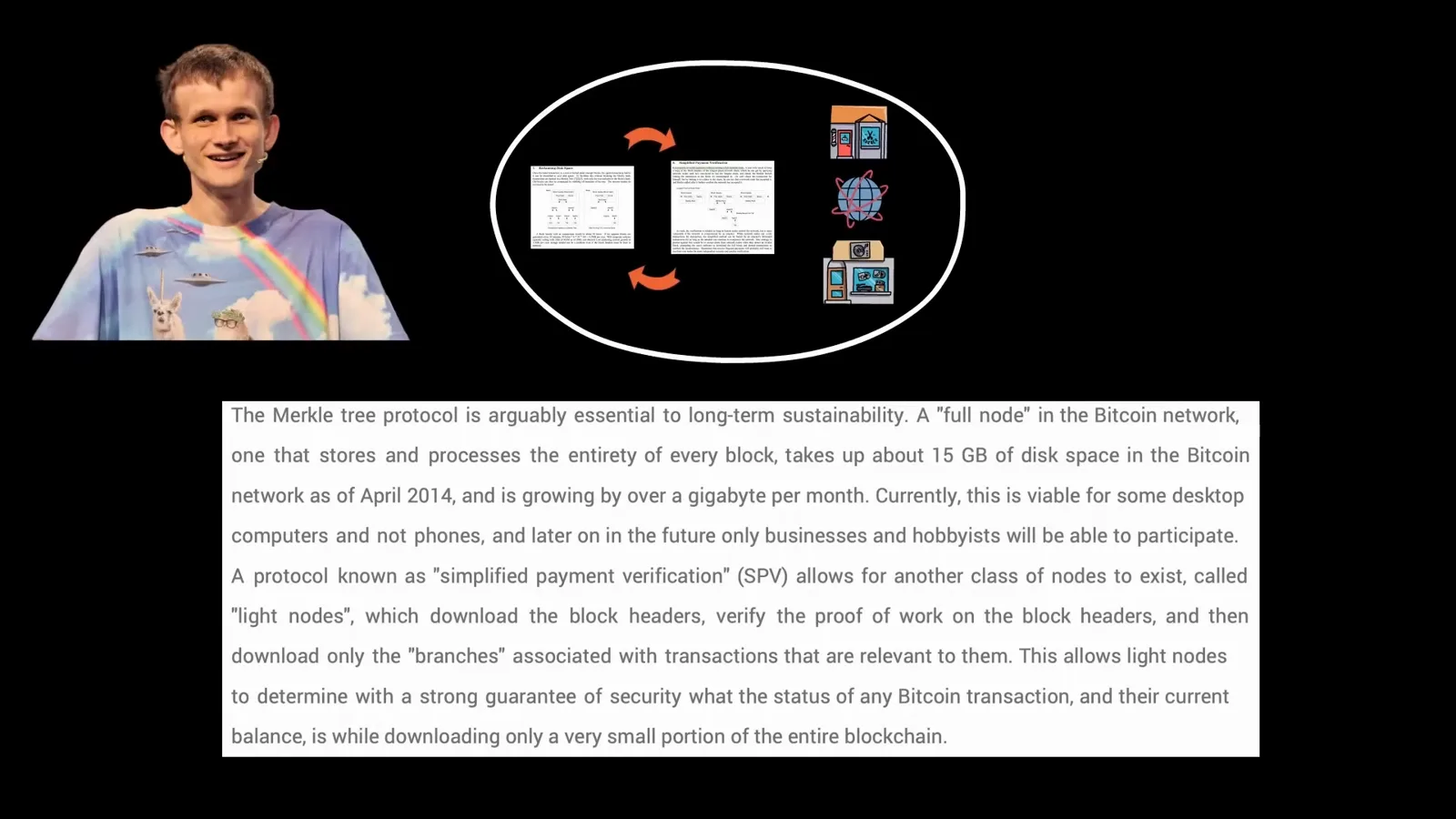
Ask 'was my transaction really in that block?' and a full node can answer with a Merkle proof: a handful of hashes that, combined with your transaction, reconstruct the root. That's simplified payment verification — the reason a phone can verify payments without storing 500+ GB.
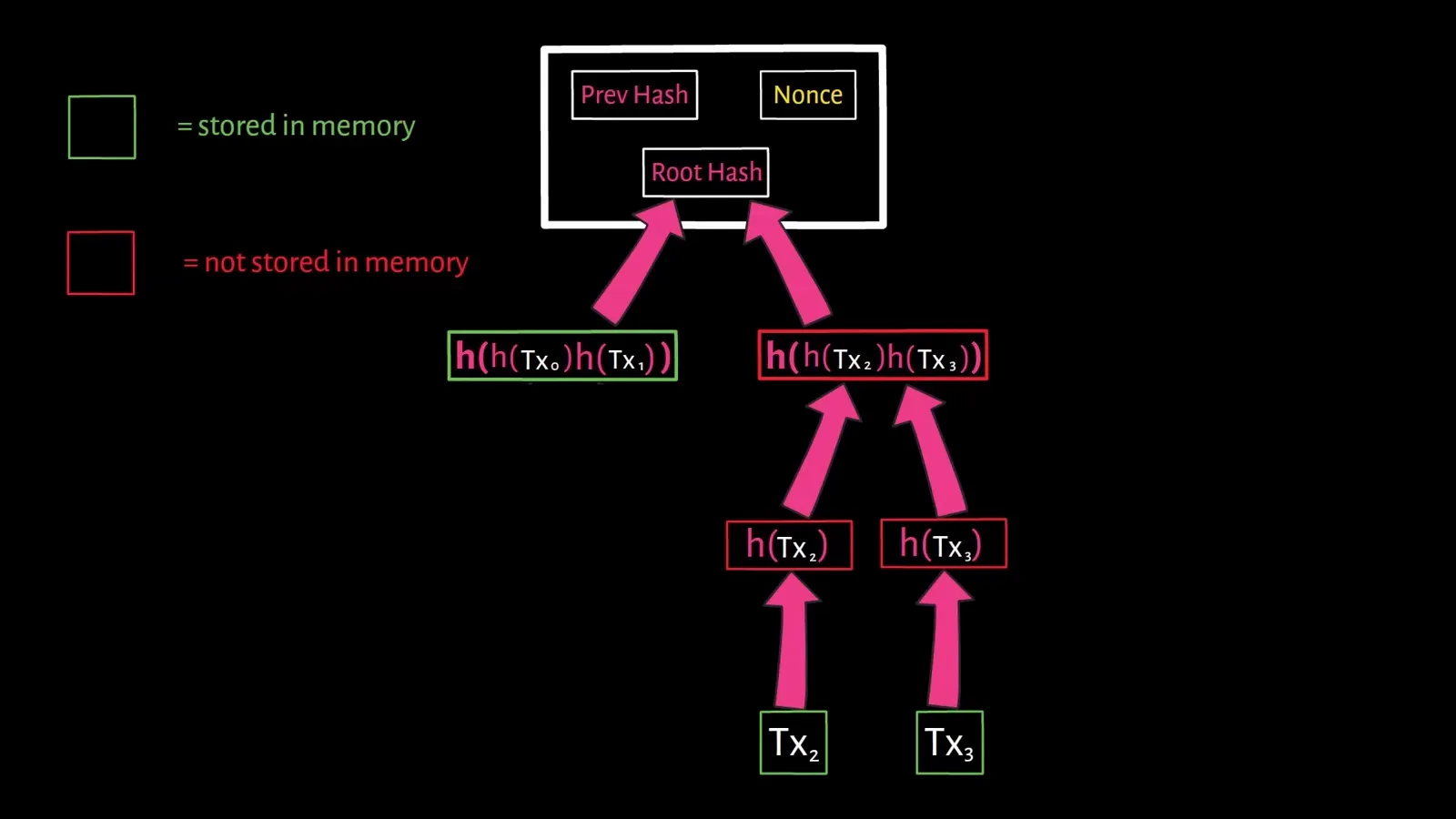
SPV in one picture: prove it, don't store it.Watch at 30:00 - 20
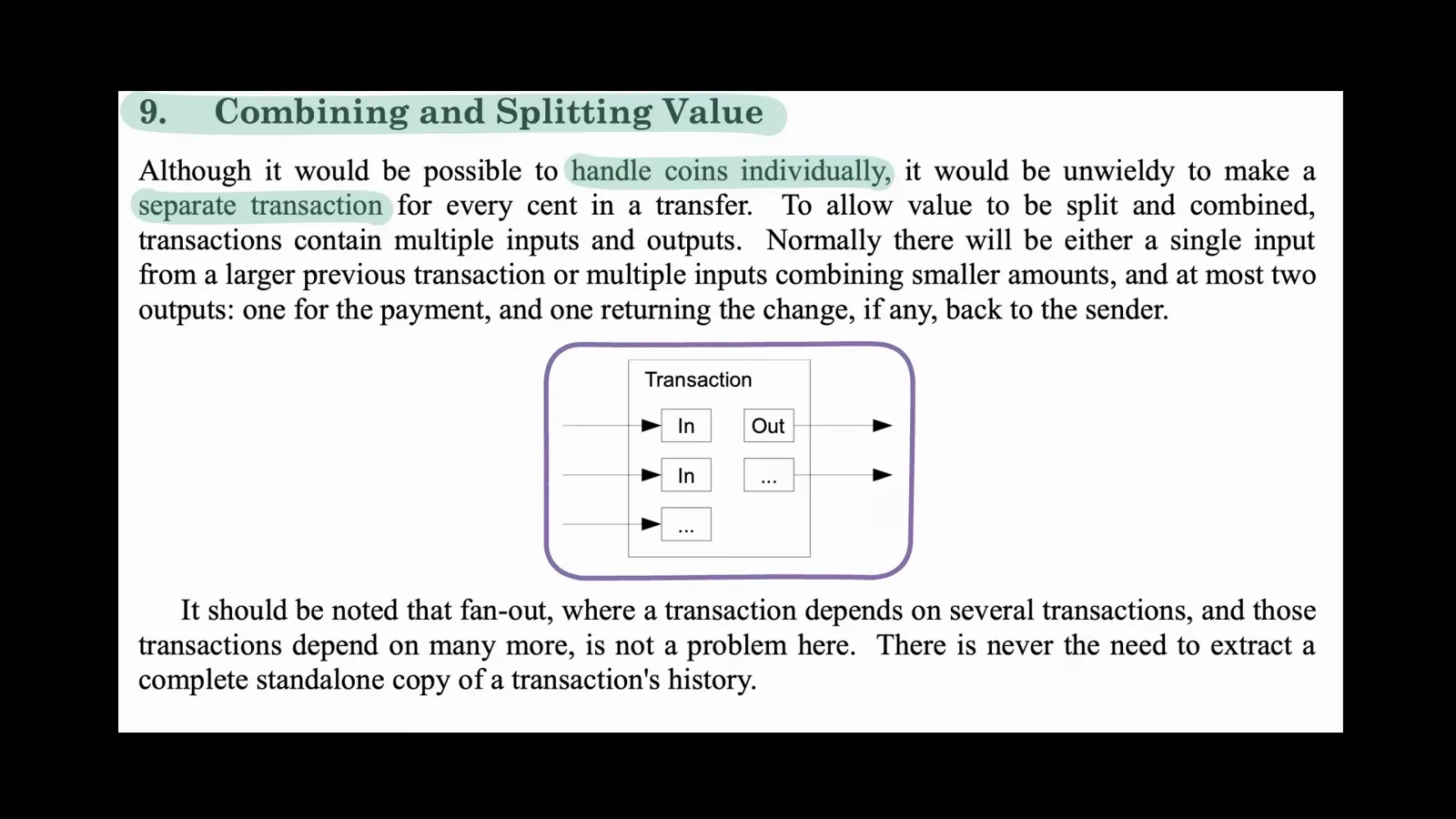
Section 9: combining and splitting value
Coins don't have to be passed one at a time. A transaction can gather several inputs and always produce two outputs — one to the recipient, one back to yourself as change. Value in must equal value out; the paper shows exactly this In/Out diagram.
Merge coins, split coins — same rule.Watch at 33:30 - 21
The cash register analogy
Paying $1.55 with a dollar bill, a 50-cent coin and a 10-cent coin works exactly like Bitcoin: you hand over everything you have, and the 'cashier' returns 5 cents of change. That's why Bitcoin transactions so often pay themselves back.
No 'cutting' coins — just pay and take change.Watch at 34:00
Sections 10–12: Privacy, the Attack Math, the End
The paper closes with its most dated section and its most rigorous one.
- 22
Keeping the UTXO set straight
With every transaction public, each node tracks which outputs remain spendable. The paper's chain-of-ownership plus the transaction-ID table from section 5 is what modern nodes implement as the UTXO set — the list of coins that can still be spent.
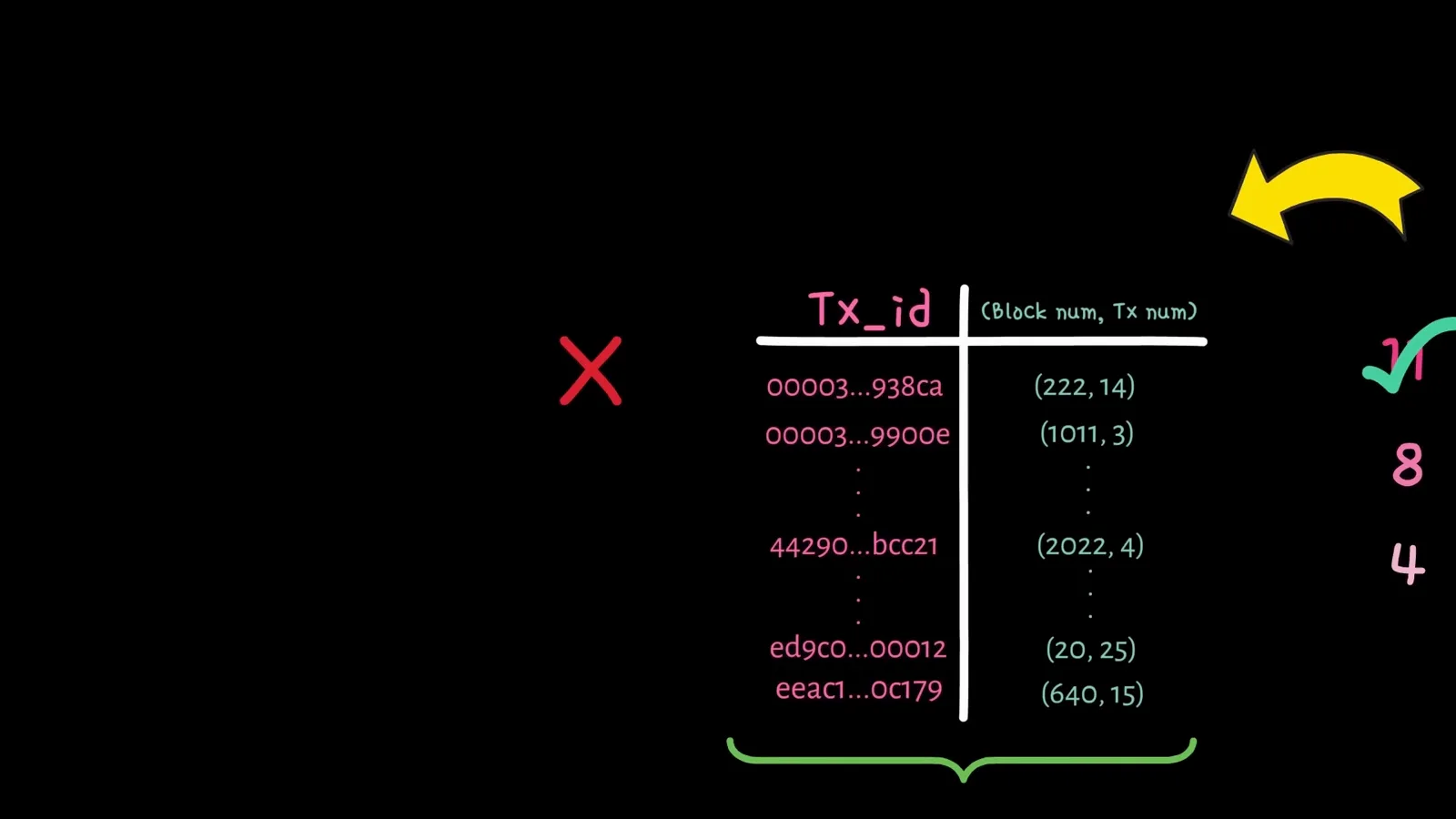
Every coin is either spendable or spent — nothing else exists.Watch at 37:00 - 23
Section 10: privacy — the paper's most dated claim
The paper argues privacy holds because identities are public keys, not names — the public can see transactions flow, but not who they belong to. Written before exchanges tied keys to bank accounts, it's the section reality has most thoroughly revised.
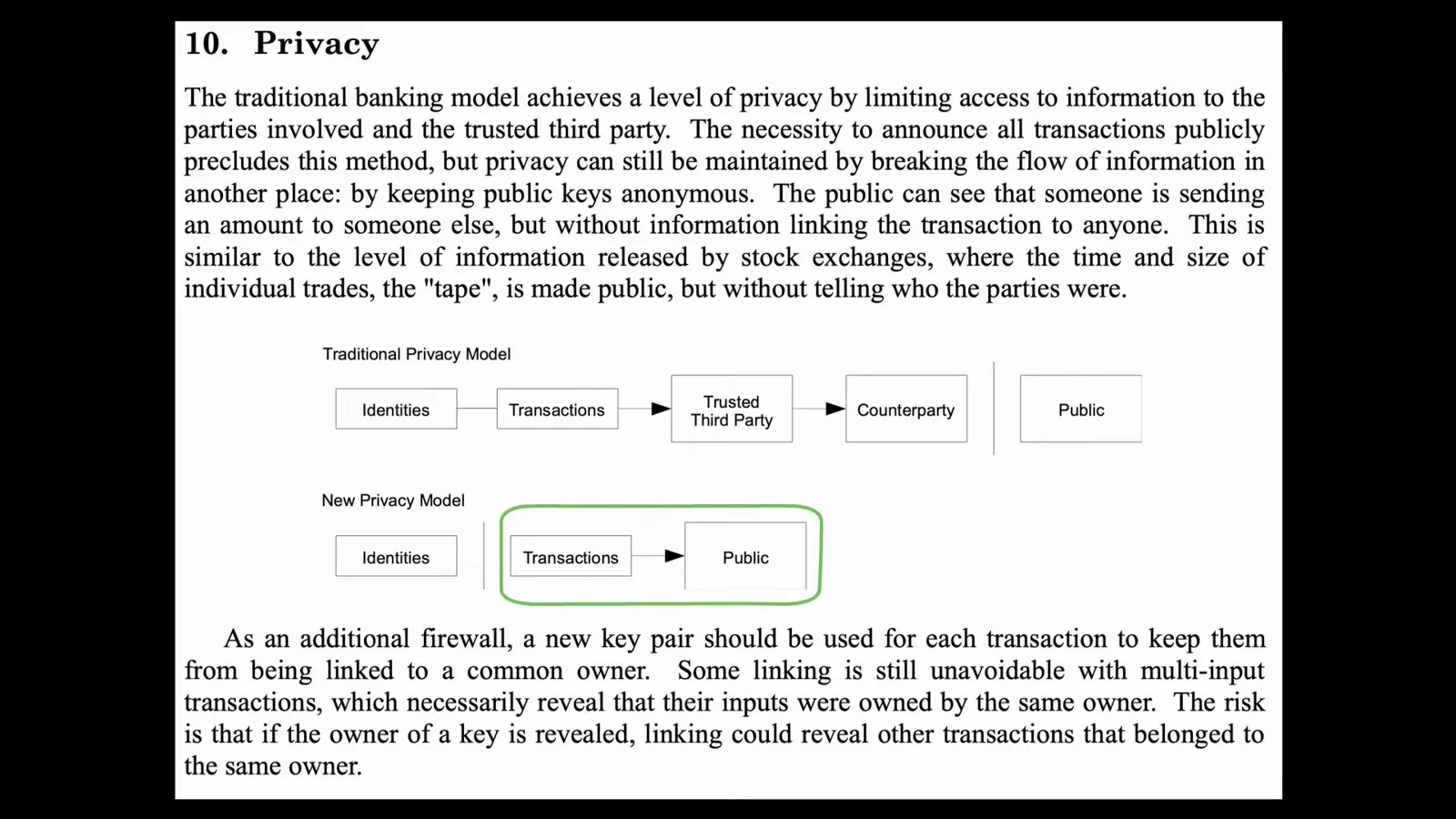
Section 10: honest for 2009, optimistic for 2025.Watch at 38:00 - 24
Section 11: how safe are your confirmations?
Satoshi computes the odds that an attacker with less than half the network's power can catch up after you accept a payment. At 10% of the hash power, the attacker catches up just 20.5% of the time after one confirmation — and effectively never after six. That table is where the six-confirmation convention comes from.
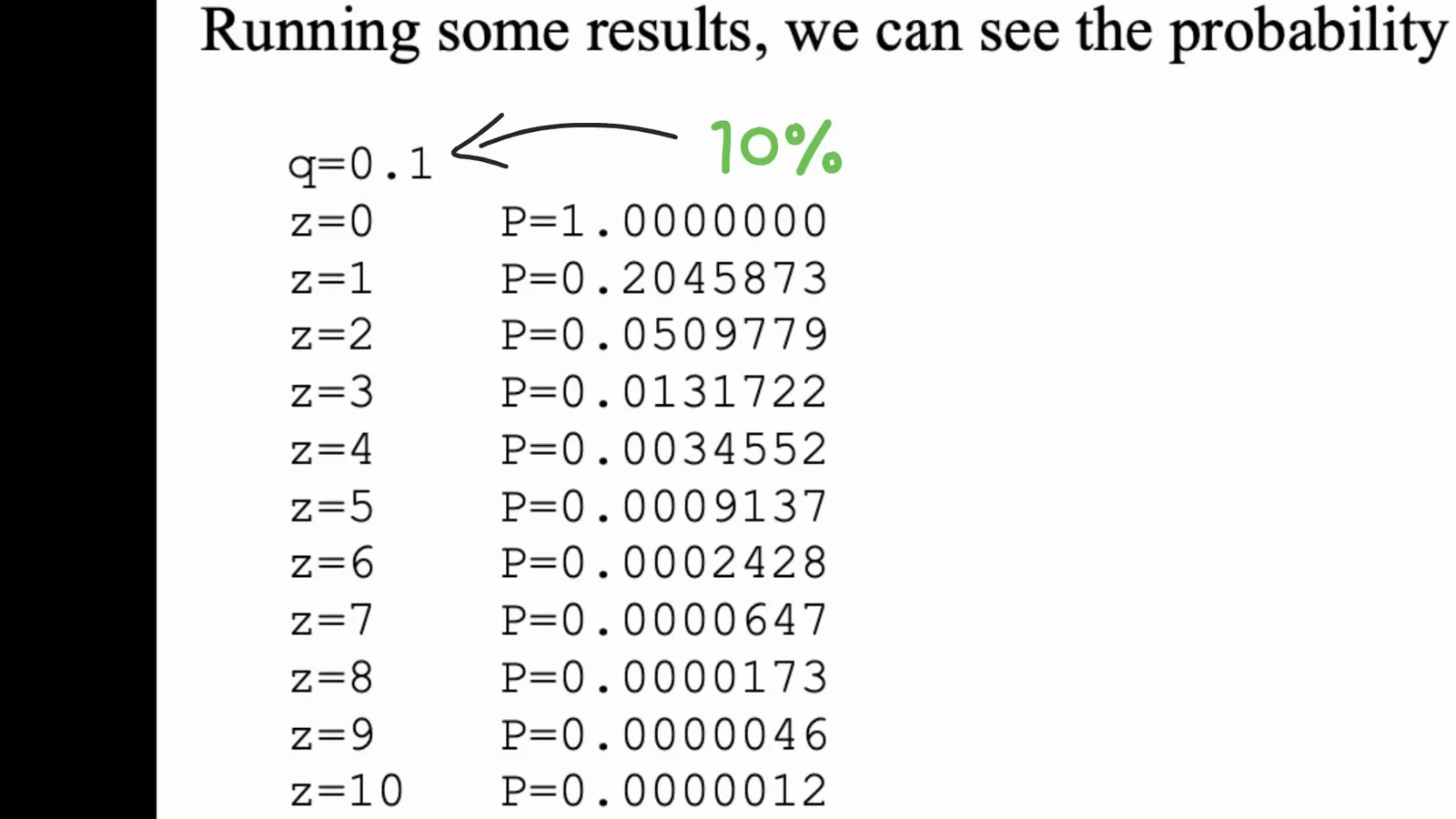
The math behind 'wait for six confirmations'.Watch at 41:00
Frequently Asked Questions
How long is the Bitcoin whitepaper and how long does it take to read?
Which section of the whitepaper is the most important?
What is the double-spending problem the whitepaper solves?
What are Merkle trees and why do they matter?
Is the whitepaper still accurate today?
Where can I read the original Bitcoin whitepaper?
Continue the Story
What Is the Genesis Block?
The whitepaper's first real-world proof: block 0, the Times headline and the unspendable 50 BTC.
Bitcoin Halving History, Frame by Frame
Section 6's incentive design in action — the four-year reward schedule and what it means.
Mt. Gox Collapse: The Complete Timeline
What happens when trust replaces the paper's proof — crypto's first great exchange failure.
Bitcoin History: The Complete Guide
From the Halloween 2008 email to ETF approval — the full arc the paper started.
The Cypherpunk Movement
The manifestos, mailing lists and crypto wars that set the stage for Satoshi's paper.
References
Extended Multimedia Reference
Visual sequences and chronologies in this guide cross-reference video documentation “The Bitcoin Whitepaper | Fully Explained (With Animations!)” by RedBlockBlue.
This illustrated guide is maintained strictly for educational, research, and historical documentation purposes. None of the materials constitute investment, financial, legal, or trading advice. Historical crisis and market events are documented from public archives. Digital assets involve significant risks.