Bitcoin Halving History, Frame by Frame
Every four years, Bitcoin's mining reward is cut in half. Walk through the full reward schedule from 50 BTC to 6.25 BTC, the monetary reasoning behind it, and the mechanics that keep the schedule honest.
7 minutes • 11 illustrated steps • In-depth historical chronology & technical analysis
Editorial Research & Chronological Archive
Independently synthesized and cross-verified by The Blockchain History Editorial Board using primary whitepapers, historical archives, and on-chain records.
What is the Bitcoin halving?
The Bitcoin halving is a built-in event that cuts the block reward paid to miners in half every 210,000 blocks — roughly every four years. The reward started at 50 BTC in 2009, then fell to 25 BTC (2012), 12.5 BTC (2016), 6.25 BTC (2020) and 3.125 BTC (2024). Satoshi hard-coded it to taper Bitcoin's issuance toward its 21 million cap, making new supply increasingly scarce instead of infinitely printable.
Key Takeaways
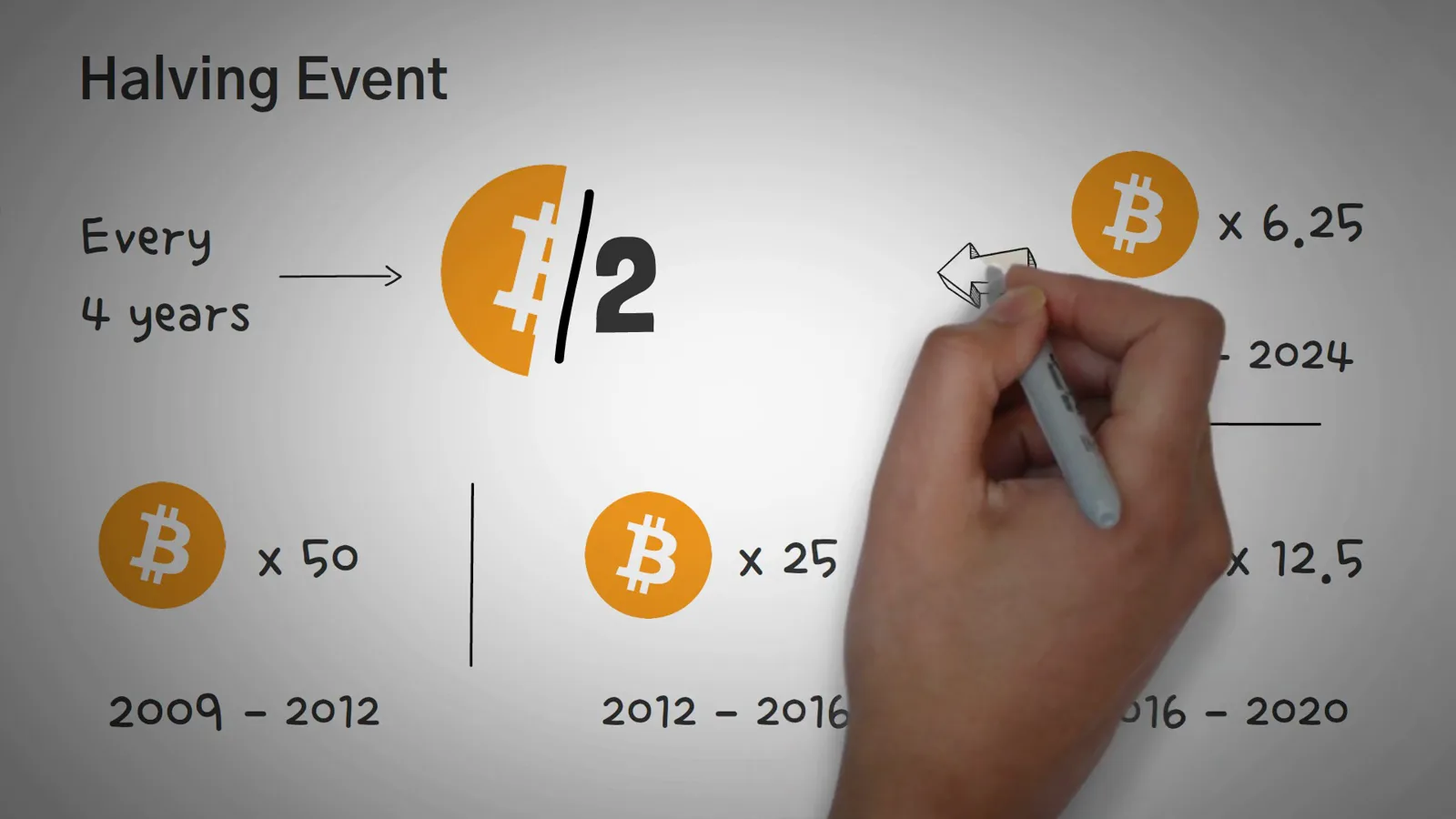
- The block reward has been cut in half four times so far: 50 BTC (2009–2012), 25 BTC (2012–2016), 12.5 BTC (2016–2020), 6.25 BTC (2020–2024) and 3.125 BTC since April 2024.
- Halvings are measured in blocks, not dates: every 210,000 blocks, which lands at roughly four years given Bitcoin's ten-minute block target.
- The motivation is monetary: fiat currencies can be printed at will and lose value through inflation, while Bitcoin's issuance tapers toward a hard 21 million cap.
- Bitcoin keeps itself on schedule with a difficulty adjustment every 2,016 blocks (about two weeks), compensating for miners joining or leaving.
- For holders, halvings are a non-event you do nothing for — but each one cuts new sell pressure in half. For miners, revenue drops overnight unless prices or efficiency compensate.
- Lost coins plus a shrinking issuance schedule mean Bitcoin's effective supply growth keeps falling — the video argues it can even turn deflationary.
What Is Being Halved?
The halving is about one specific number: the reward miners collect for appending the next block.
- 1
The reward for winning the block race
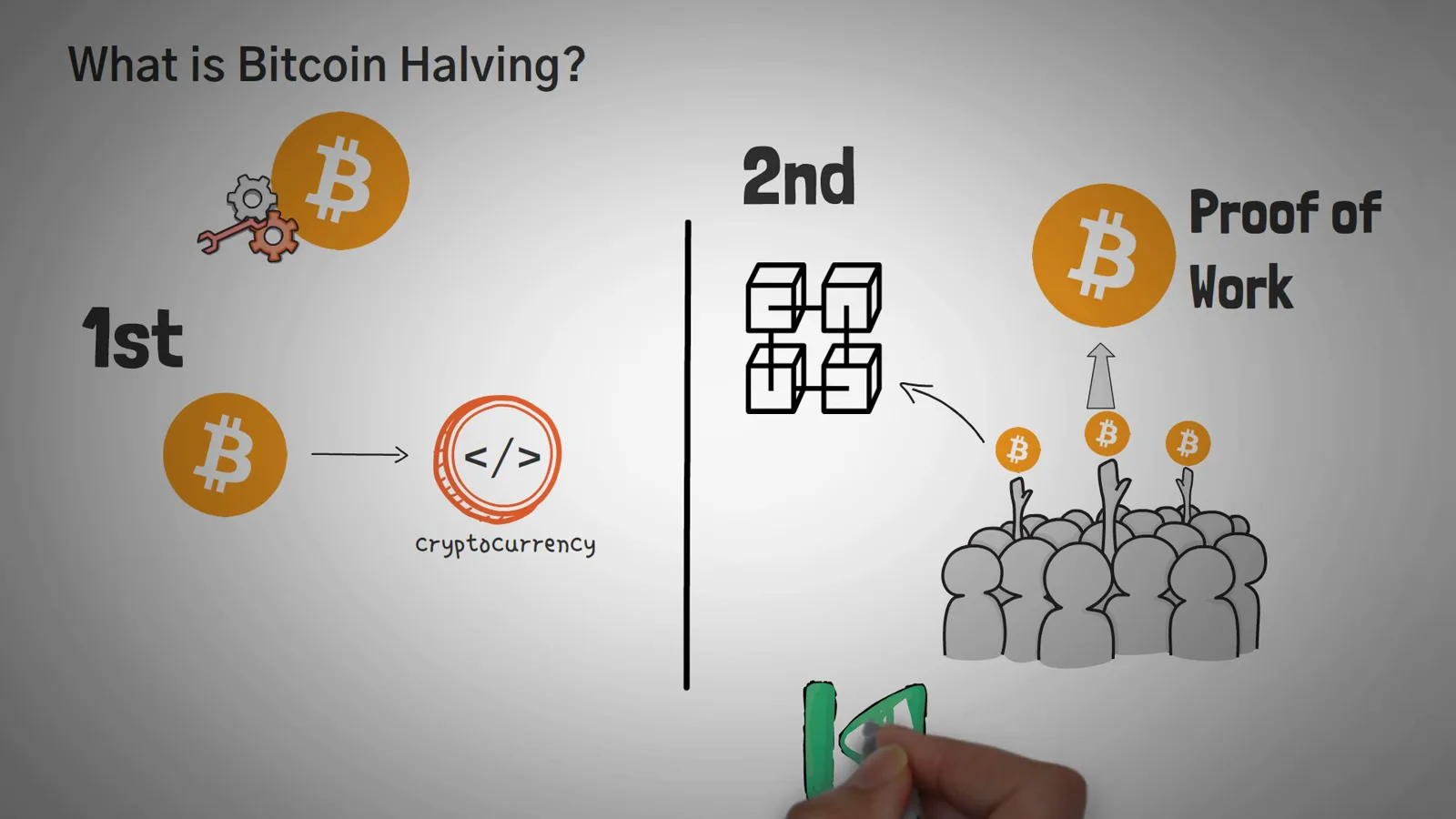
Bitcoin runs on proof of work: miners compete to solve a puzzle, and the winner both earns freshly issued bitcoin and gets to add the next block to the chain. That reward is the number the halving cuts.
Proof of work: race, win, collect the reward.Watch at 1:22 - 2
2009–2012: the 50 BTC era
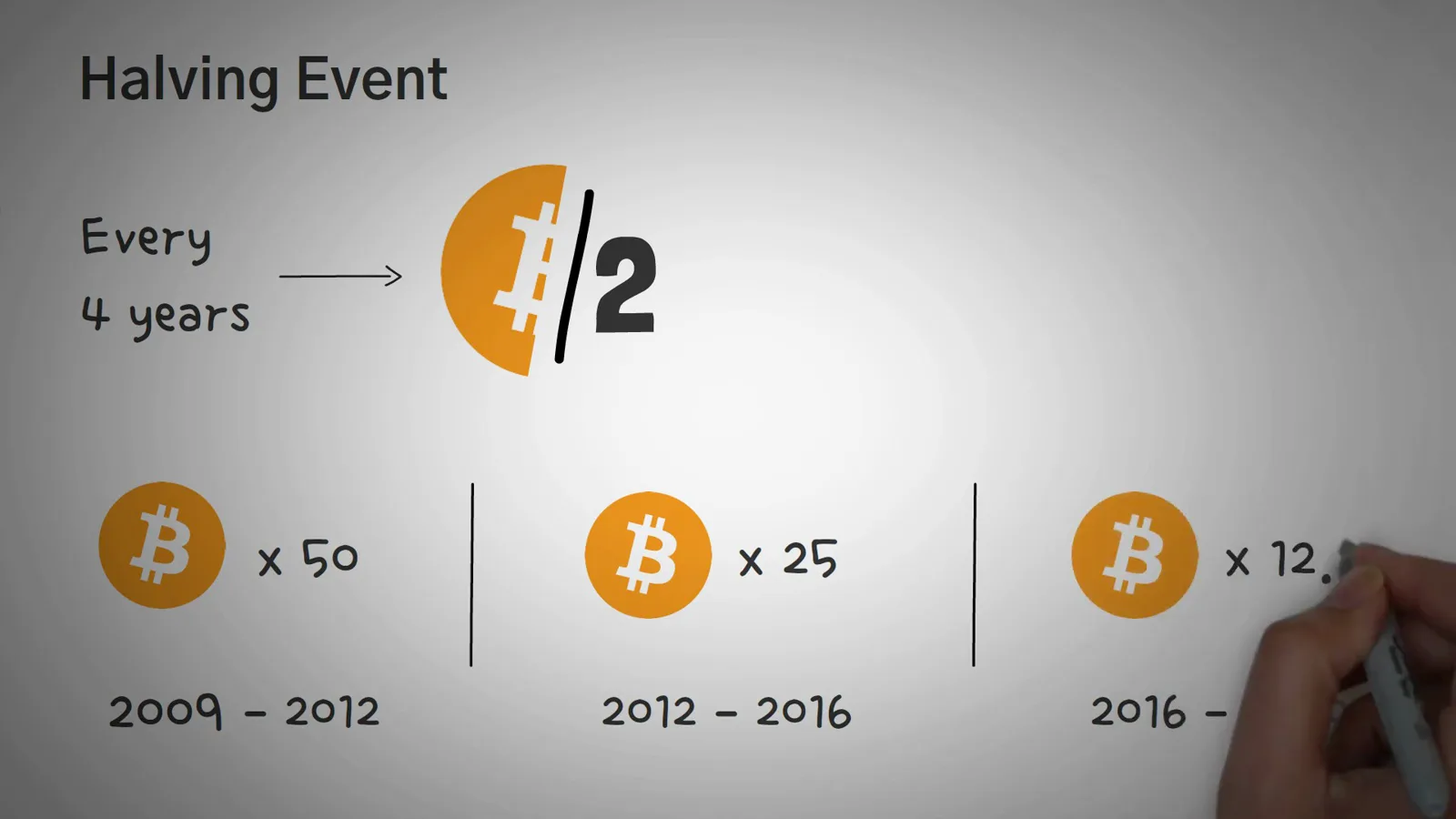
From Bitcoin's launch in January 2009 until late 2012, every mined block paid 50 bitcoins. At one block every ten minutes, that pace issued new coins around the clock — the network's entire money supply grew from these rewards.
50 BTC per block: the era when a CPU was enough.Watch at 2:00 - 3
The full schedule on one whiteboard
Every four years the reward falls by half: 50 BTC (2009–2012), 25 BTC (2012–2016), 12.5 BTC (2016–2020), 6.25 BTC (2020–2024) — and, as the video anticipates, 3.125 BTC after April 2024. Each step is hard-coded, not voted on.
The full epoch schedule Satoshi wrote into the code.Watch at 2:10
Why Cut the Reward at All?
The halving is Bitcoin's answer to a monetary problem every fiat currency has.
- 4
Fiat: print more whenever needed
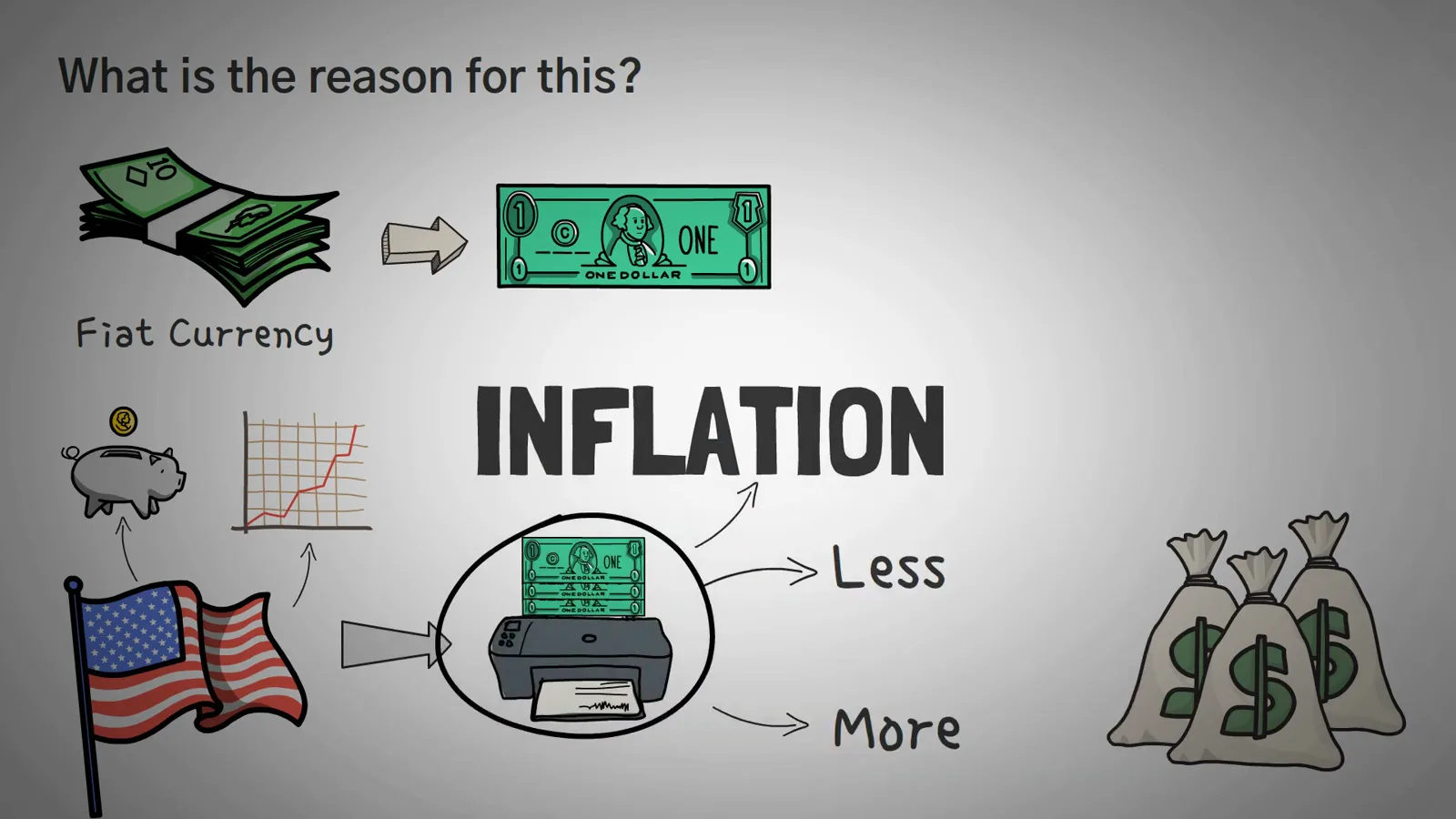
A central bank can print more cash whenever it wants to hit economic goals. Humans, the video notes, tend to print more than needed — and each extra bill makes the existing ones worth slightly less.

The fiat baseline: supply grows on demand.Watch at 2:28 - 5
Inflation, visualized
That ever-growing supply is inflation: the same goods cost more because the currency buys less. The whiteboard makes the point with a money printer — more output, less value per unit, year after year.
Printing more means each unit buys less.Watch at 2:48 - 6
Bitcoin's answer: a hard cap and falling issuance
Bitcoin is different: supply growth is fixed by code and shrinks with every halving, toward a hard limit of 21 million coins. And because coins are permanently lost every year — sent to wallets nobody can open — the circulating supply can even shrink, which is why the video calls Bitcoin theoretically deflationary.
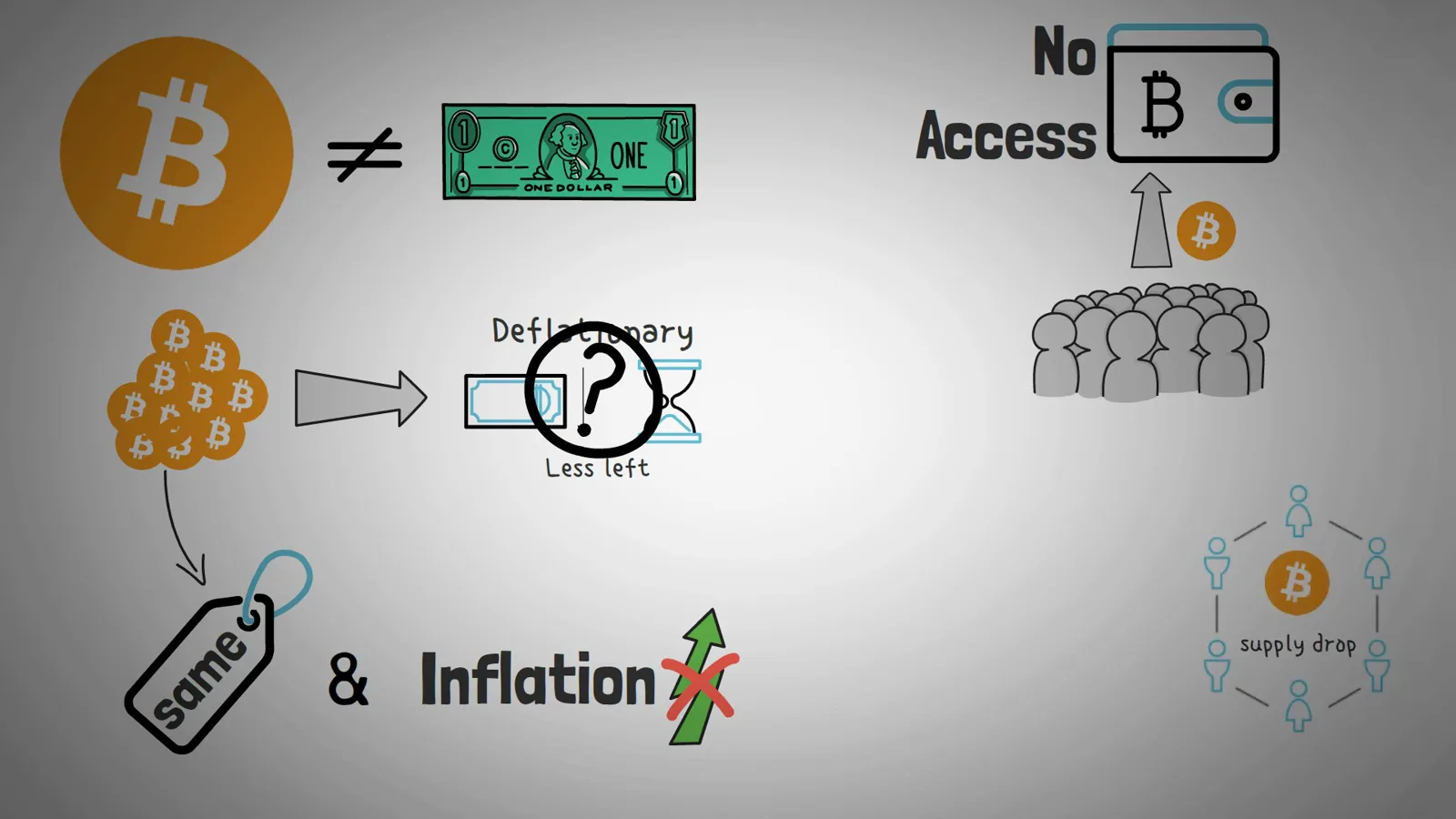
Fewer new coins + lost coins = tightening supply.Watch at 3:44
How Bitcoin Keeps the Schedule Honest
The halving doesn't follow the calendar. It follows the chain — with a self-correcting clock.
- 7
210,000 blocks, not four years
Bitcoin doesn't use real-world time to trigger halvings; it counts blocks. Every 210,000 blocks the reward is cut in half. Since a block is targeted at ten minutes, 210,000 blocks lands at roughly four years — but the block count, not the date, is authoritative.
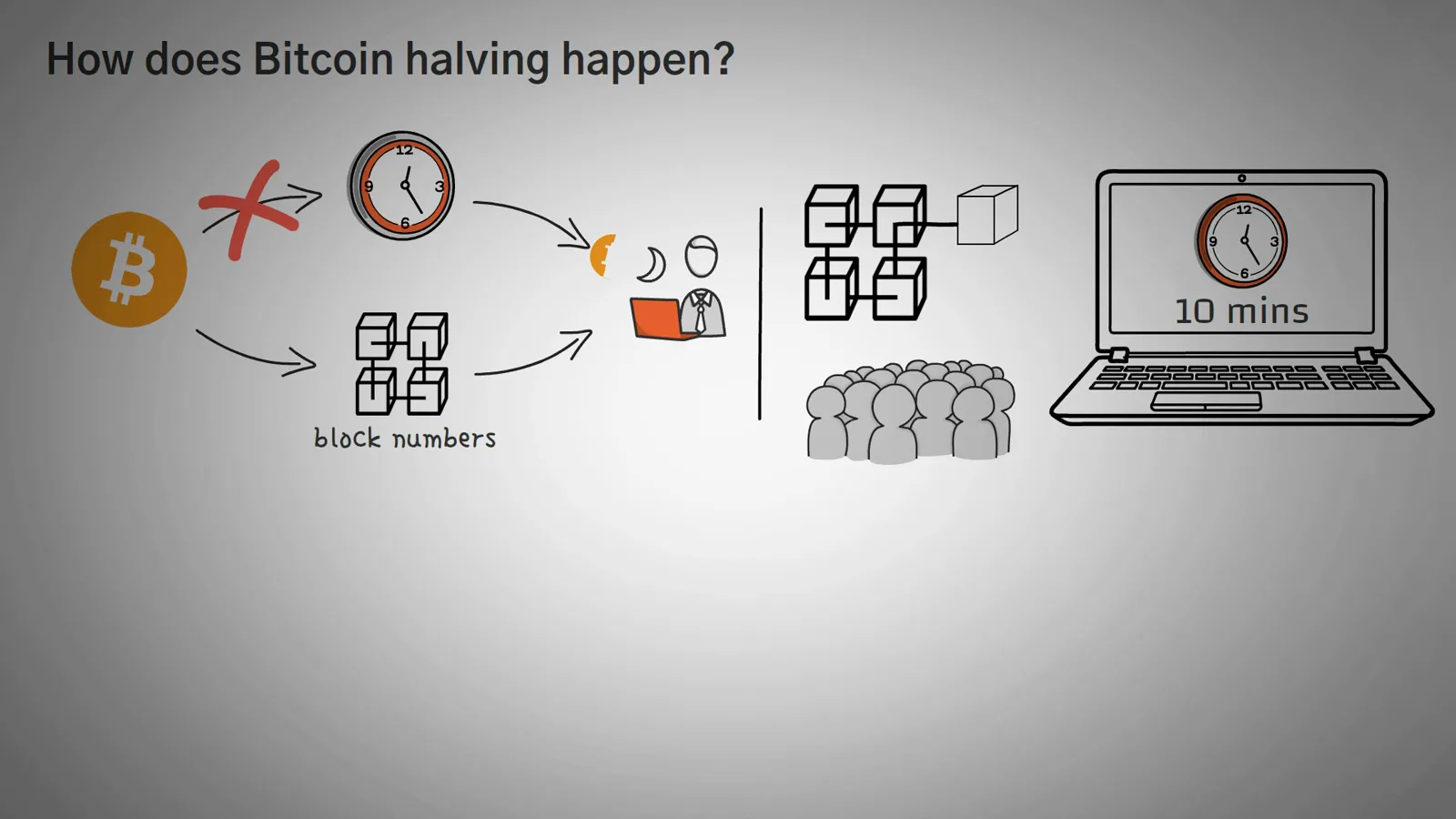
The chain's own clock: 210,000 blocks per epoch.Watch at 4:18 - 8
The difficulty adjustment: a clock that self-corrects
What if miners join or leave? Bitcoin adjusts its mining difficulty every 2,016 blocks (about two weeks), making the puzzle harder or easier so the ten-minute average holds. That's why halvings stay near their four-year rhythm even as mining power swings.
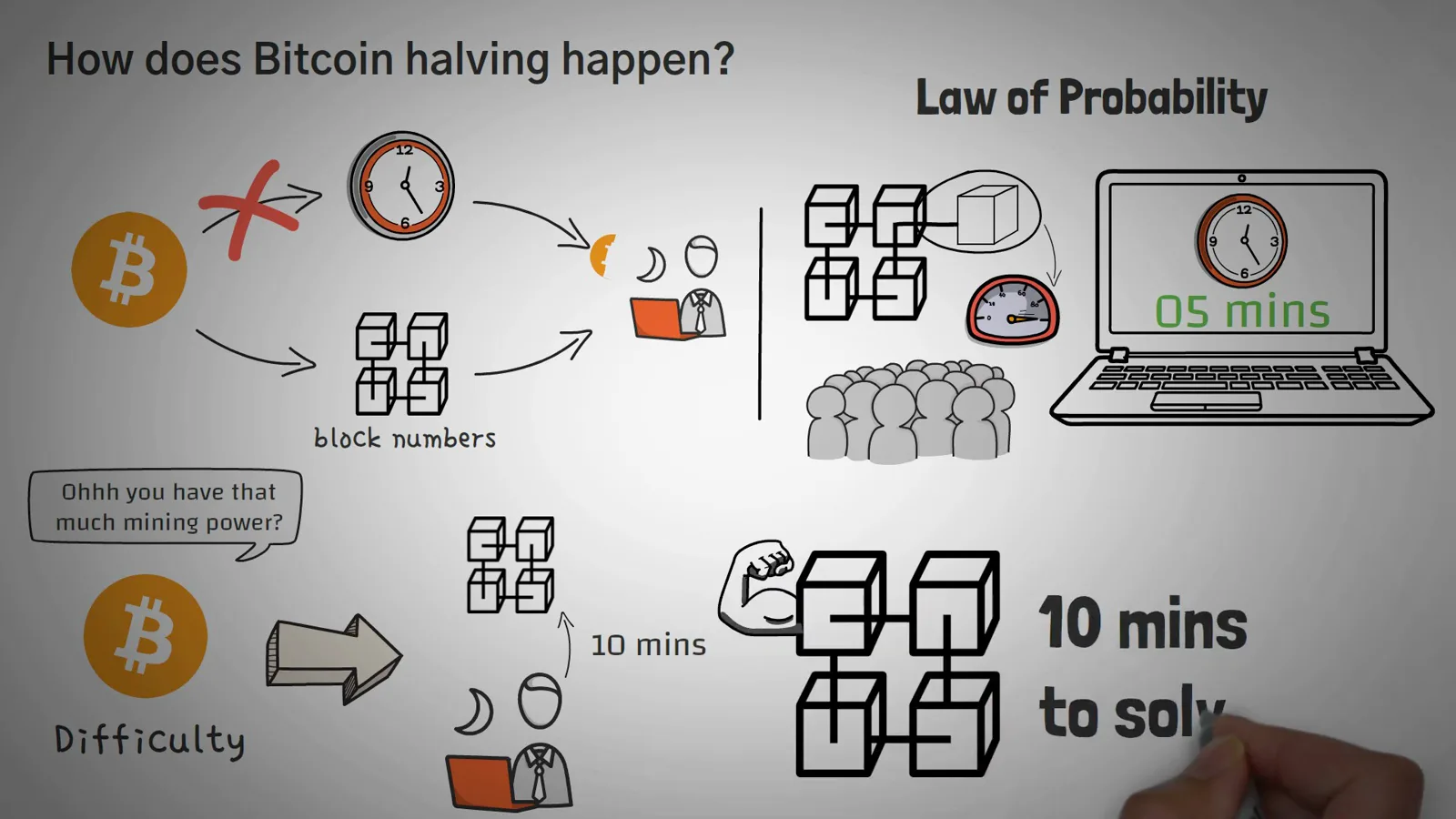
Retarget every two weeks, hold the ten-minute tick.Watch at 4:45
What the Halving Means for You
Holders, miners and the long-run question of a reward that trends toward zero.
- 9
If you hold bitcoin: nothing to do
For a holder, the halving requires no action. Some investors treat it as a speculative event because past halvings were followed by price increases — the video is careful to note this may just be Bitcoin making headlines, not the supply cut itself.
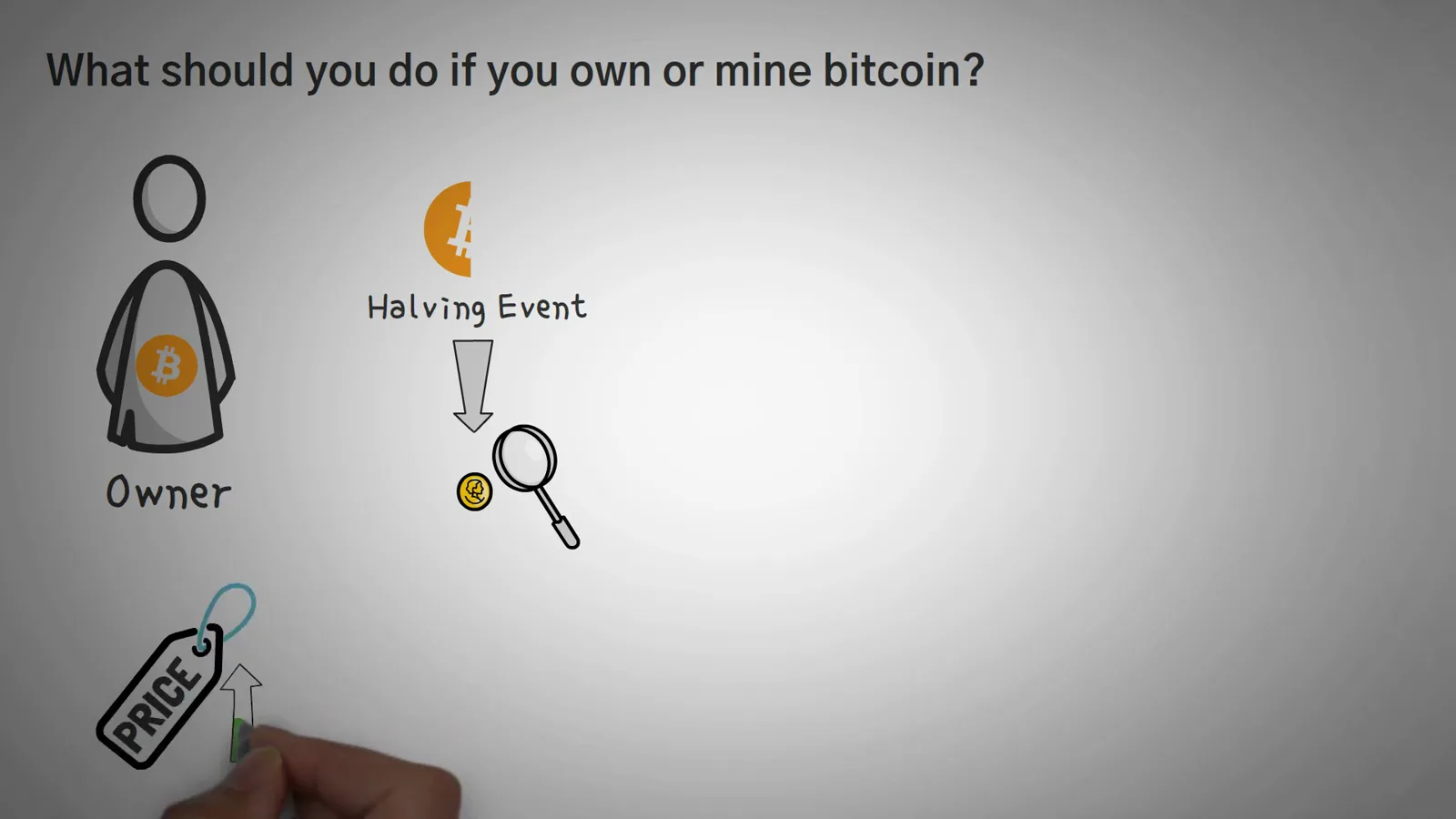
Holders watch; the code does the work.Watch at 5:40 - 10
If you mine: revenue just got cut in half
Miners earn the same block reward for the same electricity — until the halving halves it overnight. Large players with economies of scale (cheap power, industrial cooling) cope best, while higher-cost operations switch off, which lowers difficulty for everyone who remains.
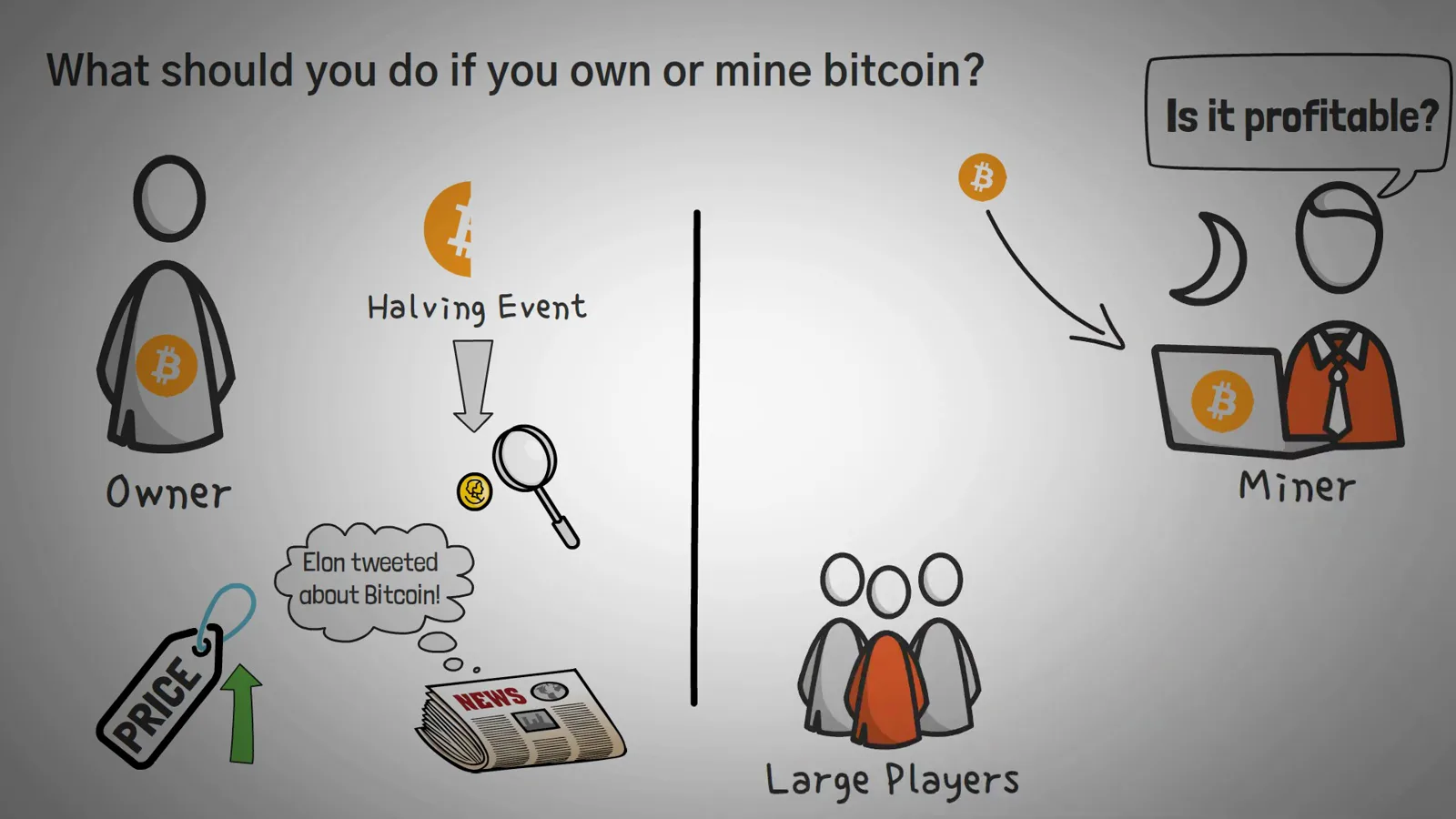
Marginal miners switch off; difficulty follows.Watch at 5:57 - 11
And when it halves to zero?
One day the reward becomes so small it rounds away entirely, around the year 2140. What happens to miner incentives then? The video ends honest: nobody knows for sure — the expectation is that transaction fees take over, but that's a question for another century.
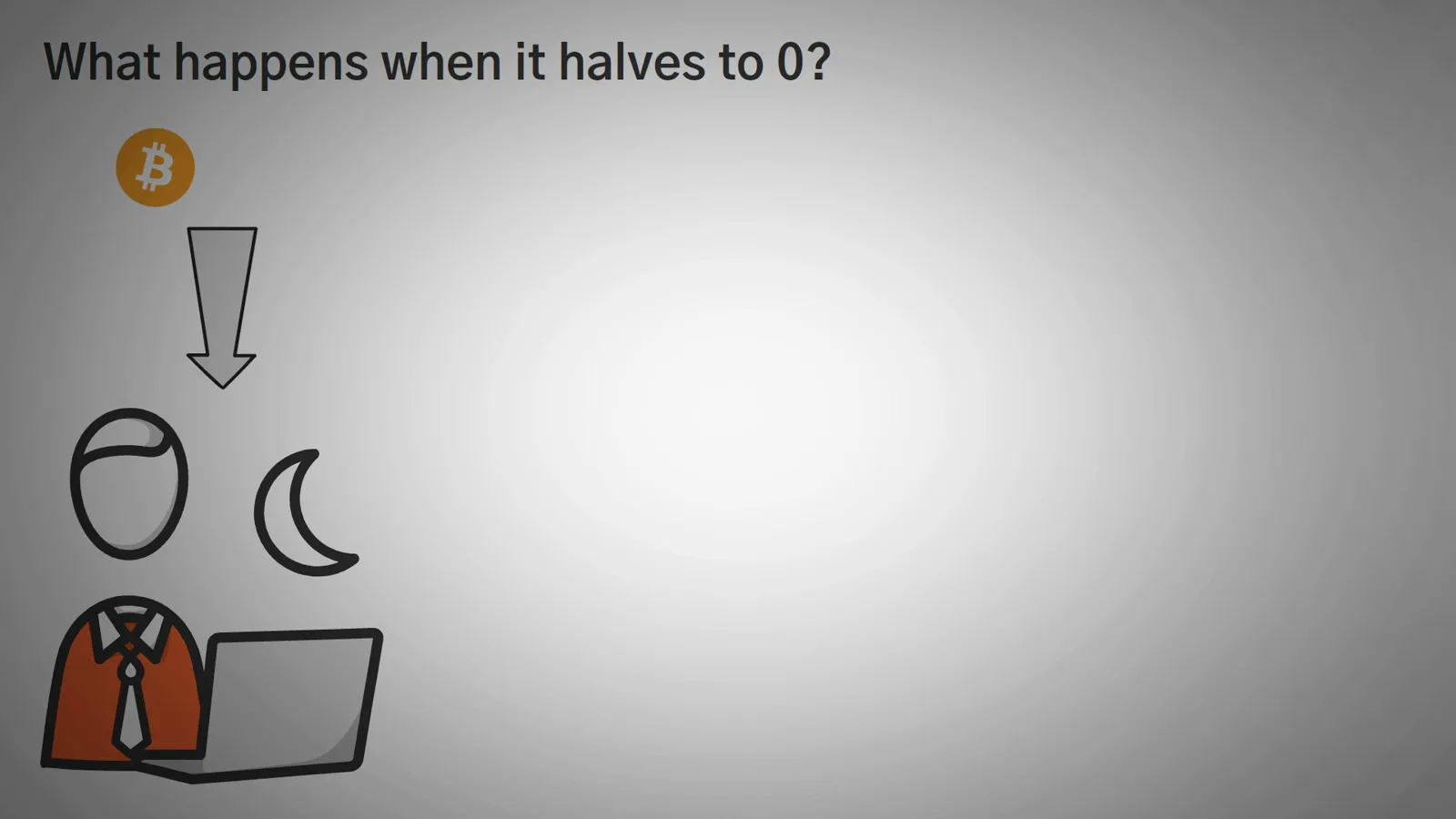
The endgame question Satoshi left unanswered.Watch at 6:24
Frequently Asked Questions
When have the Bitcoin halvings happened?
Why does the halving happen every four years?
Does a halving automatically raise Bitcoin's price?
What happens to miners after a halving?
Will all 21 million Bitcoin ever be mined?
Continue the Story
What Is the Genesis Block?
Block 0 is where the first 50 BTC rewards began — and its coins can never be spent.
Bitcoin Whitepaper, Explained Section by Section
The incentive design behind the block reward comes straight from section six of Satoshi's paper.
Bitcoin History: The Complete Guide
See each halving in the context of Bitcoin's full arc from experiment to asset class.
Bitcoin Evolution
How Bitcoin transformed from digital cash into digital gold — the halving is the engine of that story.
The History of Bitcoin Mining
From CPU experiments to 200 TH/s ASICs — the hardware arms race behind every block reward.
References
Extended Multimedia Reference
Visual sequences and chronologies in this guide cross-reference video documentation “Bitcoin Halving Explained (Animated)” by Whiteboard Crypto.
This illustrated guide is maintained strictly for educational, research, and historical documentation purposes. None of the materials constitute investment, financial, legal, or trading advice. Historical crisis and market events are documented from public archives. Digital assets involve significant risks.