Why the eNaira Failed: Nigeria's CBDC Postmortem
In October 2021 Nigeria's president personally unveiled the eNaira — Africa's first central bank digital currency and one of the first anywhere. Two thousand Nigerians signed up on day one in a country of 200 million. A year later the IMF found 98.5% of wallets unused; even the great cash shortage of 2023, when ATMs ran dry and old naira notes were demonetized, couldn't make Nigerians keep using it. This is the frame-by-frame postmortem: the launch, the broken app, the banks' cold math, the redesign crisis, and the P2P stablecoin boom that filled the gap the state's own digital naira left.
10 minutes • 16 illustrated steps • Postmortem of the world's first presidentially launched CBDC
Editorial Research & Chronological Archive
Independently synthesized and cross-verified by The Blockchain History Editorial Board using primary whitepapers, historical archives, and on-chain records.
Why did the eNaira fail?
The eNaira failed because Nigeria built a digital wallet nobody had a reason to open. Launched by President Muhammadu Buhari on October 25, 2021 as Africa's first CBDC, it stumbled out of the gate: the app barely worked on day one, and only about 2,000 Nigerians registered in the first 24 hours against a banking population of more than 100 million. A year later only around 292,000 wallets existed in a country of 200 million, and the IMF found 98.5% of them went unused in any given week. The wallet paid no interest, carried transaction caps, ran on a private permissioned chain that many Nigerians read as a surveillance tool, and threatened commercial banks with disintermediation — so banks and merchants had every incentive to ignore it. Even the great 2023 cash crisis, when the naira redesign demonetized the old ₦200, ₦500 and ₦1,000 notes and ATMs ran dry, produced only a brief usage spike that collapsed as soon as physical cash returned. By December 2023 the central bank had effectively legalized the competition, lifting its ban on banks serving crypto — while Nigeria became the world's busiest P2P USDT market.
Key Takeaways
- The eNaira launched on October 25, 2021 — the first CBDC in Africa and one of the first in the world — unveiled in person by President Muhammadu Buhari after a three-week delay, with the president pitching it as a way to move Nigerians from the informal into the formal sector and grow the tax base.
- Day one set the tone: an early adopter's app didn't work within the first hour, only about 2,000 customers registered in 24 hours against a banking population above 100 million, and a fake Twitter handle promising a 50-billion-eNaira giveaway scammed Nigerians during the government's own Twitter ban.
- A year in, adoption was a rounding error: roughly 292,000 wallets in a country of about 200 million people — about 0.5% of banked accounts — and the IMF judged usage 'disappointingly low', finding that 98.5% of eNaira wallets were never used in a given week.
- The design worked against it: no interest, tiered transaction and balance caps, a private permissioned blockchain instead of a public one, data held under financial institutions' control, and a disintermediation threat that made commercial banks quietly reluctant to promote it — while merchants saw no reason to build acceptance infrastructure nobody used.
- The 2023 naira redesign crisis should have been eNaira's moment: the CBN demonetized the old ₦200, ₦500 and ₦1,000 notes, ATMs ran dry and withdrawal limits rationed cash — but even then the eNaira only spiked briefly before collapsing back once the Supreme Court forced the old notes back into circulation.
- While the state's digital naira sat unused, Nigerians embraced the alternatives: crypto volume reached $56.7 billion in a year, Nigeria ranked #1 globally in P2P trading, and on December 22, 2023 the CBN lifted its February 2021 banking ban on crypto — regulating what people actually use instead of forcing the coin they wouldn't.
A Launch Like a State Occasion: October 25, 2021
Most digital currencies get a press release. Nigeria's got a president. On October 25, 2021 the eNaira was unveiled at the State House in Abuja — after a three-week delay — as Africa's first central bank digital currency.
- 1
Buhari pulls the cover off Africa's first CBDC
On October 25, 2021, President Muhammadu Buhari stood with officials at Nigeria's State House and physically pulled the sheet off the eNaira logo board, making Nigeria the first African nation to launch a central bank digital currency — and one of the very first countries anywhere whose CBDC was launched by the head of state in person. Only the Bahamas' Sand Dollar (2020) and the Eastern Caribbean's DCash (March 2021) had gotten there first among retail CBDCs. The launch had already slipped three weeks past the original October 1 Independence Day target, a small omen nobody in the room treated as one. The eNaira was pitched as the same naira Nigerians already used — just digitized, issued directly by the Central Bank of Nigeria and convertible one-to-one with cash.
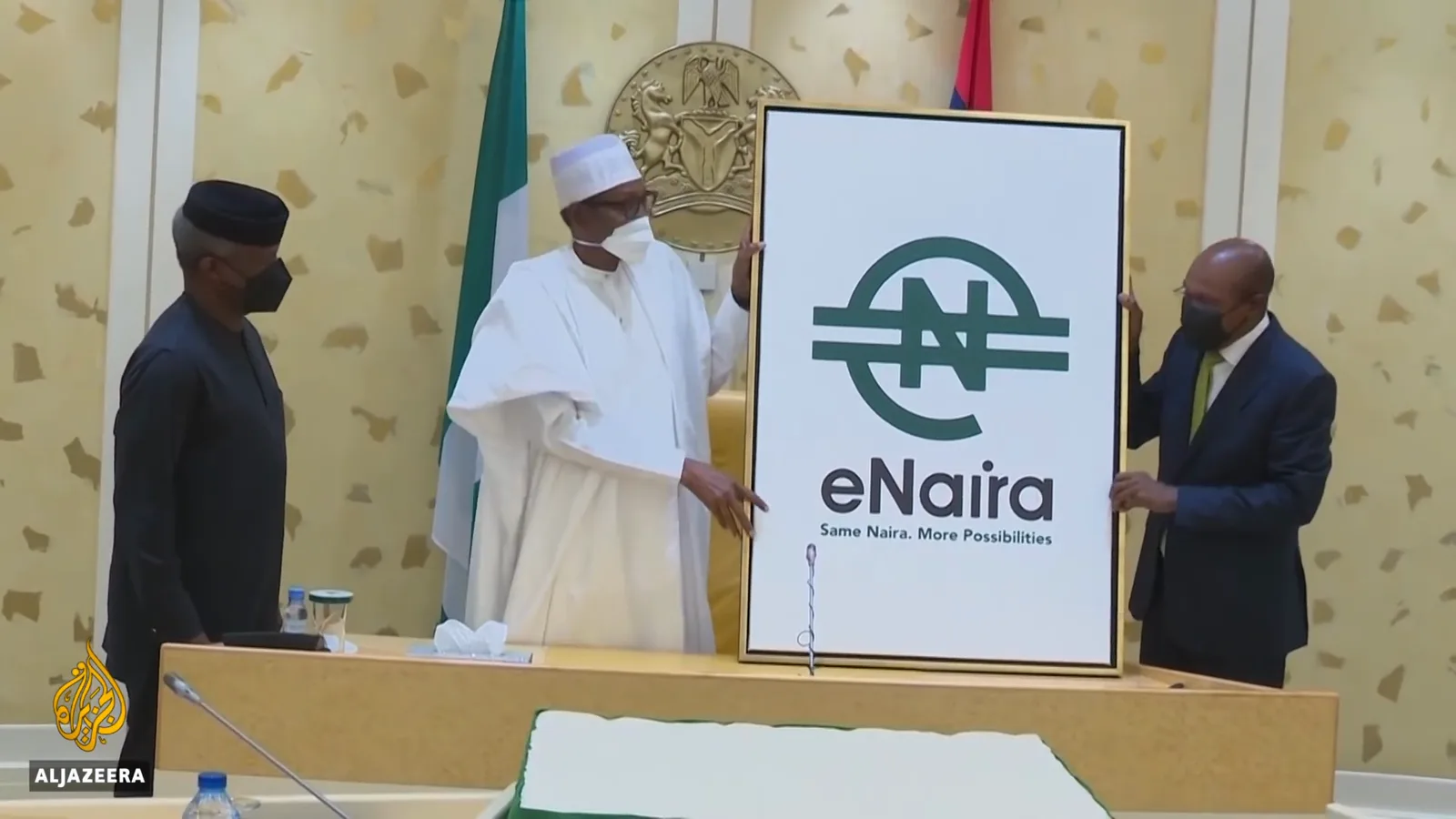
One sheet, one logo: Africa's first CBDC goes official.Watch at 0:10 - 2
The president's pitch: formalize the informal
In his launch address, Buhari framed the eNaira as an engine for the formal economy: central bank digital currencies, he said, 'can help move more people and businesses from the informal into the formal sector, thereby increasing the tax base,' and could foster growth through better economic activity. The government's wishlist was long — improve cross-border trade, expand access to financial services for a country where almost half the population had no bank account, and capture more of the remittances Nigerians abroad send home. The central bank set an aggressive target: move 10% of Nigeria's monetary transactions onto the platform within months. Analysts in the room were already skeptical that commercial banks would cooperate with a currency that competed with their own deposits.
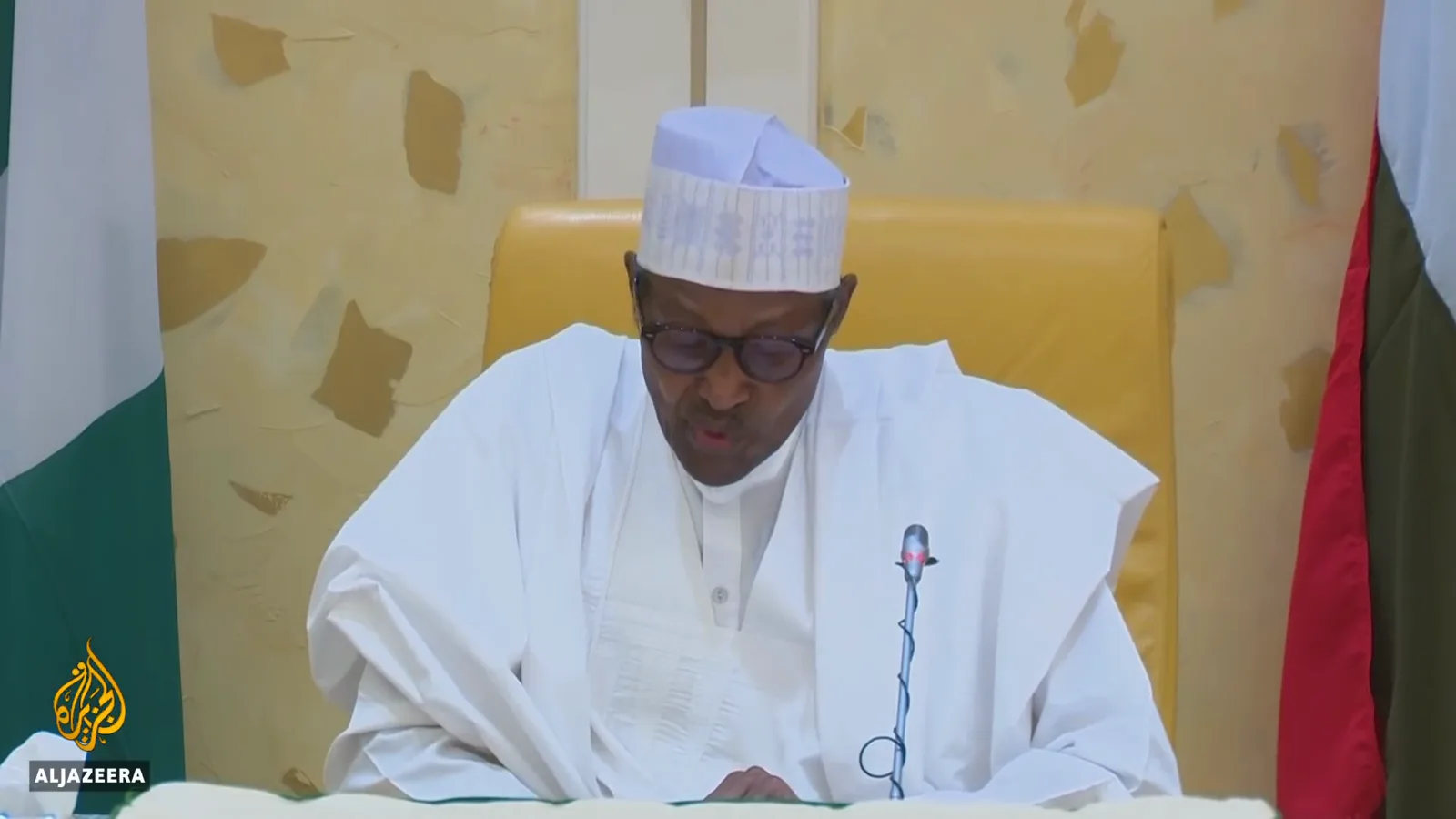
Formalize the informal, grow the tax base — the presidential pitch.Watch at 0:27 - 3
The app arrives: 'Same naira, more possibilities'
The eNaira Speed Wallet hit the Google Play and Apple app stores on launch day, marketed under the tagline 'Same naira, more possibilities.' The pitch was deliberately boring — this wasn't a new currency, just the naira in your pocket rendered digital. The central bank's own numbers, cited in a launch-week interview with its deputy governor, claimed almost 500,000 consumer wallets and about 107,000 merchant wallets in the first week. But downloads are not use: the wallet paid no interest, sat in tiers with daily transaction and balance limits, and could only be funded by moving money out of a regular bank account. Nigerians were being asked to pre-pay inconvenience for a product identical to the cash already in it.
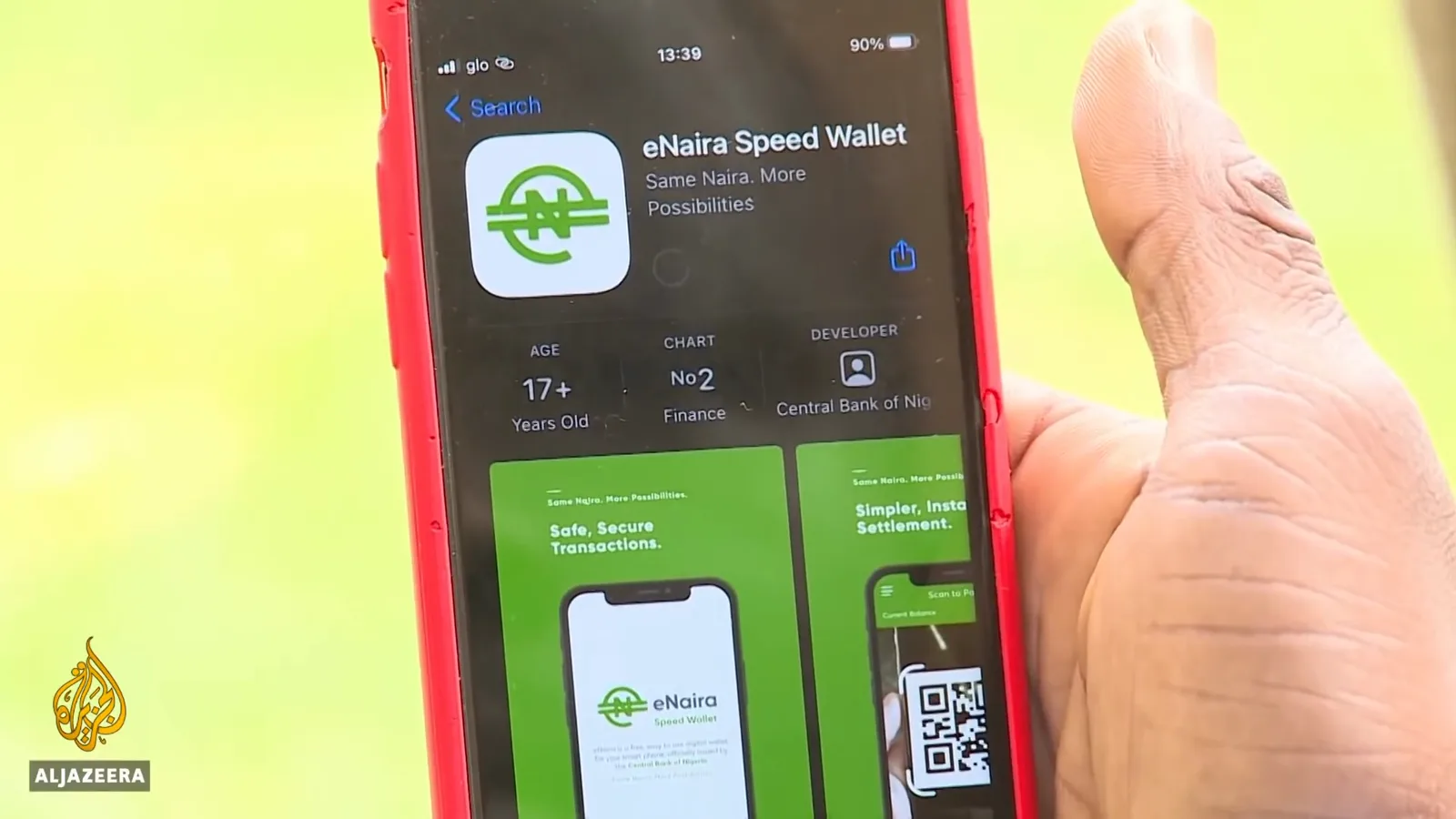
Free to download. Costly to bother.Watch at 0:48 - 4
The storefront: a wallet that looks like a bank app
The eNaira's promotional screens promised the essentials — send and request payments, scan QR codes, top up from your bank — with mockups showing a ₦5,000 balance and a quick-response code for merchant payments. What the screens couldn't promise was a reason to be there. The wallet earned nothing, capped how much you could hold and move, and offered nothing Nigerians' existing bank apps and mobile money agents didn't already do better. Every person who opened the storefront had to answer the same unasked question: what is this for? The government had built the 'what' — a digital legal-tender naira — and shipped it without the 'why.'
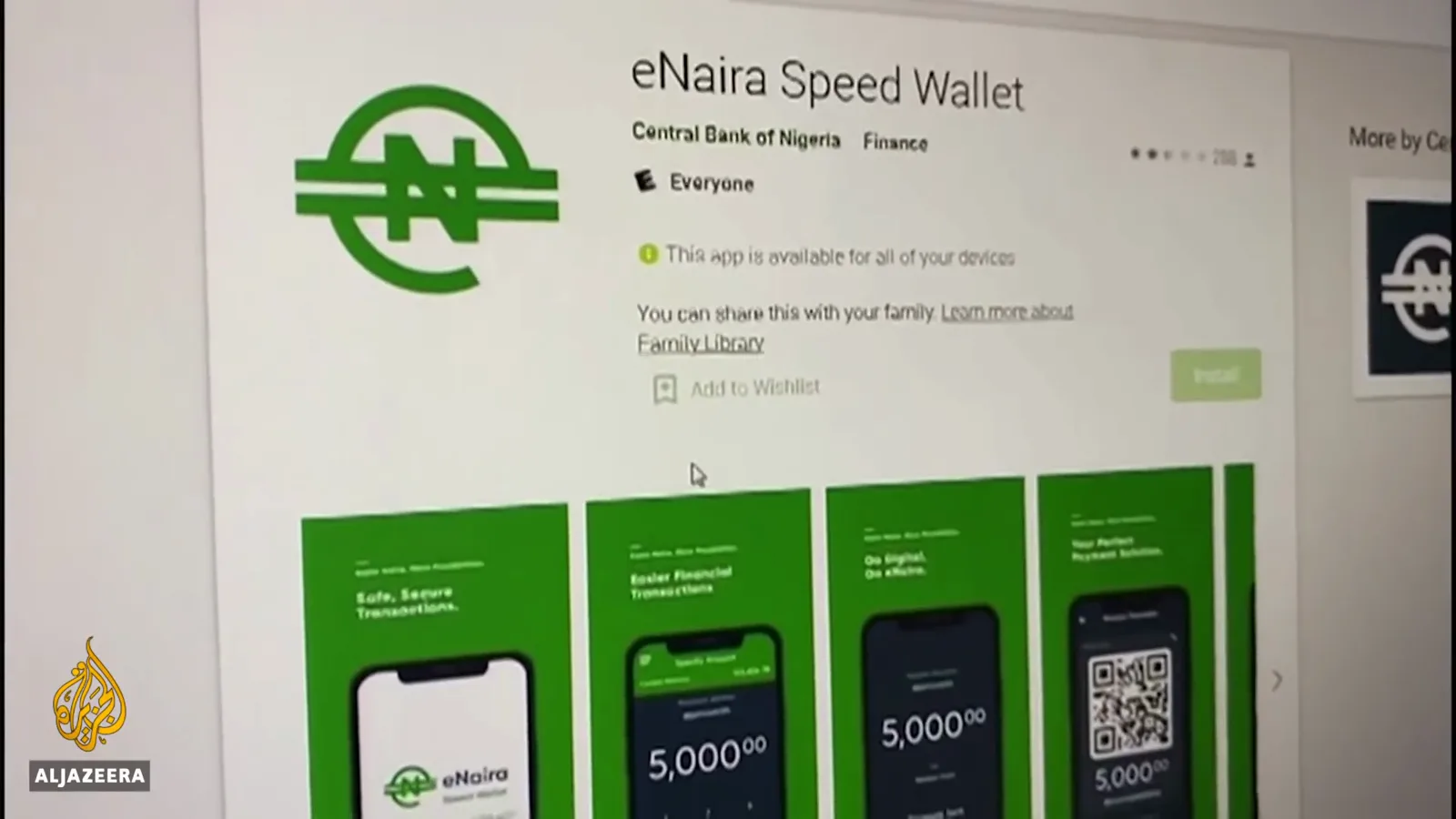
Everything a wallet needs — except a reason to open it.Watch at 2:43
Signed Up, Then Locked Out: The First Days
The launch-week numbers looked respectable until you compared them to anything. Behind the scenes, the app failed its first users, a scammer nearly hijacked the brand, and the design itself carried the seeds of the refusal to come.
- 5
Hour one: the app doesn't work
Al Jazeera found Michael, a Lagos early adopter who downloaded the app about an hour after the launch — and couldn't get in. 'One would expect that if a government is rolling out an official platform, it's been tried, it's been tested and it's running,' he said, after some 40 minutes of failed logins with no assets appearing in his wallet. The central bank, for its part, reported just over 2,000 customer registrations in the first 24 hours — against a banking population of more than 100 million. 'Not a great start,' as the reporter put it. The pattern was set early: a product launched as a state showcase, stumbling on the basic promise of working.
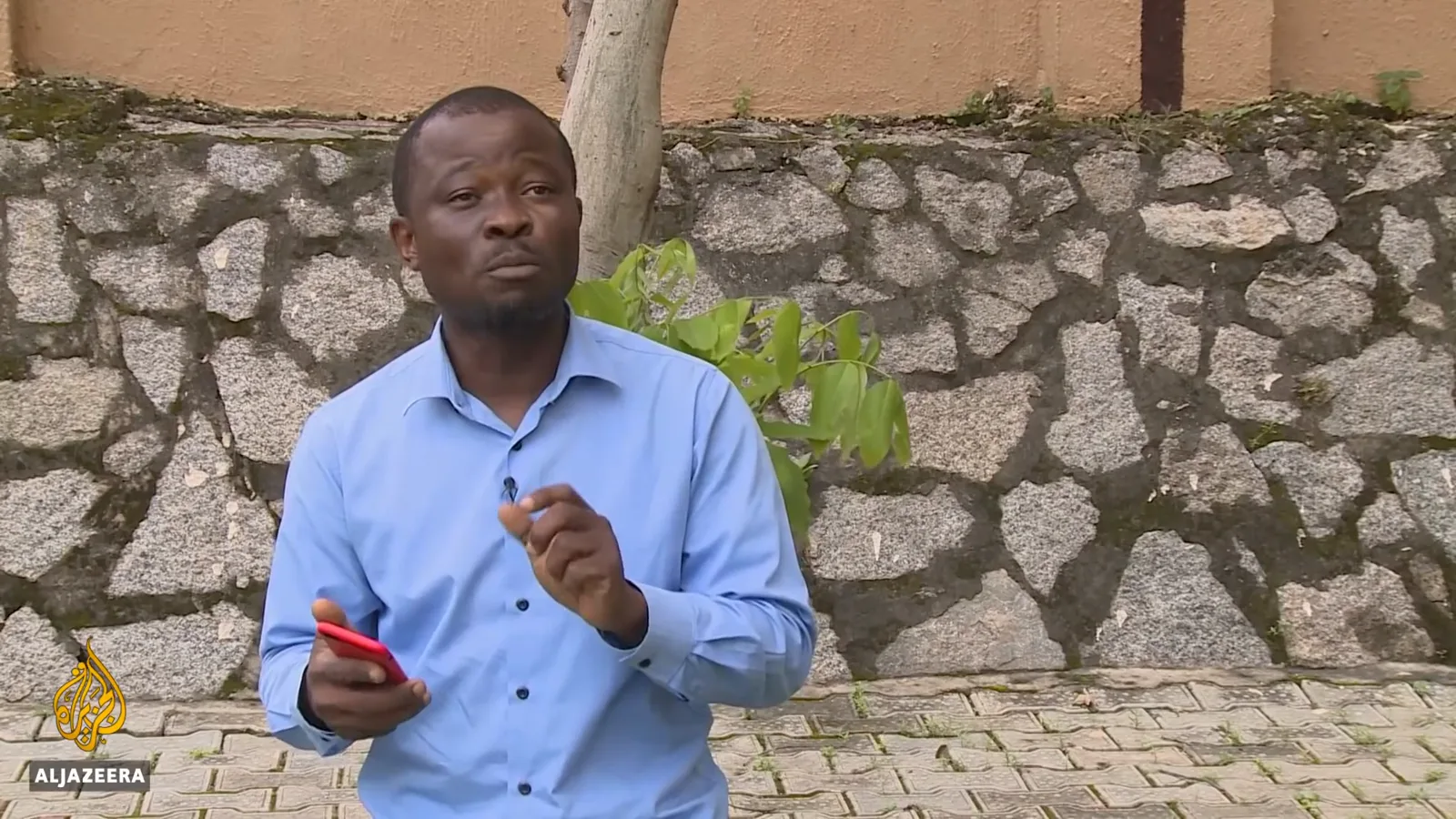
Downloaded in an hour. Working in… a while.Watch at 1:04 - 6
The technology partner had exactly one qualification — and a scam almost ruined the debut
Nigeria's CBDC was built by Bitt Inc, a Barbados fintech chosen through a competitive process. Its distinguishing credential: it was the only bidder that had already launched a digital currency anywhere — DCash, the Eastern Caribbean Central Bank's pilot that had gone live in March 2021. Launch week brought a taste of the trust problem to come: a fake Twitter account posing as the official eNaira handle promised to distribute 50 billion eNaira to followers, harvesting account details — while Twitter was itself banned inside Nigeria, slowing the official response. The central bank needed two days to put out a fraud warning. A currency whose entire value rests on state credibility began life impersonated.
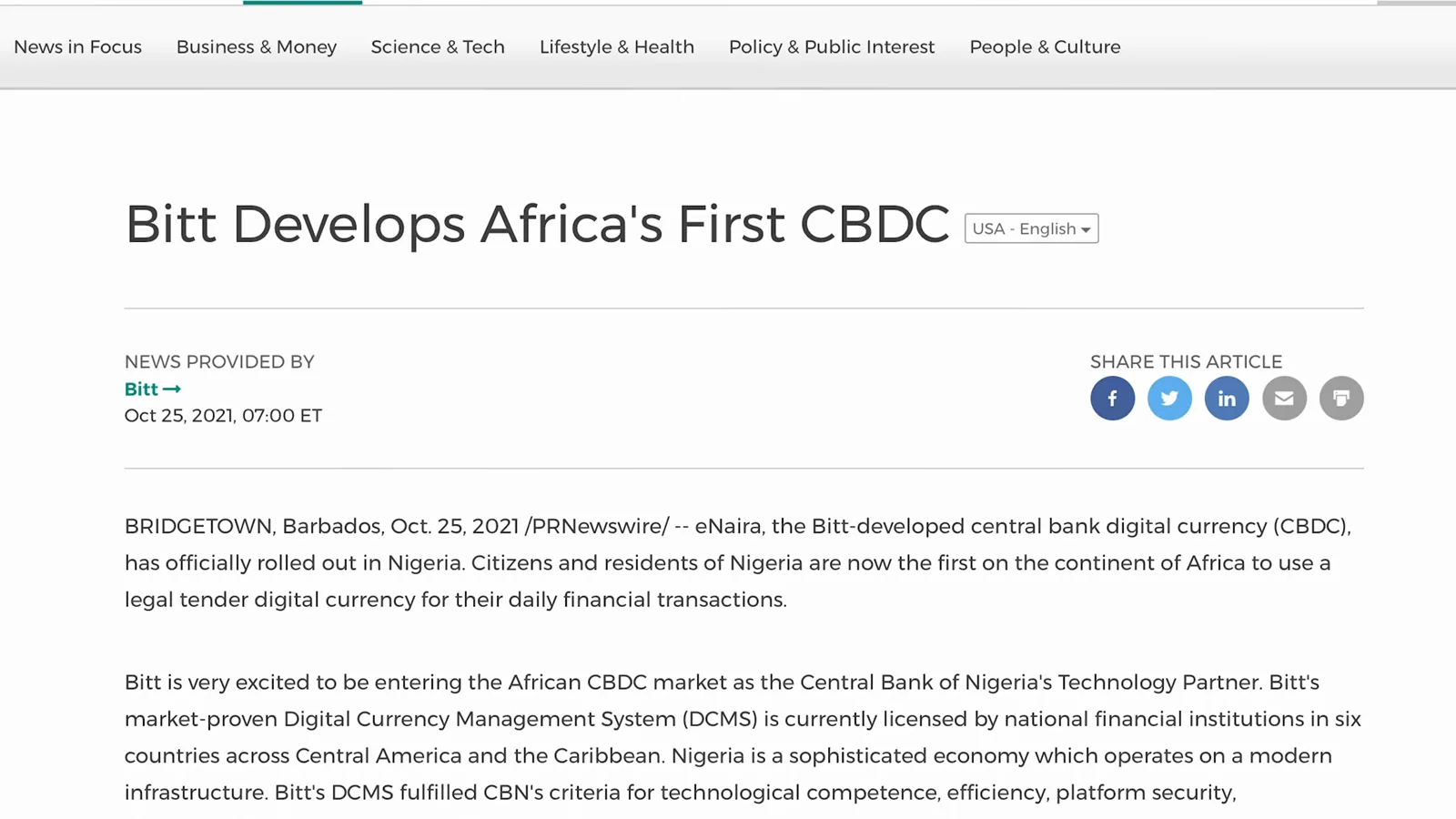
First in Africa — built by the team behind the Caribbean's DCash.Watch at 1:56 - 7
Under the hood: not crypto, and not quite cash
Despite the blockchain branding, the eNaira ran on a private, permissioned ledger — Bitt's design documentation is candid that a retail CBDC 'functions like cash and preserves privacy by making transactions pseudonymous,' while letting the central bank eliminate third-party settlement risk. But pseudonymous is not anonymous, and Nigerians had fresh reasons to distrust promises about money and state power. Cash in hand answers to nobody; a wallet on a permissioned ledger answers to the central bank that had, months earlier, banned banks from serving crypto users. Add zero interest, tiered caps and identity tiers, and the eNaira was technically the most controllable naira ever issued — a feature for the issuer, a warning label for everyone else.
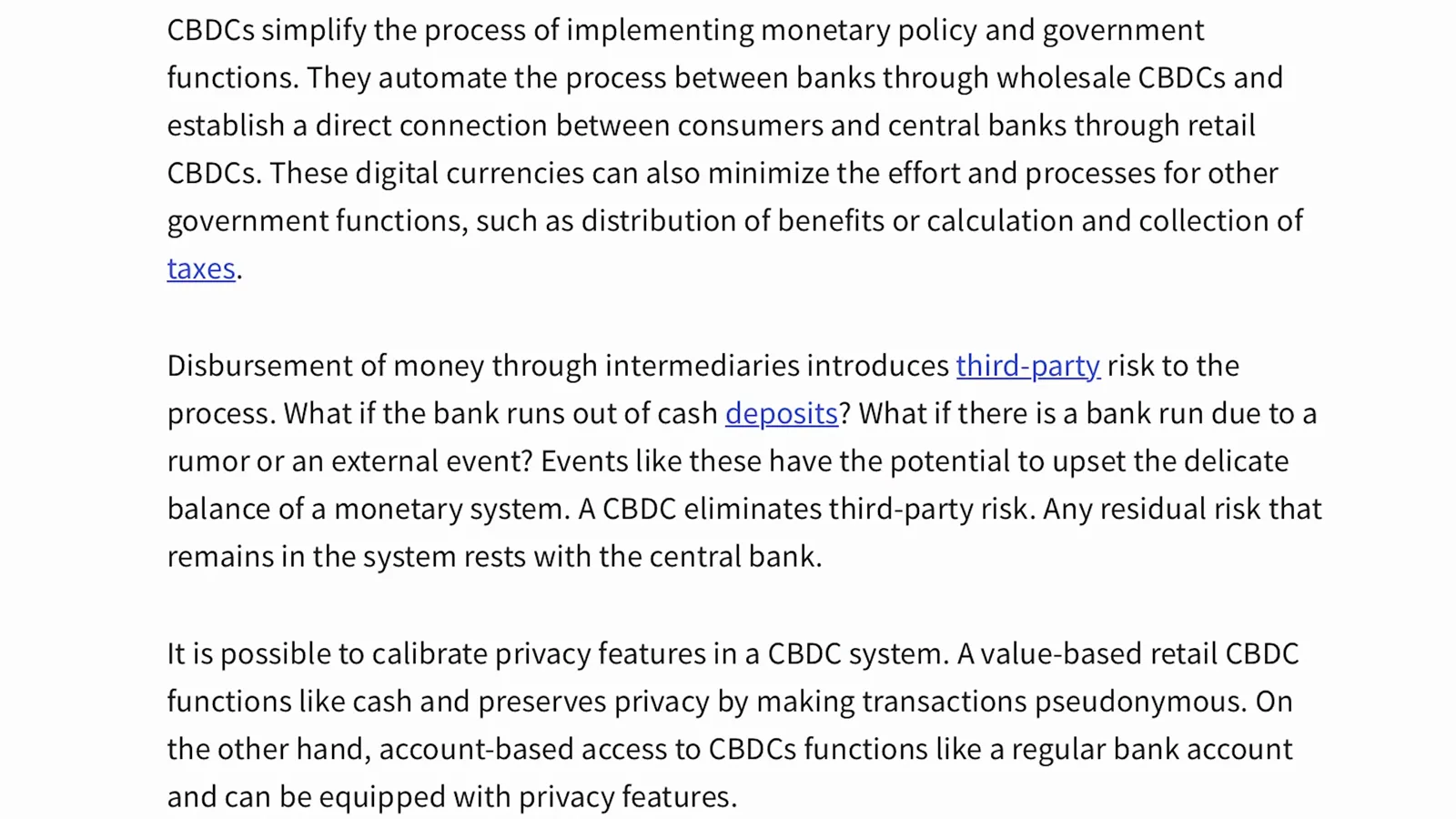
Pseudonymous, capped, permissioned — the fine print of 'digital cash'.Watch at 13:09 - 8
The banks did the math — and quietly opted out
Every eNaira balance started as money pulled out of a commercial bank deposit. Analysts flagged the conflict immediately: moving customer funds into central-bank wallets 'is a real threat to the commercial banks,' one Abuja analyst told Al Jazeera, predicting some banks 'would do one or two things, perhaps to sabotage this very process.' Banks earned nothing from float they lost and weren't the eNaira's biggest fans to begin with; merchants, facing fees and integration work for a currency with a few thousand users, declined to build acceptance infrastructure. That is the chicken-and-egg trap that killed uptake: no merchants meant no reason for users, and no users meant no reason for merchants. The eNaira needed someone to spend first. Nobody did.
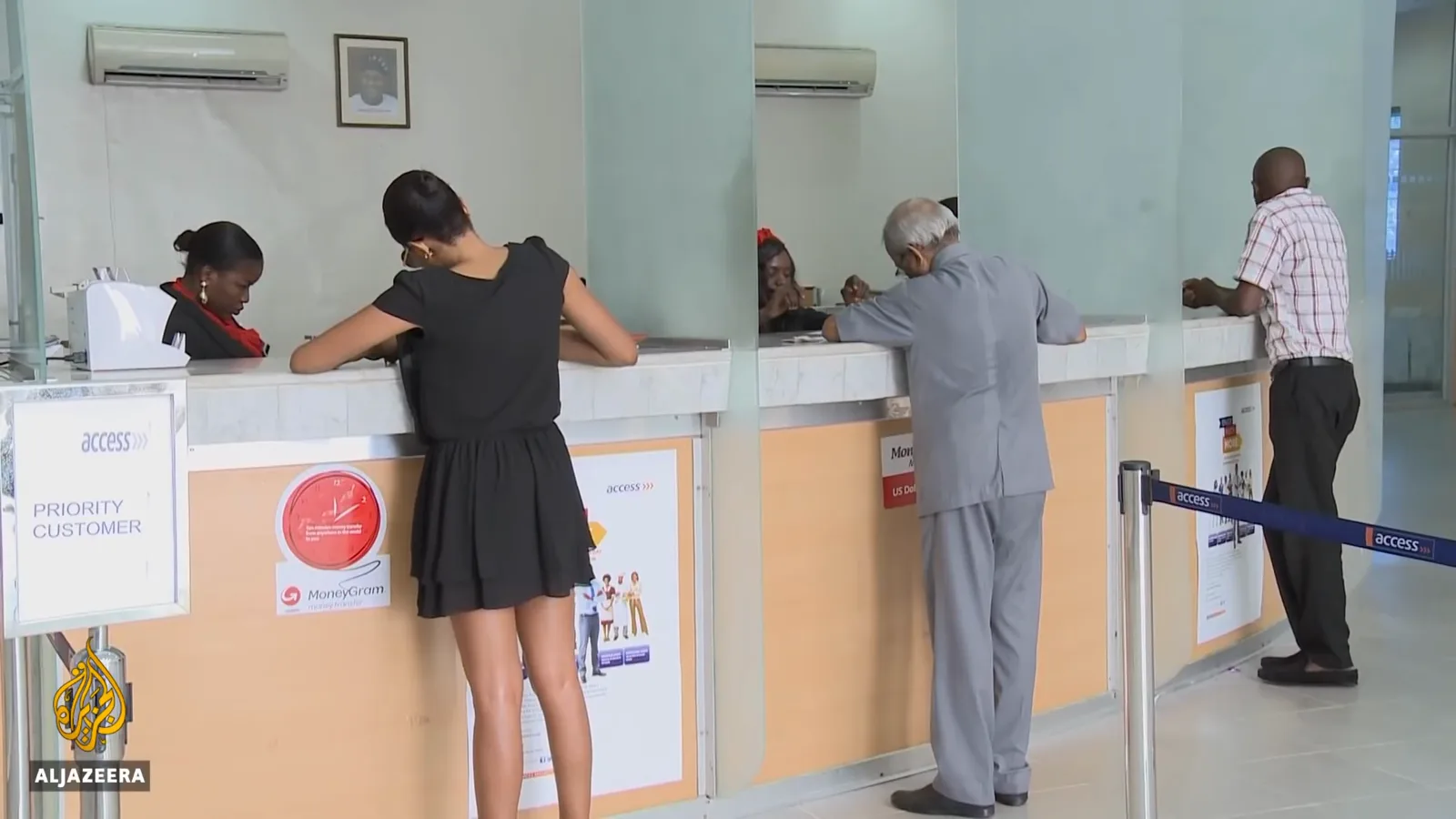
Every eNaira wallet was money leaving a bank — and the banks knew it.Watch at 2:30
The Crisis That Should Have Been eNaira's Moment: 2022–2023
In October 2022 the central bank demonetized the old ₦200, ₦500 and ₦1,000 notes. By early 2023 Nigeria — a cash-heavy economy — had no cash. If ever a digital naira had its opening, this was it.
- 9
October 2022: the redesign decree
On October 26, 2022 — days after historic floods — CBN governor Godwin Emefiele announced that Nigeria's highest-value notes, the ₦200, ₦500 and ₦1,000, would be redesigned, and that the old versions would cease to be legal tender on January 31, 2023. Officially the point was to pull hoarded cash back into banks and fight counterfeiting and kidnapping ransoms. Practically, it meant every old note in hand, in savings pits and in market stalls had an expiry date. The mint could not print anything close to enough replacement notes in under three months. Nigerians would soon discover that a currency can be invalidated by announcement — a lesson about state-controlled money that would hang over any state-issued digital wallet too.
The day the naira got an expiry date.Watch at 2:25 - 10
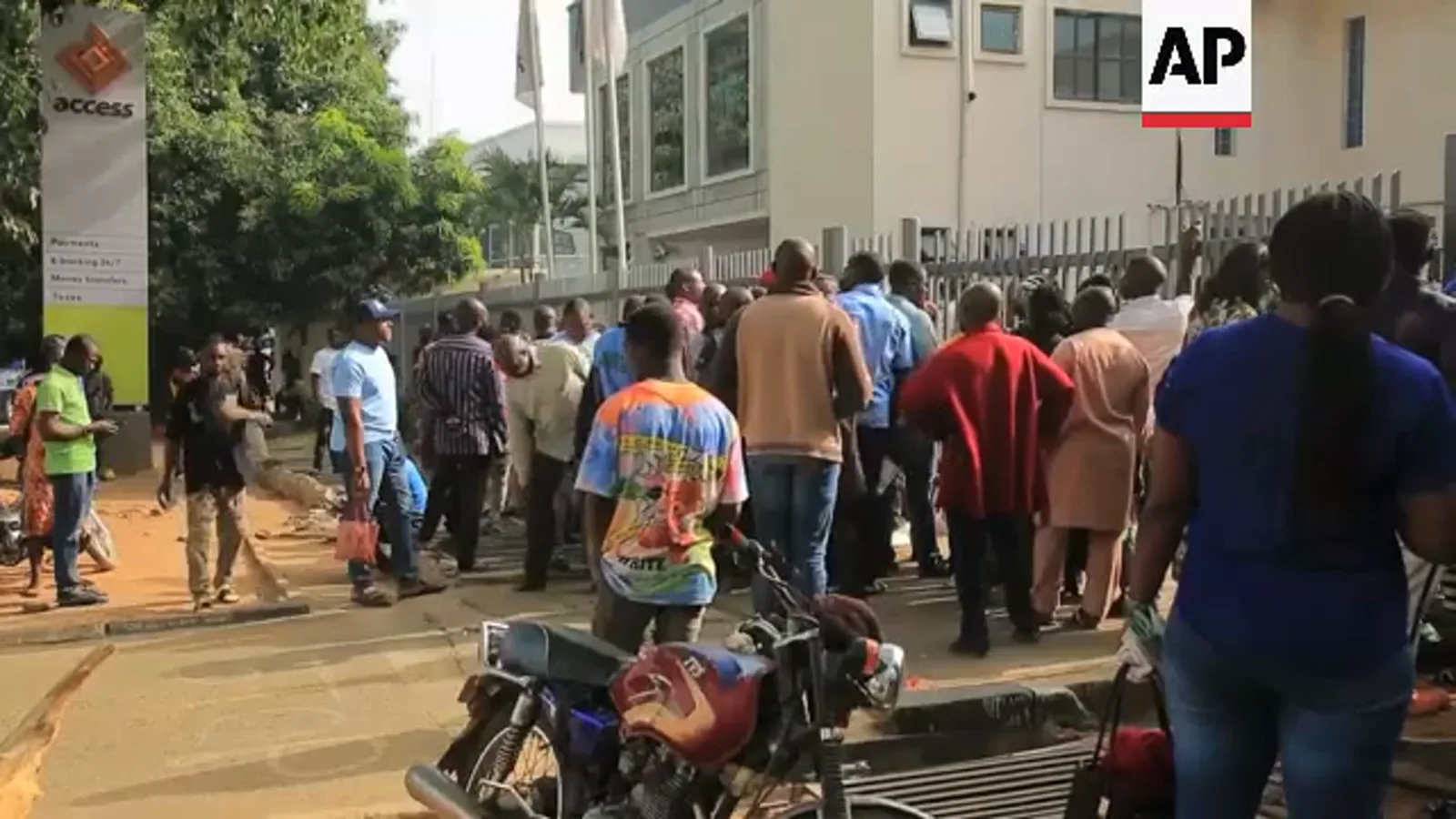
ATMs run dry in a cash-first economy
Through late 2022 the deadline slipped once — to February 10, 2023 — and then the cash simply ran out. New notes were hoarded by banks and elites, ATMs dispensed nothing, and withdrawal limits rationed what remained. This in a country where cash is king: tens of billions of dollars' worth of naira left Nigerian ATMs every year, paying for taxis, food and market goods. By February 2023, with a presidential election weeks away, Nigerians were sleeping outside bank branches. The world watched a state engineer a shortage of its own money. Almost half the population had no bank account at all — and even the banked couldn't get their own money out.
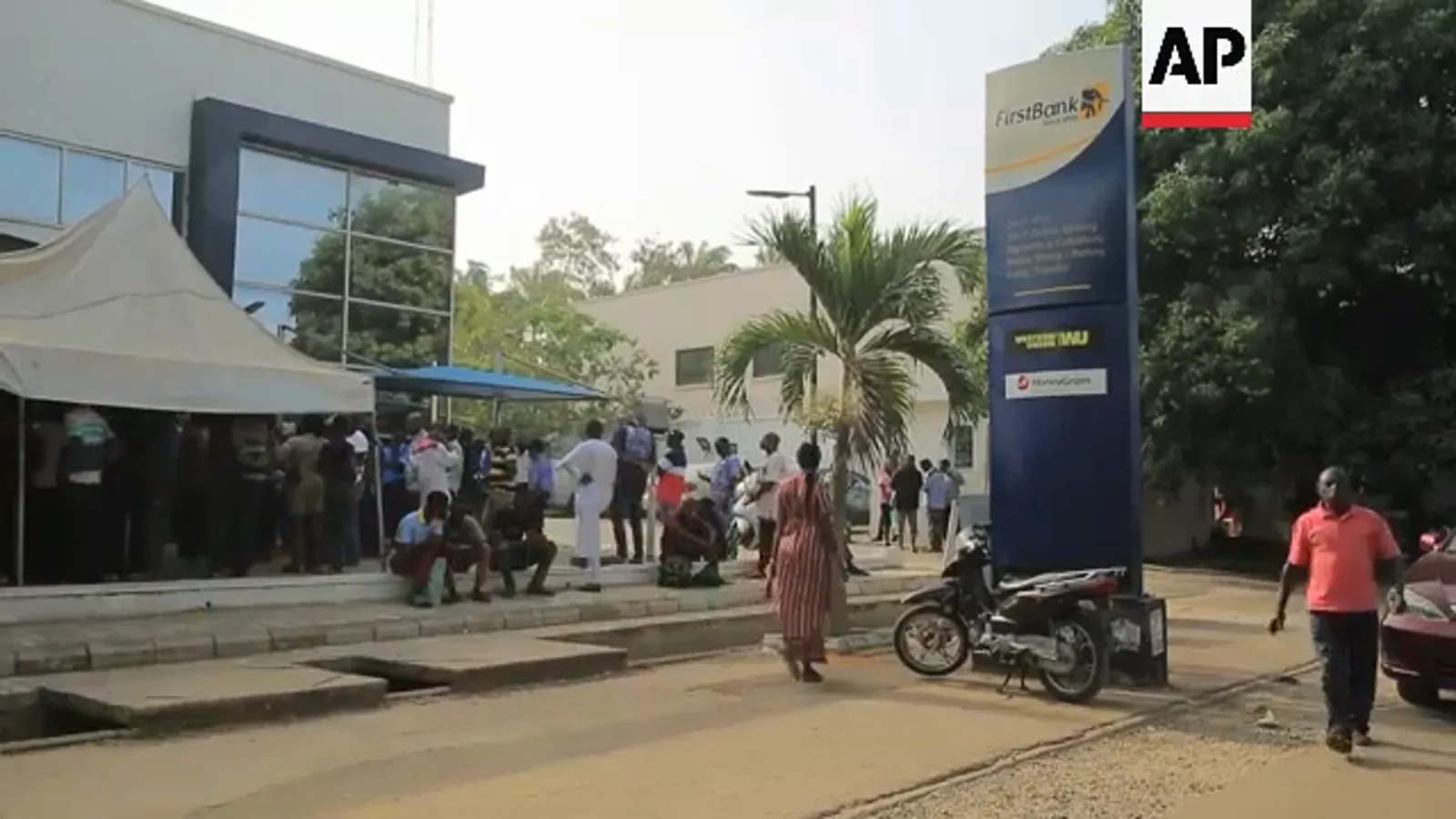
Sleeping for the right to touch your own money.Watch at 1:00 - 11
What remained: a fistful of naira
The shortage got absurd enough to archive: withdrawal windows capped at the equivalent of a few dollars a day, queues measured in nights, and — in the words of one man interviewed on the street by AP — 'could you imagine they give you only five thousand? What would five thousand do for a father of three?' Old notes changed hands at a premium against new ones in some markets. People paid agents just to access their own deposits. This was the moment the eNaira had been built for: cash was scarce, distrust of banks was total, and a digital legal-tender wallet needed no ATM. Usage did jump — transaction volumes briefly surged in February 2023. Then the moment passed, and the numbers told the real story.
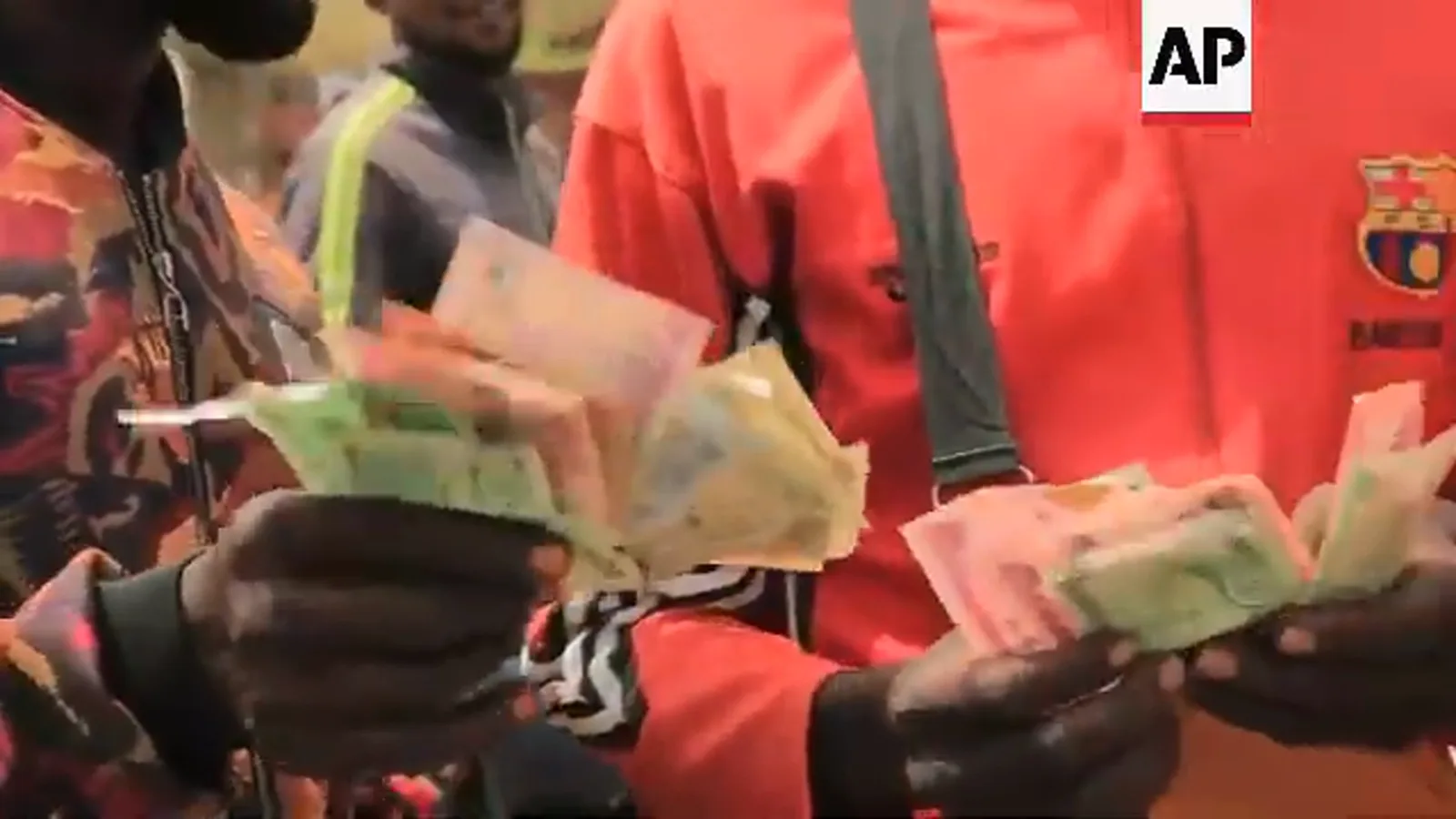
When cash got scarce, the eNaira got… briefly popular.Watch at 1:50 - 12
The lifeline was a human with a POS machine
The infrastructure that actually carried Nigerians through the crunch was improvised: street POS agents in branded vests, running mobile-money floats, cashing people out for fees, swapping old notes for new at a markup. Where the state's app asked citizens to come to it, these agents stood at every market gate with cash and a card reader. The contrast defined the failure: financial inclusion in Nigeria had already been solved by human networks and feature phones — transfers, agents, USSD — none of which required the eNaira. When the Supreme Court ruled on March 3, 2023 that the old notes stayed legal tender until December 31, 2023, cash flooded back, the agents went back to normal business, and the eNaira's usage spike evaporated with the queues.
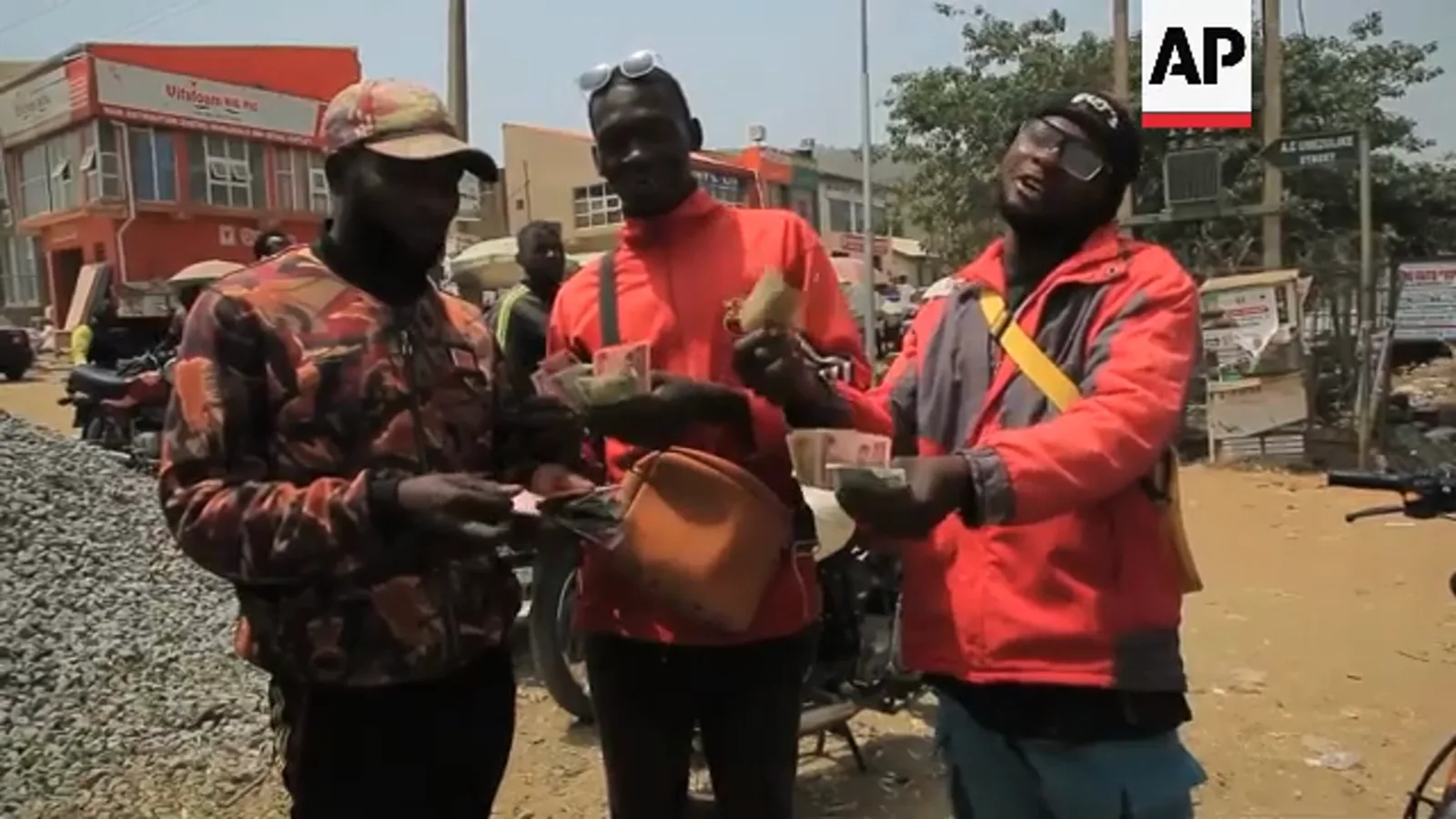
The real payment network wore red vests.Watch at 1:44
Why Nigerians Said No — And What They Used Instead
The verdict after five years: about ₦18 billion of eNaira in circulation against trillions of naira of cash, 98.5% of wallets dormant — and a P2P stablecoin market that became the world's biggest. The failure wasn't technical. It was a product nobody needed, issued by an issuer nobody trusted to hold the only money that couldn't be redesigned by decree.
- 13
Cash won, again
When the crisis ended, Nigerians went back to exactly what the eNaira was supposed to replace. Bank bundles of ₦1,000 notes resumed their place at every counter, and currency in circulation climbed back above ₦3 trillion while eNaira in circulation sat near ₦18 billion as of early 2025 — a rounding error of a fraction of a percent. The IMF's postmortem on year one had already settled the question of adoption: 'disappointingly low,' with 98.5% of wallets unused in any given week and network effects suggesting the low-adoption equilibrium could persist indefinitely. It did. Downloads kept trickling — 13 million wallets by 2024 — but the CBN itself formed a task force to figure out how to make people care.
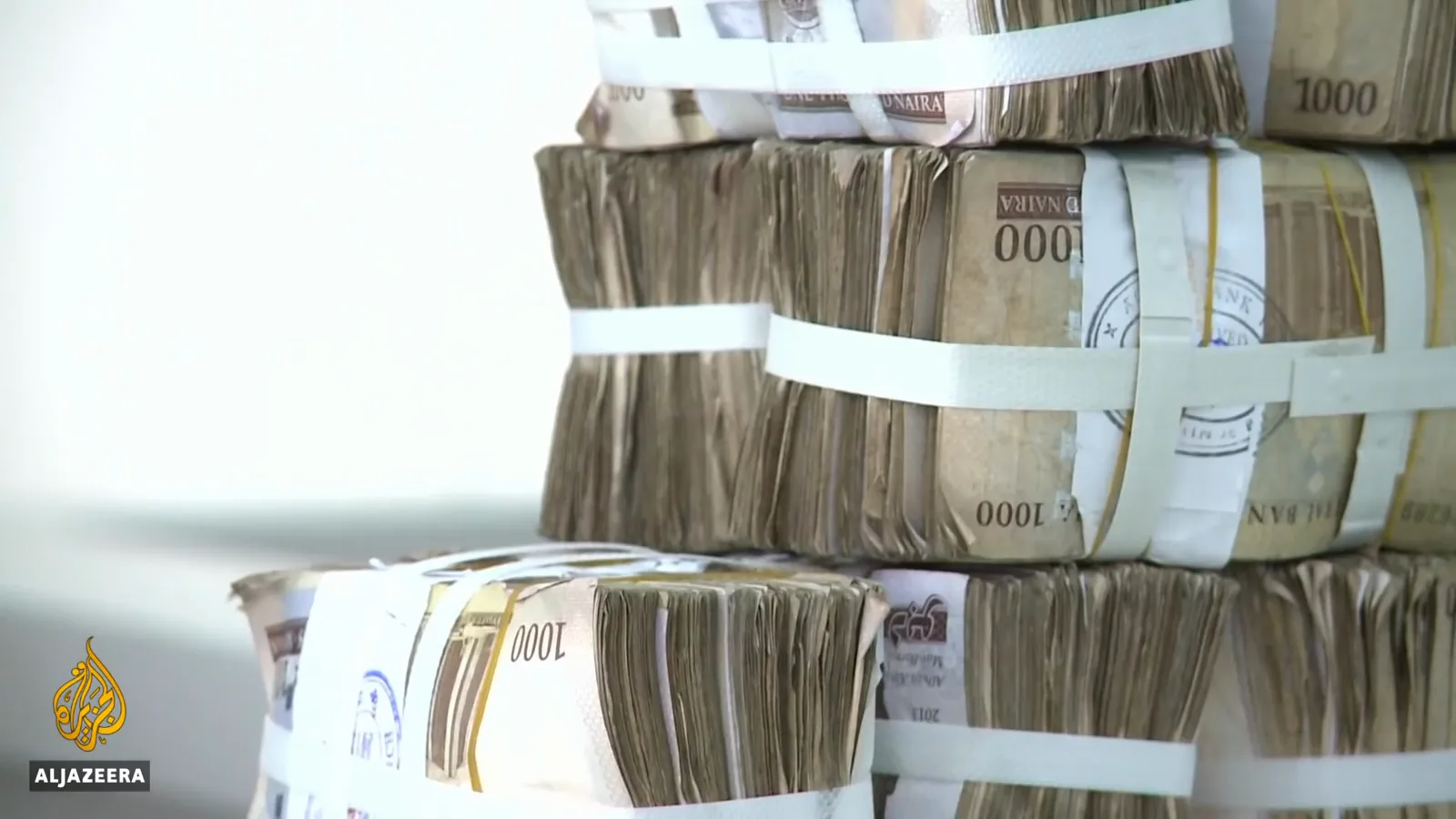
₦18 billion digital versus trillions physical. Cash won.Watch at 2:39 - 14
A cash-first country, by structure
The deeper reasons were structural. Nigeria is enormous and largely informal: most daily commerce happens in street markets where a QR code has no steward — no one to maintain it, no margin to justify it. Coverage numbers told the story from the start: roughly 25–45 million smartphones in a country of about 219 million, nearly half the population unbanked, and by government estimates about 35% of adults functionally illiterate — while the eNaira required a smartphone, an internet connection and literacy to even attempt. The USSD fallback for feature phones that could have bridged the gap was discussed for years and never meaningfully shipped. The eNaira wasn't built for the Nigerians who most needed financial inclusion; it was built for people who already had bank apps.
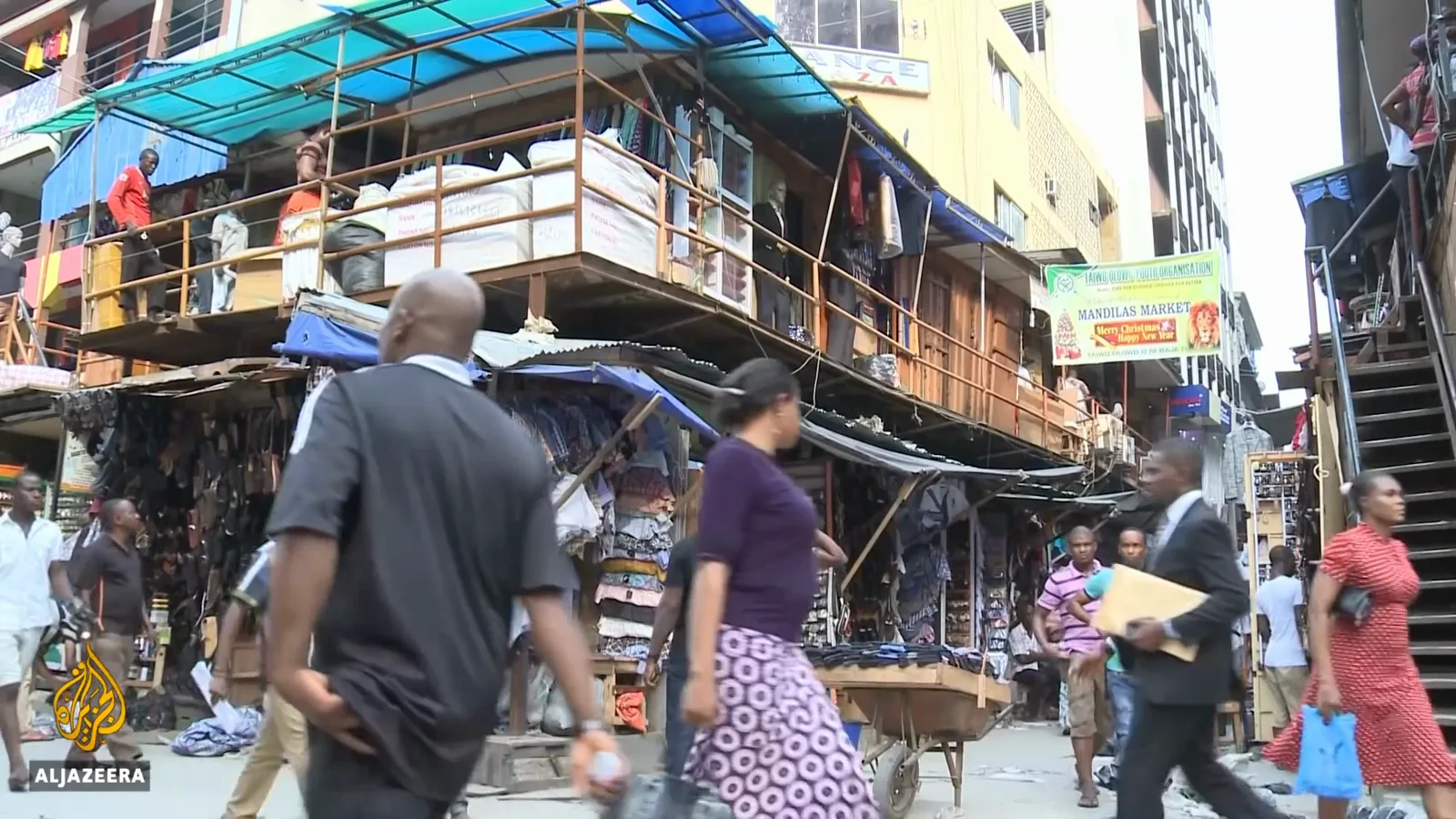
The real economy never asked for an app.Watch at 1:53 - 15
The informal market had no shelf for the eNaira
Walk any Nigerian street market and the payment network is visible: vendors under umbrellas, cash drawers in wheelbarrows, change passed hand to hand. Acceptance infrastructure here is a relationship, not a terminal — and nobody's relationship required the eNaira. Merchants were asked to pay integration costs and fees to accept a currency their customers didn't hold, for transactions they already settled in cash at zero marginal cost. The chicken-and-egg problem that adoption researchers flagged at launch never got its egg: there was never a moment when paying by eNaira was easier, cheaper or safer than the alternatives for an ordinary trader. A currency is a network; nobody joins a network of one.
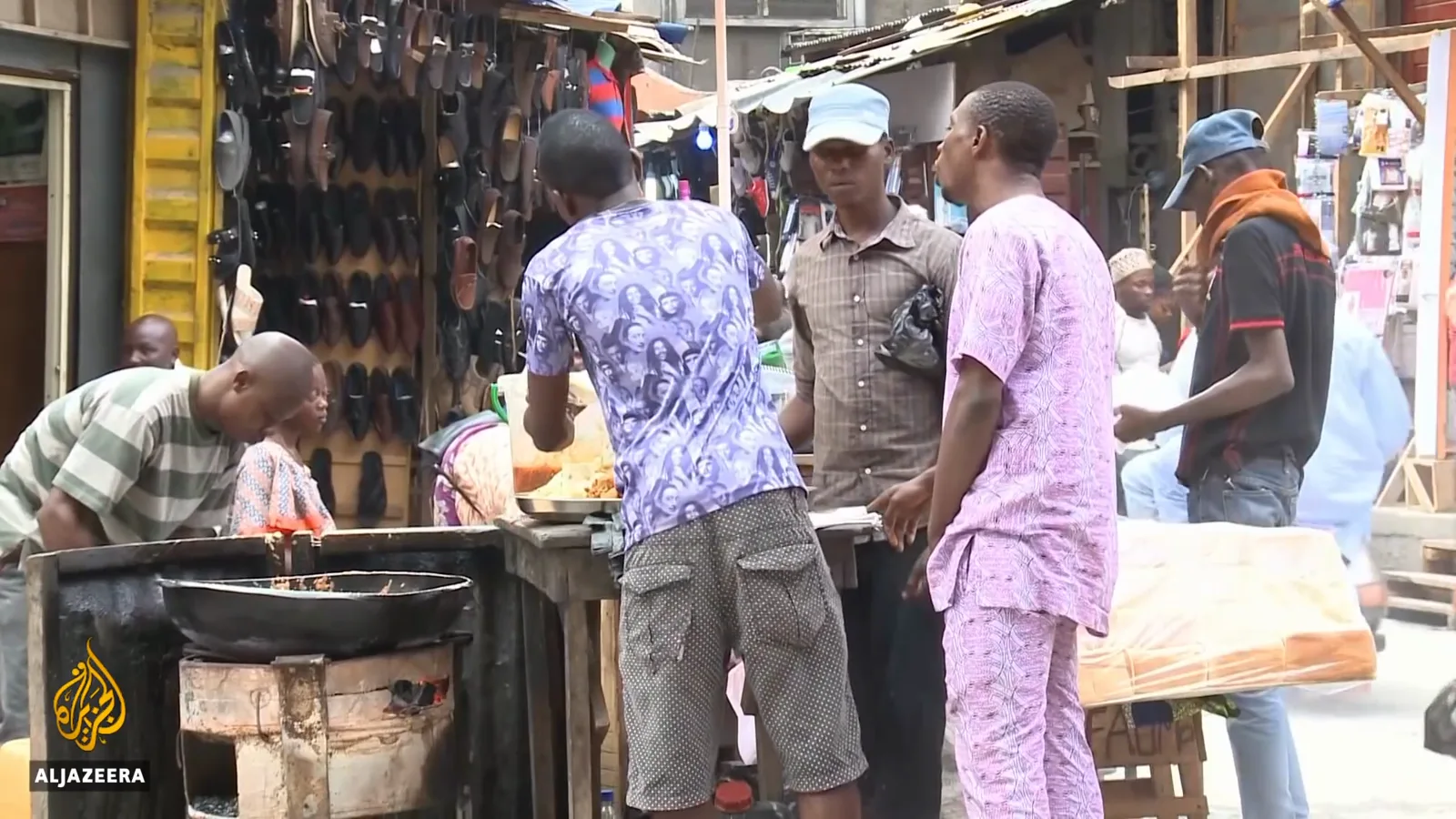
Acceptance is a relationship, not a terminal.Watch at 2:00 - 16
Nigerians chose the dollar they could hold: P2P USDT
The great irony of the eNaira story is what Nigerians did adopt. Through P2P exchanges — the LocalBitcoins and Paxful rails that had made Nigeria a bitcoin stronghold years earlier — traders moved into USDT, a dollar stablecoin no Nigerian institution controls. Crypto volume reached $56.7 billion between July 2022 and June 2023, and Nigeria ranked #1 in the world for P2P trading; the USDT-naira rate became a shadow exchange rate quoted alongside the official one. The redesign crisis had taught the lesson in reverse: money that can be invalidated by decree is liability, and a digital dollar outside the system is an asset. On December 22, 2023 the CBN conceded the point, lifting its February 2021 ban on banks serving crypto — choosing to regulate the money Nigerians actually use. The eNaira remains live, repositioning toward government payments, a cautionary tale every other central bank now studies.
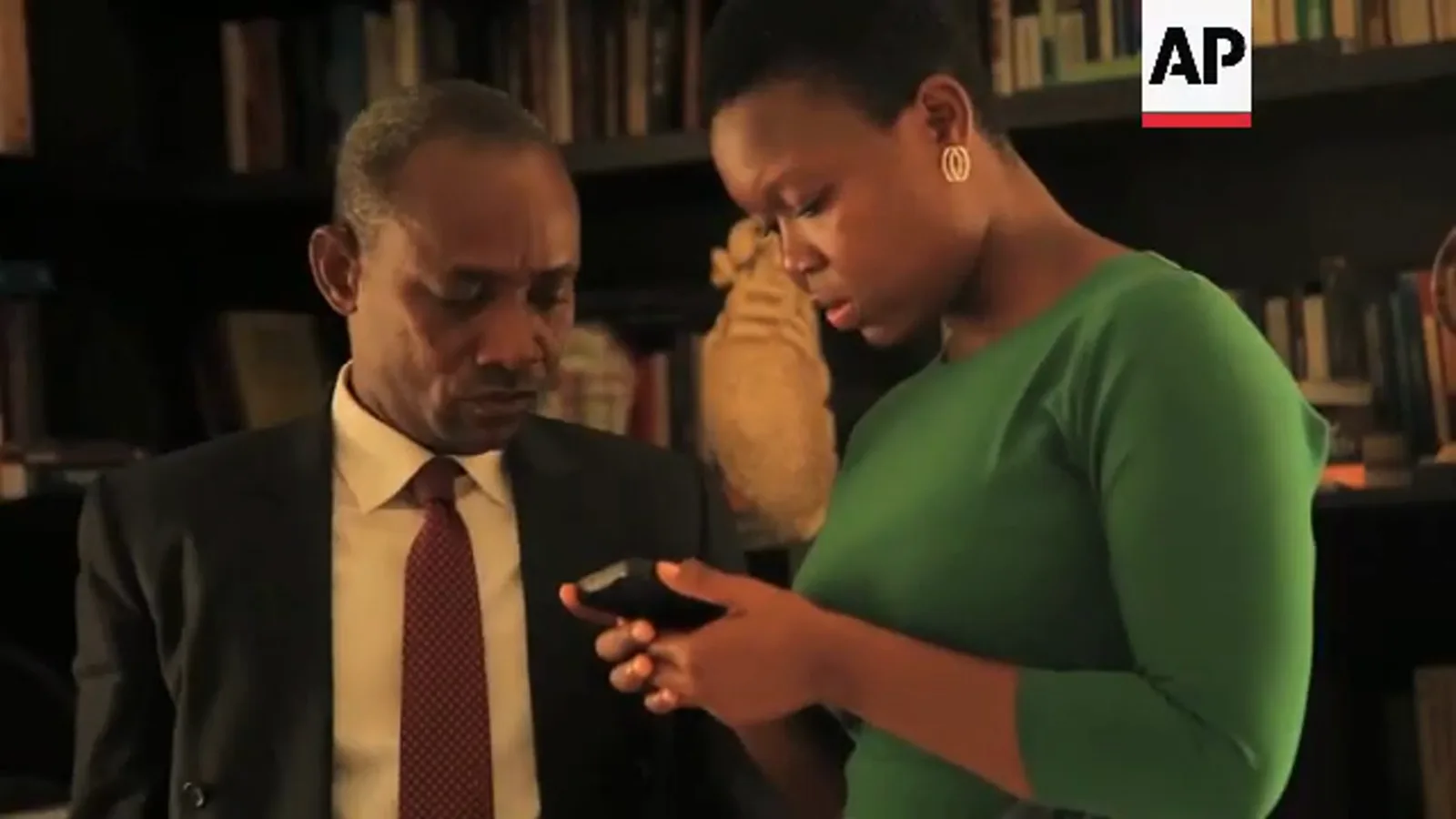
The people's digital dollar wasn't issued by a central bank.Watch at 1:52
Frequently Asked Questions
Why did the eNaira fail?
Is the eNaira still working today?
How many people actually use the eNaira?
What happened to the eNaira during Nigeria's 2023 cash crisis?
Is Nigeria banning cryptocurrency?
What's the difference between a CBDC like the eNaira and cryptocurrency?
Continue the Story
El Salvador's Bitcoin Law: The First Nation That Said Yes
The mirror-image experiment: while Nigeria's state coin found no users, El Salvador made Bitcoin legal tender — and met its own adoption wall.
The History of Crypto Regulation
From Nigeria's 2021 banking ban to its 2023 reversal — how regulators worldwide have swung between prohibition and licensing.
e-Gold: Digital Money Before Bitcoin
The 1996 digital gold currency that proved private digital money could work — until the state decided it shouldn't.
Dead Crypto Exchanges: Where Trading Worlds Ended
Mt. Gox, FTX and the graveyard of exchanges — what kills the platforms a financial system runs on.
References
Extended Multimedia Reference
Visual sequences and chronologies in this guide cross-reference video documentation “Nigeria becomes first African nation to roll out digital currency” by Al Jazeera.
This illustrated guide is maintained strictly for educational, research, and historical documentation purposes. None of the materials constitute investment, financial, legal, or trading advice. Historical crisis and market events are documented from public archives. Digital assets involve significant risks.